Officials clash over causes of nationwide tech outages as lawmakers raise cybersecurity alarm
A wave of outages hit the FAA, the NSA, banks and Microsoft, and officials gave conflicting explanations while lawmakers in both parties warned about cybersecurity.
The full story
Here is the full story. A wave of technology outages lasting about ten days has disrupted major companies and government systems across the United States, and the official explanations have not all lined up. The failures have hit Microsoft, JPMorgan Chase, brokerage Charles Schwab and the National Security Agency's classified internal network, among other large organizations. The most disruptive came on Friday, when an outage at the Federal Aviation Administration led to a ground stop of all U.S. flights that lasted nearly five hours.
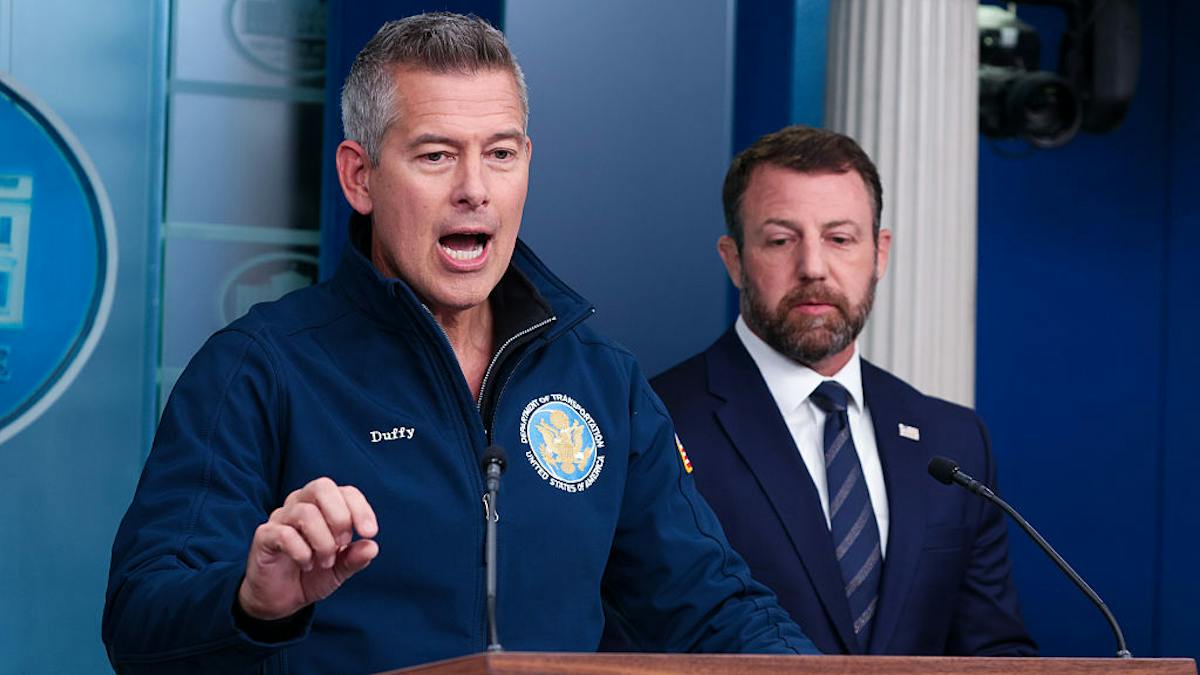
Transportation officials have said the FAA failure came from a router problem that occurred during a system update, part of a wider push to modernize an aging air traffic control system. But on Monday, Homeland Security Secretary Markwayne Mullin offered a different possibility in an appearance on Fox News' "Hannity." He said the Cybersecurity and Infrastructure Security Agency had told him it saw no traffic pointing to a cyberattack and that the outages were individually unrelated. He then said he had asked a tech industry figure, who wanted to stay anonymous, what could explain so many separate failures. According to Mullin, that person suggested AI programs that write and fix their own code could set off a ripple effect, overloading older systems not built to run that fast. Mullin compared it to a change order on a house and said the idea "kind of makes sense to me." He added that he was 98 percent certain the outages were not caused by a cyberattack.
On Tuesday, FAA Administrator Bryan Bedford and Transportation Secretary Sean Duffy pushed back at a news conference. Bedford called the claims that AI was involved in the aviation outage "completely unfounded." Duffy said the air traffic system's AI tool only provides predictive analytics on flight trajectories and weather, takes in data but sends nothing back into the network, and is not connected to the systems that make decisions. If the tool turns up something useful, he said, staff call the command center by phone. "I've heard all of the speculation, but that is not true," Duffy said.
The same day, Director of National Intelligence Jay Clayton went on television and said officials do not see signs of a coordinated cyberattack or of state-sponsored activity, adding that they could be fairly confident because they know what such attacks look like. Meanwhile, multiple outlets reported last week that new White House Chief of Staff Stephen Miller told Mullin to stop making television appearances. President Donald Trump also fired National Cyber Director Sean Cairncross; Breitbart reported the firing happened Thursday over concerns that he lacked proper cybersecurity credentials, while The Daily Wire reported that Trump confirmed it on Friday.
Some figures from Trump's political circle urged a clearer message. Steve Cortes, a former senior adviser to Trump's 2016 and 2020 campaigns, wrote on X that Americans are panicked and that the administration should speak "with one voice" and lay out the facts every day until the crisis ends. Former White House Press Secretary Karoline Leavitt said in a Fox News interview that "transparency is key" and suggested that once Trump returns from an overseas trip, he or someone at the White House should address the public directly about what they know. She later praised the decision to put Clayton on television.
In Congress, concern crossed party lines. Rep. Keith Self, a Texas Republican, told Fox News that from his experience in intelligence and at the Pentagon, "this is not normal," and said he did not believe the public statements, suspecting something was going on behind the scenes. Sen. John Ossoff, a Georgia Democrat, said cybersecurity threats are becoming more serious. Pete Ricketts, a Nebraska Republican, struck a calmer note, saying complex systems like these fail and that it is not unusual. Sen. Tim Sheehy, a Montana Republican, called local, municipal infrastructure a "soft target" that has been flagged for decades without being fully fixed. Sen. John Hoeven, a North Dakota Republican, said security work has to be constant because everything is now interconnected, in business as well as government.
Experts have described AI as cutting both ways: it is getting better at finding security holes, but patching those holes can strain systems, and hackers can use it to find weaknesses too. Systems at stake range from banking and aviation to local water supplies and power grids. Sen. John Fetterman, a Pennsylvania Democrat, said legislation could be possible if lawmakers focus on cyber threats and on making American systems less vulnerable. Whether the outages are connected or random, he said, no one really knows, and "we really need to strip out the politics and find out really what it is."
Reported by
Get this email every day
Like getting the day's news with a smile? Sign up below and we'll send this email to your inbox every day.
Other news / Full articles
 Federal judge bars Agriculture Secretary Rollins from sending religious holiday emails to staff
 FBI investigates reported hack of National Crime Information Center database
 Texas Governor-elect Hinojosa vows to end Abbott's H-1B hiring freeze on day one
 Trump, Xi and Putin sign joint declaration on oil, nuclear risk, the UN and the ICC
 Lawmakers raise cybersecurity alarm after 10-day wave of US tech outages
 Trump says Vance's midterm analysis was accurate but he would wage Iran war again