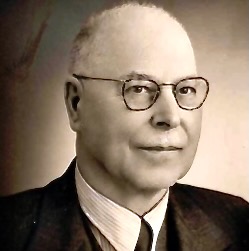
Fifty years ago—on September 30th, 1976—Congress first enacted an amendment offered by Rep. Henry Hyde (R-IL) to protect federal Medicaid funds from being used to subsidize killing unborn children by abortion.
Beginning in 1981, I had the honor of serving alongside Henry Hyde in the U.S. House of Representatives. He was a brilliant, one-of-a-kind lawmaker—who, to this day, remains the great defender of unborn children and their mothers.
When he first offered his amendment, Rep. Hyde said, “An innocent, defenseless human life, in a caring and humane society deserves better than to be flushed down a toilet or burned in an incinerator. The promise of America is that life is not just for the privileged, the planned, or the perfect.”
Get the latest pro-life news and information on X (Twitter). Follow @LifeNewsHQ
Today, nearly 2.7 million people are alive because of Henry Hyde’s amendment. In other words, this critical protection saves about 60,000 children from the violence of abortion each year.
Thanks to Henry Hyde, 2.7 million people—who would have otherwise been aborted—were able to enjoy the first and most basic of all human rights: the right to life. They experienced the ability to grow, thrive, and eventually have families of their own—all because public funds were unavailable to effectuate their violent deaths.
Polling data consistently reflects what the 2026 Marist Poll found in January 2026: the majority of Americans do not support taxpayer funding for abortion.
However, the billion-dollar abortion industry continues to cleverly market the cheap sophistry of choice, while going to extraordinary lengths to downplay the suffering and pain experienced by the battered baby victims in the womb—as well as the coercion or pressure exerted on the mother to end the life of her unborn child.
As pro-life Americans work to replace abortion violence with compassion and empathy for women and the children in the womb, the Hyde Amendment continues to stand as one of the most important human rights advances of the past 50 years.
My pro-life colleagues and I are committed to continuing this essential work and ensuring that taxpayer dollars support both mother and child and do not fund the destruction of children through abortion.
We continue to oppose the Hyde violations in the so-called Affordable Care Act (ACA)—Obamacare—which created taxpayer-funded ACA health insurance plans that include coverage for elective abortion. According to a GAO report released earlier this month, these plans that violate the Hyde Amendment covered 4.4 million individuals this year alone.
For the above reasons—and many more—Congress must make permanent the life-saving Hyde Amendment by passing the No Taxpayer Funding for Abortion Act (HR 7), legislation I’ve introduced to:
- Make the Hyde Amendment and other current abortion funding prohibitions permanent and government-wide (Soon after enactment of Hyde in 1976, other abortion funding “riders” were enacted into law. In 1983, for example, I authored the ban on funding abortion in the Federal Employees Health Benefits program. Most must be legislatively renewed each year. Again, HR 7 makes the funding restrictions permanent); and
- Ensure the ACA, until repeal, conforms with the Hyde Amendment.
Someday, future generations of Americans will look back and wonder how and why such a seemingly smart and enlightened society could have permitted and perpetrated the violent deaths of more than 66 million children by abortion, often with government enabling and subsidy.
History will note, however, the struggle of Henry Hyde and the millions of pro-life Americans who joined him in his unrelenting quest to protect and defend the rights of unborn children.
The Hyde Amendment, one of Henry Hyde’s lasting legacies, reaffirms the fundamental truth that every life is precious and irreplaceable. It is well past time that we make it permanent law.
- Chris Smith, New Jersey Republican, is the Co-Chairman of the Congressional Pro-Life Caucus.