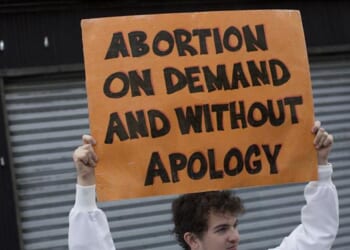
The “Turnaway Study” is the basis for a series of papers published by researchers with Advancing New Standards in Reproductive Health (ANSIRH) that examine the impacts of unwanted pregnancy on women’s lives.
Researchers compared the outcomes for three groups of women who were recruited at abortion centers: 1) women who had been turned away from having an abortion because they were past the abortion center’s gestational limit; 2) women who received a near-limit abortion; and 3) women who had received an abortion early in pregnancy.
Participating women were interviewed every six months over a five-year period. The study has been interpreted to show that receiving an abortion does not harm women but being denied an abortion does result in harm (e.g., economically, emotionally).
Follow LifeNews.com on Instagram for pro-life pictures and videos.
Pro-abortion advocates, therefore, often cite this study to demonstrate the harms caused by lack of abortion access and to challenge abortion limits and life-protecting laws. However, a closer look at the study reveals a lack of scientific rigor and findings that cannot be generalized. Furthermore, the conclusions are not always consistent with the data.
The Turnaway Study is based on interviews with a non-random sample consisting of a small number of participants.
- Selection of participants was non-random because invitations to join the study were at the discretion of abortion center staff.[1]
- Sixty-nine percent of women invited to participate declined or dropped out before the first interview (31% participated in the first interview), even when offered $50 per interview. [2] Participation fell to 17% at the last interview.[3] Other studies show that the women most likely to decline to participate (or drop out) were those who anticipated strong, negative feelings after their abortions.[4]
- Recruitment rates varied significantly among the 30 participating centers, with staff enrolling two-thirds or more of the eligible women at the three abortion centers with the highest recruitment rates but less than one-quarter of the eligible women at the bottom five centers.[5]
The Turnaway Study participants were missing important characteristics found in the general abortion-seeking population, thus the results cannot be generalized to the experiences of all women who undergo, or initially seek but do not undergo, abortions.
- The study excluded women who were seeking abortions for “therapeutic” reasons, including the reason of fetal anomaly,[6] which is particularly notable because other research indicates that abortions in these circumstances result in more negative reactions.[7]
- The study underrepresented women who experienced pressure to abort, with only 1.2% of the women in the study who had abortions reporting pressure from family or friends.[8] In contrast, research by scholars affiliated with the Charlotte Lozier Institute found that 19% of women who had abortions recalled feeling high levels of pressure from a family member, while 15% experienced high levels of pressure from their male partner.[9]
- The women in the Turnaway group did not all carry to term. Thirty percent either underwent an abortion at another abortion center or suffered a miscarriage.[10] Additionally, the study did not account for prior or subsequent abortion histories in any group despite evidence that women who have more abortions have more mental health problems.[11] Therefore, mental health impacts cannot be attributed necessarily or solely to the initial abortion denial.
Some papers using data from the Turnaway Study contain conclusions that are inconsistent with the actual findings.
- The finding that 95% of participants agreed with the statement that “given the situation, the decision to have an abortion was right for them” (emphasis added) is characterized as proof of “decision satisfaction” and evidence that very few women have regrets or psychological distress after an abortion.[12] However, significant percentages of participants who received abortions also reported regret (33-41%), sadness (61-68%), guilt (55-62%), and anger (28-29%).[13]
- The conclusions emphasize that women “turned away” suffered psychologically and economically. Yet, the findings demonstrated that there were no lasting significant differences between women who had abortions and the Turnaway group. Instead, one week after being turned away, 60% of the women expressed happiness over their pregnancies. Similarly, 54% of the women expressed relief and 48% expressed some happiness at being turned away.[14] They also experienced less guilt than those who had abortions.[15] Over the following years, women’s happiness significantly increased, and the percentage that still wished they could have had an abortion dramatically decreased. By five years after being denied an abortion, 96% of women turned away indicated they were glad they had kept their pregnancies.[16] Additionally, abortion denial did not appear to have a lasting negative effect on mental health: by five years after being denied an abortion, women in all groups had similar levels of depression and anxiety.[17]
- In a study of suicidal ideation using Turnaway data, the paper concluded that there was no difference in suicidal feelings between women who had abortions and those who did not, and that consequently, women undergoing abortion need not be informed of the risk of suicide.[18] However, a reanalysis highlighted methodological limitations including a sample size that was actually too small to detect statistically significant differences, undermining the Turnaway paper’s conclusion.[19]
- Turnaway Study data have not been shared with other researchers who seek to replicate the findings, and the authors have not responded to queries requesting details regarding their published findings.[20]
[1] Loren M. Dobkin, Heather Gould, Rana E. Barar, et al., “Implementing a Prospective Study of Women Seeking Abortion in the United States: Understanding and Overcoming Barriers to Recruitment,” Women’s Health Issues 24, no. 1 (2014):e115—e123, doi: 10.1016/j.whi.2013.10.004.
[2] Ibid.
[3] See eFigure Participant Flowchart in Supplement 2 in M. Antonia Biggs, Ushma D. Upadhyay, Charles E. McCulloch, et al., “Women’s Mental Health and Well-being 5 Years After Receiving or Being Denied an Abortion,” JAMA Psychiatry 74, no. 2 (2017):169-178, doi: 10.1001/jamapsychiatry.2016.3478, https://jamanetwork.com/journals/jamapsychiatry/fullarticle/2592320.
[4] Hanna Söderberg, Christina Andersson, Lars Janzon, et al., “Selection Bias in a Study on How Women Experienced Induced Abortion,” European Journal of Obstetrics and Gynecology and Reproductive Biology 77, no. 1 (1998):67-70, doi:10.1016/s0301-2115(97)00223-6, https://www.ejog.org/article/S0301-2115(97)00223-6/abstract; David C. Reardon, “The Abortion and Mental Health Controversy: A Comprehensive Literature Review of Common Ground Agreements, Disagreements, Actionable Recommendations, and Research Opportunities,” SAGE Open Medicine 6 (2018), doi:10.1177/2050312118807624, https://journals.sagepub.com/doi/10.1177/2050312118807624.
[5] Diana Greene Foster, The Turnaway Study: Ten Years, a Thousand Women, and the Consequences of Having—or Being Denied—an Abortion (New York, NY: Scribner, 2020), 253.
[6] Antonia M. Biggs, Health Gould, Diana Greene Foster, “Understanding Why Women Seek Abortions in the US,” BMC Women’s Health 13, no. 29 (2013), doi:10.1186/1472-6874-13-29, https://bmcwomenshealth.biomedcentral.com/articles/10.1186/1472-6874-13-29.
[7] David C. Reardon, “The Abortion and Mental Health Controversy: A Comprehensive Literature Review of Common Ground Agreements, Disagreements, Actionable Recommendations, and Research Opportunities.”
[8] Antonia M. Biggs, Health Gould, Diana Greene Foster, “Understanding Why Women Seek Abortions in the US,” BMC Women’s Health 13, no. 29 (2013), doi:10.1186/1472-6874-13-29 (see Table 2).
[9] David C. Reardon and Tessa Longbons Cox, “Effects of Pressure to Abort on Women’s Emotional Responses and Mental Health,” Cureus 15, no. 1 (2023), doi:10.7759/cureus.34456, https://www.cureus.com/articles/124269-effects-of-pressure-to-abort-on-womens-emotional-responses-and-mental-health#!/.
[10] Corinne H. Rocca, Heidi Moseson, Health Gould et al., “Emotions over Five Years After Denial of Abortion in the United States: Contextualizing the Effects of Abortion Denial on Women’s Health and Lives,” Social Science and Medicine 269 (2021), doi:10.1016/j.socscimed.2020.113567, https://www.sciencedirect.com/science/article/abs/pii/S0277953620307863 (70 out of 231 enrolled in the Turnaway group). Elsewhere, the results have been reported as 50 out of 210 in the Turnaway group (24%); see eFigure Participant Flowchart in Supplement 2 in M. Antonia Biggs, Ushma D. Upadhyay, Charles E. McCulloch, et al., “Women’s Mental Health and Well-being 5 Years After Receiving or Being Denied an Abortion.”
[11] Donald Paul Sullins, “Abortion, Substance Abuse and Mental Health in Early Adulthood: Thirteen-Year Longitudinal Evidence from the United States,” SAGE Open Medicine 4 (2016), doi:10.1177/2050312116665997, https://pmc.ncbi.nlm.nih.gov/articles/PMC5066584/.
[12] Corinne H. Rocca, Katrina Kimport, Sarah CM Roberts et al., “Decision Rightness and Emotional Responses to Abortion in the United States: A Longitudinal Study,” PLOS One 10, no. 7 (2015), doi:10.1371/journal.pone.0128832, https://journals.plos.org/plosone/article?id=10.1371/journal.pone.0128832.
[13] Corinne H. Rocca, Katrina Kimport, Heather Gould et al., “Women’s Emotions One Week After Receiving or Being Denied an Abortion in the United States,” Perspectives on Sexual and Reproductive Health 45, no. 3 (2013): 122-131, doi:10.1363/4512213, https://onlinelibrary.wiley.com/doi/abs/10.1363/4512213 (see Table 2).
[14] Corinne H. Rocca, Heidi Moseson, Health Gould et al., “Emotions over Five Years After Denial of Abortion in the United States: Contextualizing the Effects of Abortion Denial on Women’s Health and Lives.” (Note that these percentages differ slightly from those originally reported in Rocca et al., “Women’s Emotions One Week After Receiving or Being Denied an Abortion in the United States.”)
[15] Rocca et al., “Women’s Emotions One Week After Receiving or Being Denied an Abortion in the United States.”
[16] Rocca et al., “Emotions over Five Years After Denial of Abortion in the United States.” At five years, only 4% still wished they could have had the abortion.
[17] Biggs et al., “Women’s Mental Health and Well-being 5 Years After Receiving or Being Denied an Abortion.”
[18] Antonia M. Biggs, Heather Gould, Rana E. Barar, Diana G. Foster, “Five-Year Suicidal Ideation Trajectories among Women Receiving or Being Denied an Abortion,” American Journal of Psychiatry 175, no. 9 (2018): 845–852, doi:10.1176/appi.ajp.2018.18010091, https://psychiatryonline.org/doi/10.1176/appi.ajp.2018.18010091?url_ver=Z39.88-2003&rfr_id=ori:rid:crossref.org&rfr_dat=cr_pub%20%200pubmed.
[19] David C. Reardon, “A Forensic Investigation and Critique of Suicidal Ideation Reported in a Turnaway Study,” Linacre Q. 92, no. 2 (2025):124-136, doi:10.1177/00243639241281978, https://journals.sagepub.com/doi/10.1177/00243639241281978.
[20] David C. Reardon, “The Embrace of the Proabortion Turnaway Study: Wishful Thinking? or Willful Deceptions?” The Linacre Quarterly 85, no. 3 (2018): 204–12, https://doi.org/10.1177/0024363918782156.
LifeNews Note: The article originally appeared at the Charlotte Lozier Institute.