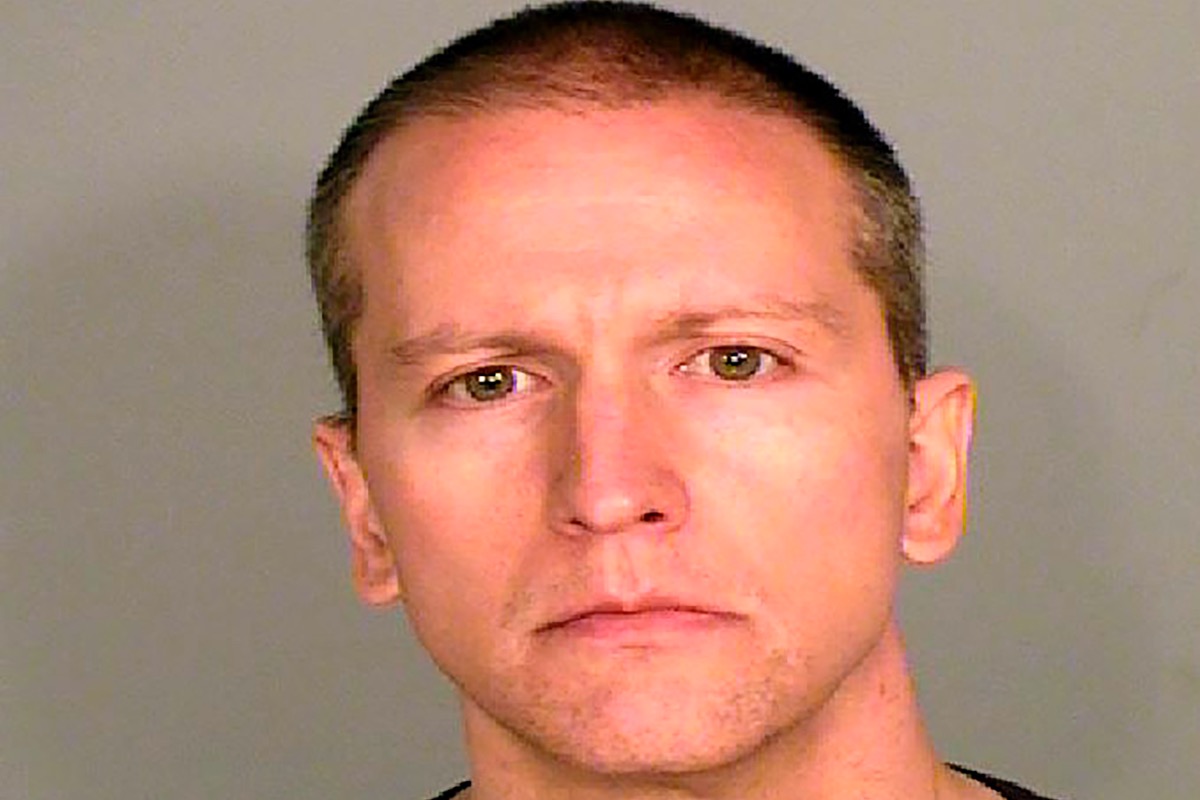
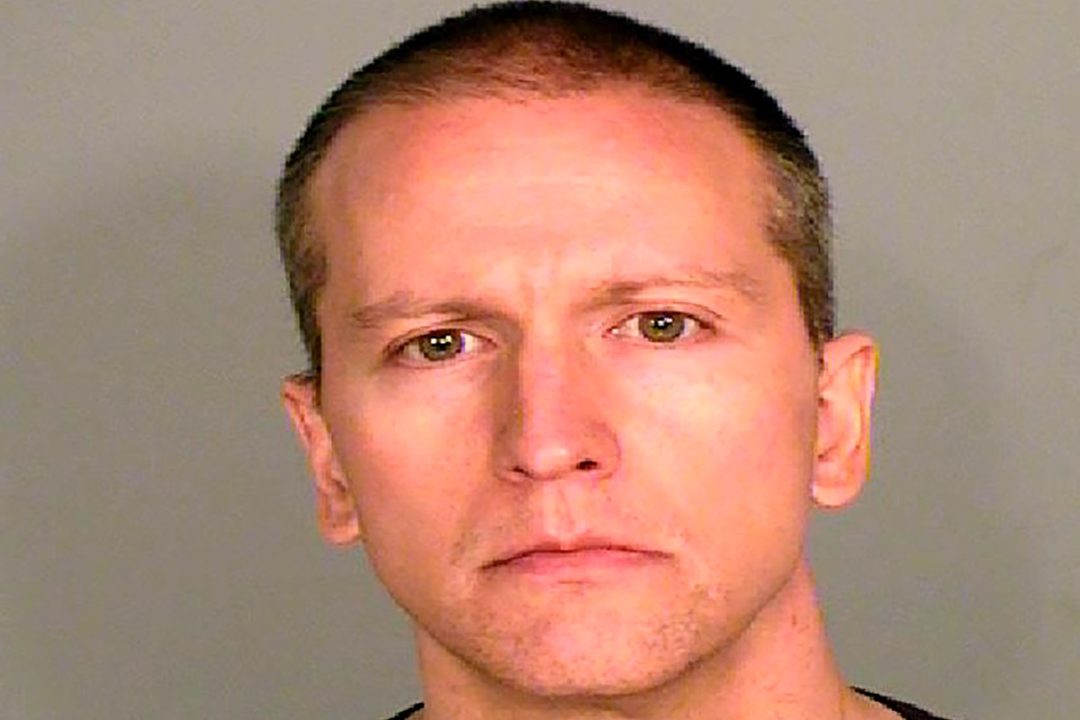
If Derek Chauvin, the Minneapolis police officer wrongly convicted of murdering career criminal and drug addict George Floyd in May 2020, gets a new trial and is acquitted, the key piece of evidence will be the autopsy report and a subsequent memo from an assistant county attorney.
The autopsy report shows no “life-threatening” injuries and that Floyd was tripping on a fatal dose of fentanyl. But the memo from assistant county attorney Amy Sweasy goes even further. It shows that Floyd didn’t die of asphyxiation from Chauvin’s now-notorious neck restraint that day.
Rather, Sweasy wrote, the toxicology showed that a massive overdose of fentanyl killed Floyd.
Multiple Problems With Trial
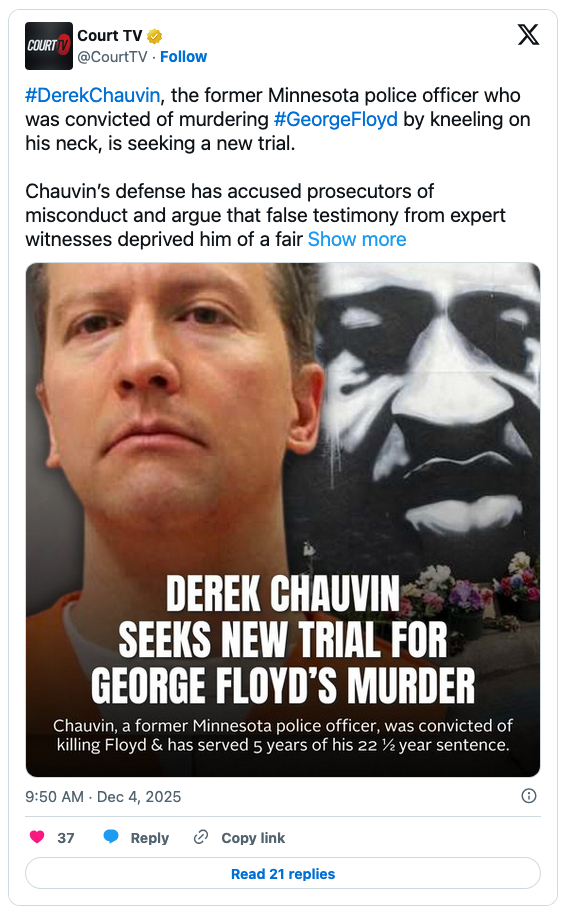
As The New American’s Selwyn Duke wrote on Friday, citing Chauvin’s “Memorandum in support of petition for postconviction relief,” Chauvin’s conviction involved suborning perjury on the stand.
While 50 Minneapolis cops testified that the neck restraint Chauvin used “was part of MPD [Minneapolis Police Department] training,” MPD officials “falsely claimed the restraint used on Floyd was neither taught nor approved under MPD policy.”
Indeed, one of those officials attempted to file a defamation lawsuit against Alpha News because the website questioned her testimony. The official lost that lawsuit and paid attorney’s fees.
Other problems with the trial included permitting on the jury a Black Lives Matter partisan who believed juries must settle verdicts to achieve “social justice.” That same juror falsely claimed during voir dire never to have attended a BLM rally.
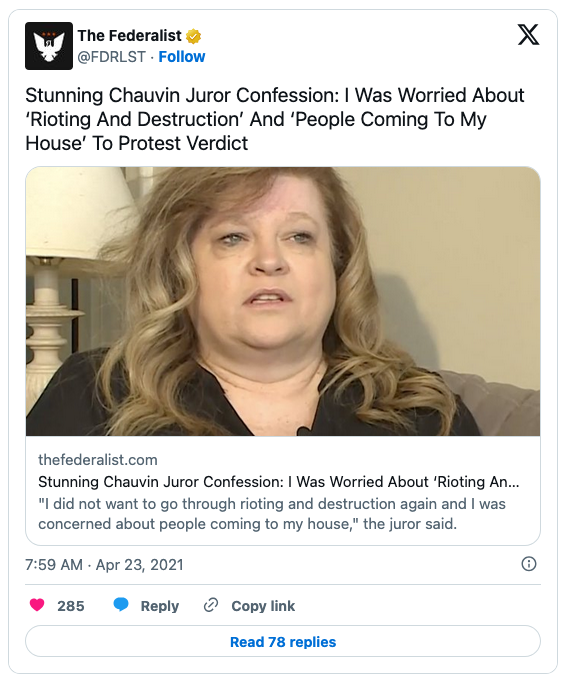
And as even far-left Harvard law Professor Emeritus Alan Dershowitz observed, the verdict should be overturned because jurors obviously feared that pro-Floyd mobs would either attack them or raze Minneapolis should Chauvin be found not guilty. An alternate juror confessed that she worried about “rioting and destruction” and “people coming to my house.”
Far-left Democratic Representative Maxine Waters of California had warned that the jury had better convict, or “we’ve got to get more confrontational.” Race hustler Al Sharpton warned at the beginning of the trial that “America is on trial.”
“No Life-threatening Injuries”
Yet the case never should have gone to a jury because of the autopsy report and county attorney Sweasy’s memo.
As The New American reported at the time, the final autopsy report was clear.
Floyd’s poor health and drug use, not Chauvin, killed him.
Floyd suffered from “severe” coronary artery disease and high blood pressure, as well as an enlarged heart, and had a “clinical history of hypertension.”
The autopsy found fentanyl and methamphetamine in his bloodstream. Fentanyl is a synthetic opioid pain reliever, the Centers for Disease Control and Prevention says, that is “50 to 100 times more potent than morphine.” Opioids are respiratory depressants. Floyd complained that he couldn’t breathe even before Chauvin pinned him to the ground.
The coroner found “no life-threatening injuries.” And, crucially, the autopsy revealed “no facial, oral mucosal, or conjunctival petechiae.”
The absence of petechiae — small red or purple spots in the eyes or skin from bleeding capillaries — is significant because they occur in upwards of 85 percent of strangulation or traumatic asphyxia deaths.
A nasal swab revealed that Floyd also had Covid-19.
Toxicology Was Clear
The autopsy revealed the load of drugs coursing through Floyd’s circulatory system as he claimed “I can’t breathe,” cries that began as cops attempted to put him in a police car before Chauvin restrained him.
Sweasy’s memo, written for the prosecutors’ file on Chauvin, recounts a conversation with a colleague, Patrick Lofton, and Dr. Andrew Baker, the county coroner.
“Dr. Baker said he had (and had recently received) the final toxicology results from Mr. George Floyd’s samples which were analyzed by NMS labs,” Sweasy wrote.
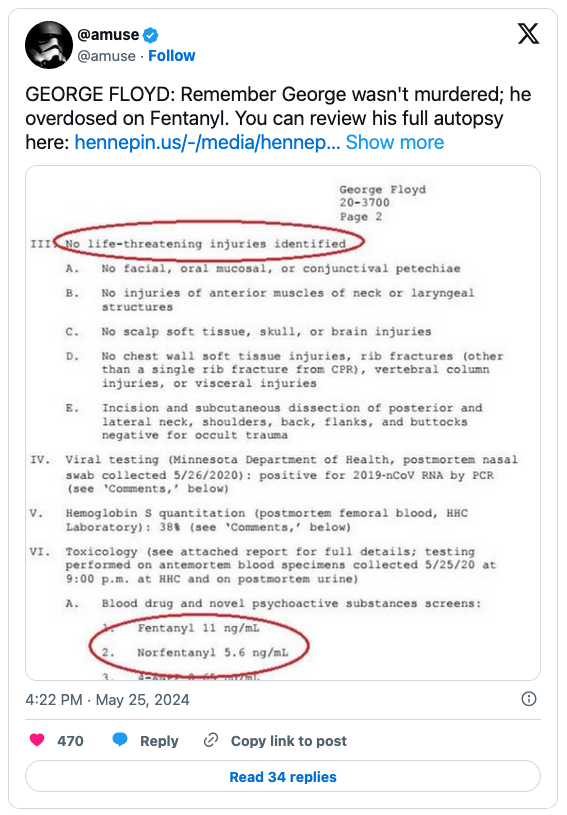
Sweasy recounted Baker’s rendition of the drugs in Floyd’s system:
• 4ANPP — a precursor and metabolite of fentanyl present in Mr. Floyd’s blood.
• Methamphetamine — 19 ng/ML which he described as “very near the low end” and “a stimulant hard on the heart.”
• Fentanyl — 11. He said, “that’s pretty high.” This level of fentanyl can cause pulmonary edema. Mr. Floyd’s lungs were 2-3x their normal weight at autopsy. That is a fatal level of fentanyl under normal circumstances.
• Norfentanyl — 5.6 a metabolite of fentanyl.
Sweasy included Baker’s most important conclusion: “If Mr. Floyd had been found dead in his home (or anywhere else) and there were no other contributing factors he would conclude that it was an overdose death.”
Yet as TNA’s Duke reported, citing emergency room physician John Dunn, though Baker found “no life threatening injuries,” the coroner “changed his position after phone calls from Washington, D.C., pathologist Dr. Roger Mitchell, who warned Baker in two phone calls that he would publicly accuse him of misconduct unless neck compression appeared in the autopsy report. Within days, the final autopsy did include ‘neck compression.’”
Chauvin Stabbed
Chauvin has unsuccessfully appealed for a new trial before. He was nearly murdered two years ago while serving his concomitant federal civil rights sentence at the Federal Correctional Institution in Tucson, Arizona.
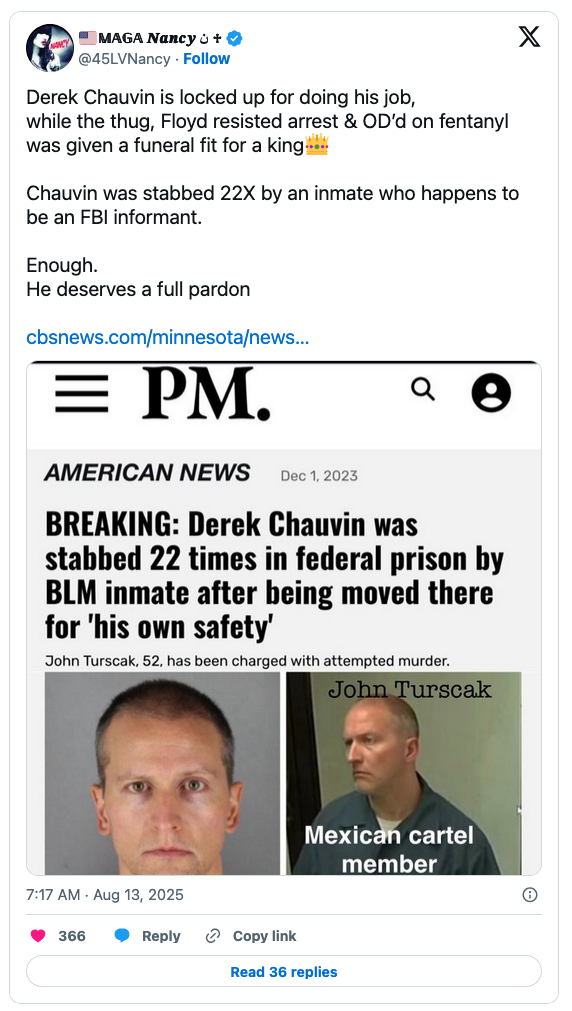
Mexican Mafia member John Turscak, an FBI informant, stabbed Chauvin 22 times, a crime he readily admitted to. “He told correctional officers he would have killed Chauvin had they not responded so quickly, prosecutors said,” Politico reported.
Turscak wanted to murder Chauvin because he is a BLM sympathizer.


![Hegseth Demands Fitness Requirements, Says 'Fat Troops' 'Not Who We Are' [WATCH]](https://teamredvictory.com/wp-content/uploads/2025/09/Hegseth-Demands-Fitness-Requirements-Says-Fat-Troops-Not-Who-We-350x250.jpg)