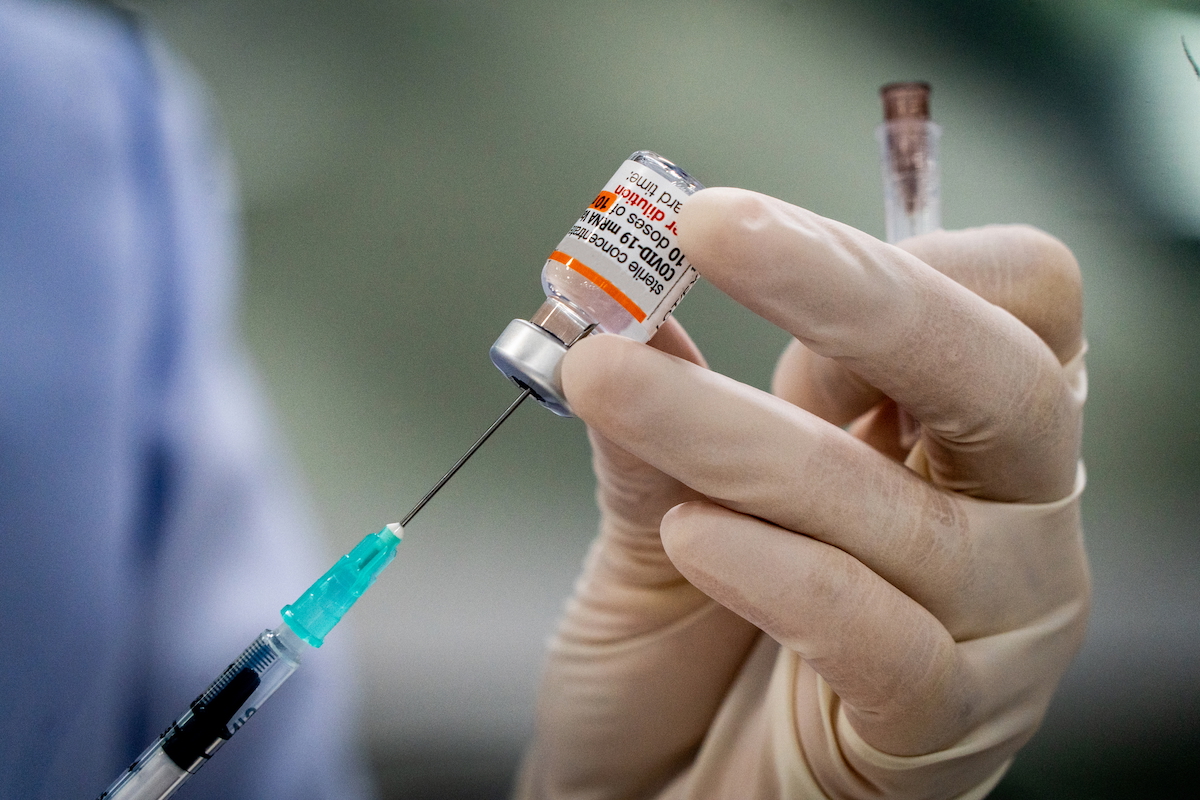
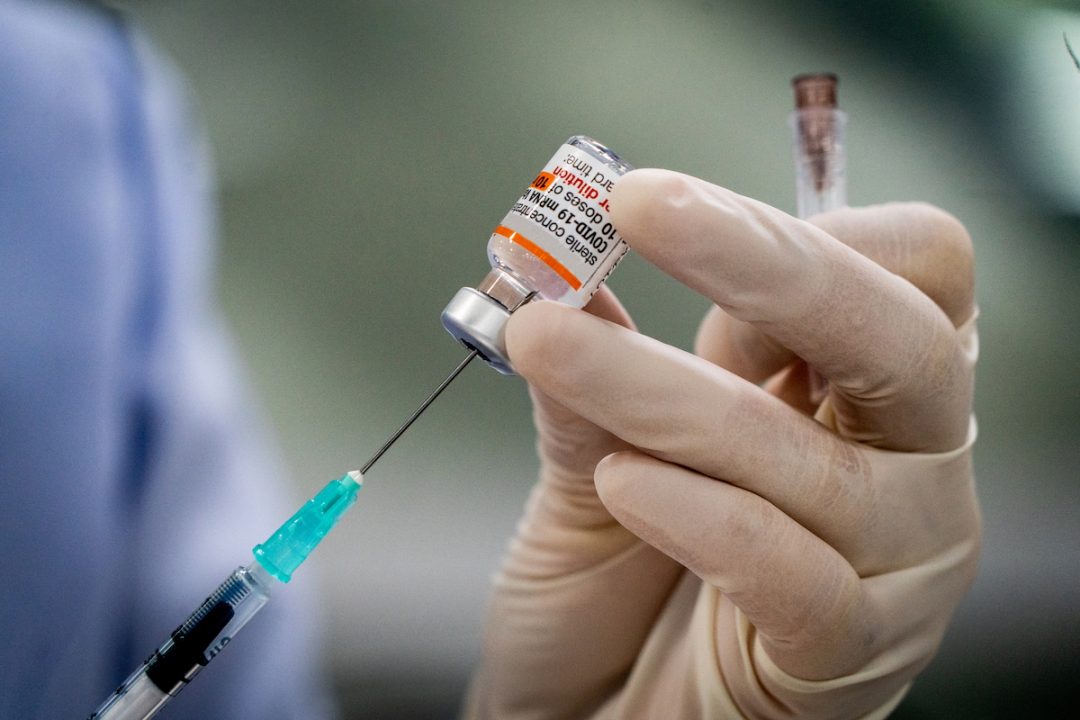
The U.S. Food and Drug Administration (FDA) has no plans to add a “black box” warning to Covid-19 vaccines, FDA Commissioner Dr. Marty Makary told Bloomberg on Monday. His remarks followed a CNN report published Friday claiming the agency was considering the strongest possible warning label. The outlet cited myocarditis risks in younger men, a serious adverse effect the FDA has acknowledged for years. The New American covered that report here.
Makary stressed the United States is instead moving toward a “risk-stratified approach” to Covid vaccinations, pointing to Europe as a model. That framework, however, traces back to guidance of the World Health Organization (WHO). Published in March 2023, it has already been adopted across much of the developed world. The policy prioritizes vaccination for the elderly and those with comorbidities. Critics in the medical-freedom movement have condemned this shift as a soft form of eugenics rather than a true reckoning with vaccine safety.
What Dr. Makary Said
“We have no plans to put that [the warning] on Covid vaccine,” said the commissioner plainly.
Likely referring to the FDA’s Office of Surveillance and Epidemiology (OSE) — FDA’s division tasked with monitoring and evaluating the safety profiles of drugs — Marty said that the formal recommendation on the “black box” warning was, indeed, made. Yet, the agency’s leadership rejected it. He said,
The Safety and Epidemiology Center within the FDA did recommend that [warning].… But some of our scientists and leadership like Dr. Vinay Prasad said it may be different today than it was in the first year of Covid, when the shot came out.
In its report, CNN alleged that Prasad, FDA’s chief medical and scientific officer and director of the agency’s Center for Biologics Evaluation and Research (CBER), “orchestrated” the plan.
Makary further argued that the difference between 2020 and today lies in the vaccines’ dosing frequency:
When you have those two doses three months apart, that’s when you see side effects go way up, like myocarditis in young people. Now, that it’s annual, you may not see the same prevalence. So we don’t want to extrapolate the same findings to today if it’s not transferable.
The agency has not published any data demonstrating that spacing doses one year apart eliminates, meaningfully reduces, or otherwise changes the underlying biological risk of myocarditis.
FDA’s Stance
The original two-dose Covid vaccine regimen for the mRNA shots produced by Pfizer and Moderna was not administered “three months apart.” The doses were given roughly two to four weeks apart — the schedule under which elevated myocarditis risk was first identified.
The FDA formally acknowledged the myocarditis signal in June 2021. In a since-deleted press release, it stated that reports of myocarditis and pericarditis had been identified following mRNA Covid-19 vaccination. Younger men were at increased risk. At the same time, federal health agencies characterized the cases as “extremely rare,” mild, and self-resolving. The officials insisted that “the benefits of Covid-19 vaccination continue to outweigh the risks.”
Between 2022 and 2024, myocarditis remained an identified safety issue in FDA and CDC reviews. The warning language, however, remained largely unchanged.
Notably, this past May, Senator Ron Johnson (R-Wis.) released an interim report alleging that federal health agencies under the Biden administration suppressed or downplayed early warnings about vaccine-associated heart inflammation.
In June, the FDA required and approved updated labeling for Pfizer’s Comirnaty and Moderna’s Spikevax. The revisions added quantified incidence estimates for myocarditis following the 2023-2024 mRNA formula and referenced follow-up cardiac MRI findings in patients with vaccine-associated myocarditis.
Under Makary, the FDA also issued a series of major approvals. On May 30, it approved Moderna’s new booster, mNexspike, for use in so-called high-risk Americans. On July 10, the agency granted full licensure to Moderna’s Covid vaccine, mRNA-1273, for children aged six months to 11 years with underlying medical conditions. Then, on August 27, the FDA fully approved updated Covid vaccines, formally ending emergency use authorizations (EUA). Those are intended for broad segments of the U.S. population. Those include people over 65 and anyone with at least one comorbidity, including health issues.
A Cardiologist’s Warning
As federal health agencies downplayed myocarditis risk, some cardiologists raised alarms. One of them was Dr. Peter McCullough, whose warning appeared in The New American’s special issue on Covid vaccines.
McCullough framed Covid vaccination as the second major wave of harm following the pandemic itself.
Central to his warning was heart inflammation. “The spike protein is proven in 3,400 peer-reviewed manuscripts to cause four major domains of disease,” McCullough said. “One is cardiovascular disease — heart inflammation or myocarditis.” He emphasized that regulatory circles no longer disputed this risk.
McCullough rejected the notion that myocarditis could be dismissed as minor. “Before Covid, for years, we’ve had guidelines in cardiology when there is myocarditis,” he said. “These guidelines include that people cannot exert themselves in athletics; it will cause cardiac arrest.” Despite that, he warned, young people received vaccines without medical necessity. He added,
And we have seen a montage of cardiac arrests in young individuals. I’m telling you, as an expert cardiologist, these cardiac arrests are due to the Covid-19 vaccine, until proven otherwise.
He also pointed to persistent injury:
The spike protein, the lethal protein from the vaccines, [has been] found in the human body after vaccination, circulating at least for six months, if not longer.
McCullough argued that repeated dosing could compound harm.
The cardiologist later carried these concerns to the U.S. Senate this year. McCullough testified that the regulators failed to recognize the risk of vaccine-induced myocarditis. He stressed that cardiac injury patterns he observed in clinical practice warranted urgent reevaluation of vaccine-safety policy.
So far, those pleas have gone unanswered by Washington’s unconstitutional healthcare apparatus.
Dr. Nicolas Hulscher of the McCullough Foundation confirmed in October that the two largest studies on vaccine safety found extremely elevated risks of myocarditis and other serious conditions following Covid vaccinations.