The Church, “expert in humanity” (as Pope Paul VI put it), knows that the mystery of Christmas (like that of Easter) is so great that it cannot be adequately plumbed – let alone celebrated – in a single day. And so, taking a page out of our Jewish liturgical heritage, the Church gives us an octave observance – eight full days to consider the central doctrine of the Incarnation, enabling us to reflect on it from a variety of perspectives, not unlike holding a diamond up to the sun to appreciate its beauty from many different angles.
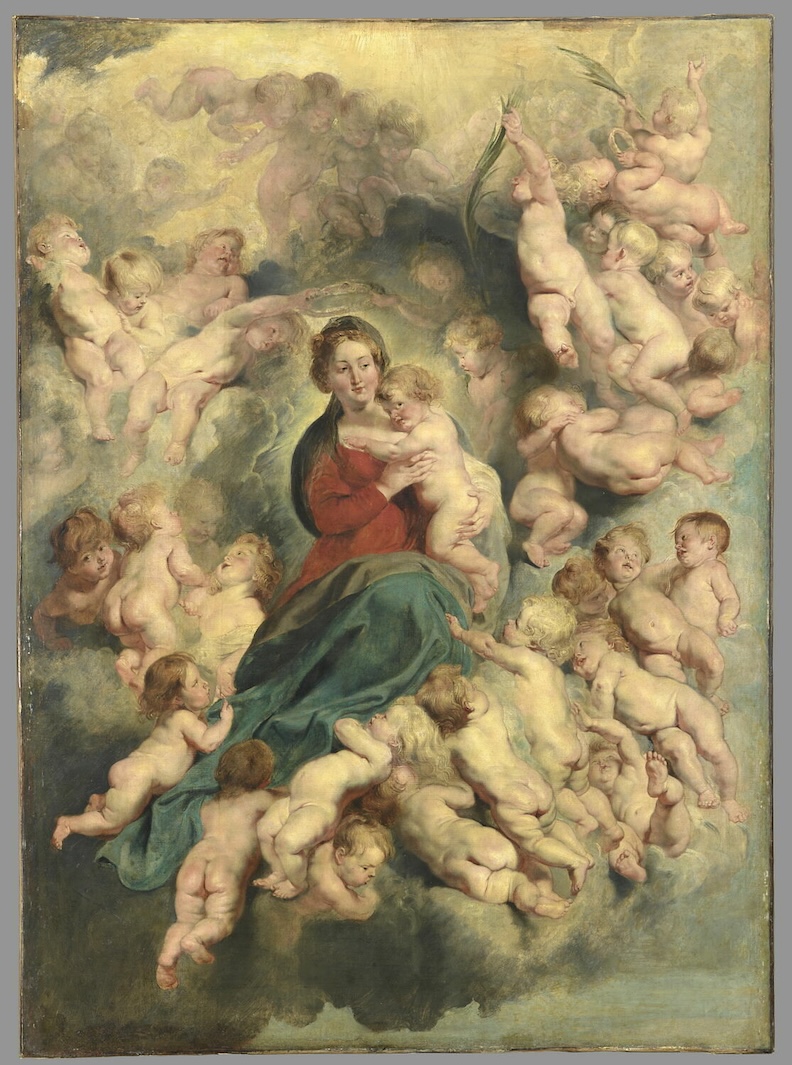
Throughout the Christmas Octave, we encounter a number of saints’ feasts. Do these commemorations serve as distractions from the central mystery of the Octave? Not at all – because, as St. Paul teaches us, “God is glorious in His saints.” (2 Thessalonians 1:10) Indeed, we can say that the very first fruits of the Incarnation are saints, the comites Christi (the companions of Christ), and in this week, the majority of them are martyrs – privileged “witnesses” to Christ: Stephen, the so-called “proto-martyr” (Dec. 27); Thomas à Becket, the medieval defender of the freedom of the Church (Dec. 29); and also, the Holy Innocents, really the first to shed their blood for Christ.
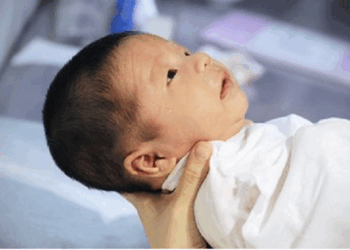
We are introduced to the “Holy Innocents” by St. Matthew (2:16-18) after he has told us of the visit of the Magi, whom Herod wanted to use as “reconnaissance” men to determine the identity of this “newborn King of the Jews.” Not obtaining the information he desired, Herod resorts to mass murder to ensure his competition is dead, ordering the execution of all male babies under the age of two in Bethlehem.
The Collect for the day’s liturgy notes that these little ones confessed the true faith, “not by speaking but by dying.” Indeed, the very word “infans” in Latin means one who cannot yet speak! The prayer goes on to ask the Lord for the great grace “that the faith in you which we confess with our lips we may also speak through the manner of our life.”
The Office of Readings for the feast treats us to a reflection of Quodvultdeus, a fifth-century bishop of Carthage in North Africa and a spiritual son of the great St. Augustine. The author addresses a question to the absent Herod: Why are you afraid, Herod, when you hear of the birth of a king? He does not come to drive you out, but to conquer the devil. But because you do not understand this you are disturbed and in a rage, and to destroy one child whom you seek, you show your cruelty in the death of so many children.
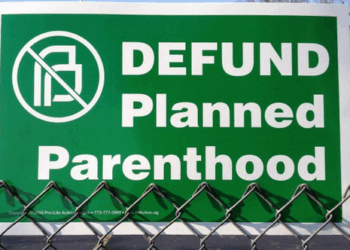
The Church in the United States has seen in the Holy Innocents the forerunners of the millions of babies slaughtered through legalized abortion. And we have witnessed the fear and rage of those ensnared in the culture of death. But why such rage? The vast majority of pro-lifers offer a kindly protest. The rage is born, no doubt, because – deep down – everyone knows the truth of what is happening in the abortion clinics.

The Church in America – especially the hierarchy – have made numerous mistakes in the post-Vatican II era. One area in which the Church shines, however, is in her unrelenting pro-life witness. Ours was a lone voice in the immediate wake of Roe v. Wade. In fact, the pro-abortionists used our solitary witness to play the anti-Catholic card, hoping to make the issue appear as a sectarian Catholic issue.
Our Catholic school system provided strength and youthfulness to the pro-life movement. A few years ago after the March for Life in Washington, D. C., a journalist in favor of “abortion rights” noted in the Washington Post (also strongly pro-abortion) that he was “expecting to write about [the March’s] irrelevance.” But admitted: “I was especially struck by the large number of young people among the tens of thousands at the march.” He highlighted the fact that the vast majority came from Catholic schools who “were taught from an early age to oppose abortion.”
Europeans are stunned by the vitality of the pro-life movement in America; most of them have given up on the cause a long time ago. Abortion is still a lively and hotly contested dimension of American politics. Most interesting of all is that young people, perhaps realizing that they themselves could have been aborted or maybe impressed by what science has discovered about life in the womb, are among the most pro-life of all.
The innocent unborn, then, have not died in vain. Quodvultdeus ends his homily thus: To what merits of their own do the children owe this kind of victory? They cannot speak, yet they bear witness to Christ. They cannot use their limbs to engage in battle, yet already they bear off the palm of victory.
Centuries later, Cardinal Newman would rhapsodize on our little saints, preaching on this feast in 1833 thus:
The longer we live in the world, and the further removed we are from the feelings and remembrances of childhood. . .the more reason we have to recollect our Lord’s impressive action and word, when He called a little child unto Him, and set him in the midst of His disciples, and said, “Verily I say unto you, Except ye be converted, and become as little children, ye shall not enter into the kingdom of Heaven.” . . .And in order to remind us of this our Saviour’s judgment, the Church, like a careful teacher, calls us back year by year upon this day from the bustle and fever of the world. . . .to sober our wishes and hopes of this world, our high ambitious thoughts, or our anxious fears, jealousies, and cares, by the picture of the purity, peace, and contentment which are the characteristics of little children.
All you Holy Innocents, although speechless in life, pray now that the witness of our lives will always match the words of our lips.

![Hegseth Demands Fitness Requirements, Says 'Fat Troops' 'Not Who We Are' [WATCH]](https://teamredvictory.com/wp-content/uploads/2025/09/Hegseth-Demands-Fitness-Requirements-Says-Fat-Troops-Not-Who-We-350x250.jpg)