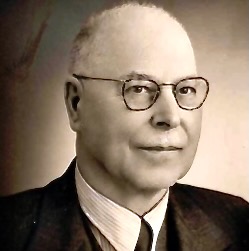
I did not meet Friedrich Hayek in a classroom. I met him on Nigerian roads, in crowded motor parks, and in the half-whispered conversations people have when policy decisions land on their lives like weather. Long before I read The Use of Knowledge in Society, I had already watched the lesson play out: The most important knowledge in a country is not stored in a capital city but rather in the daily judgments of millions of people trying to get through the day without drama.
In my early professional years, I traveled widely across Nigeria. I moved through states where the dominant language changed, where faith traditions differed, where customs were unfamiliar, and where local economies ran on their own rhythms. Yet I kept seeing the same thing. People adapted faster than officials. They responded to signals in real time. They knew what was scarce before any announcement came. They could tell when transport costs were about to rise by watching what drivers were quietly doing, how much time vehicles were spending in queues, and how quickly spare parts were disappearing from shops. They understood their own world with a precision no distant office could reproduce.
This is the kind of knowledge Hayek meant. Not academic knowledge, not the kind you can capture in a report, but practical knowledge. The knowledge of particular places, particular constraints, and particular people. The knowledge of the mechanic who knows which part has become rare this month. The knowledge of the trader who knows which supplier is struggling this week. The knowledge of the driver who knows which route has become unsafe today. It is scattered, and it is constantly changing.
The trouble begins when government behaves as though that scattered knowledge can be replaced by a few decisions made from the top. That impulse is not unique to Nigeria, and it is not uniquely African. But in African states where institutions are already strained, the habit becomes especially costly. When officials try to manage complex realities through fixed numbers, strict controls, and sweeping directives, they silence the signals that help people coordinate. They trade adaptation for compliance. They trade information for authority.
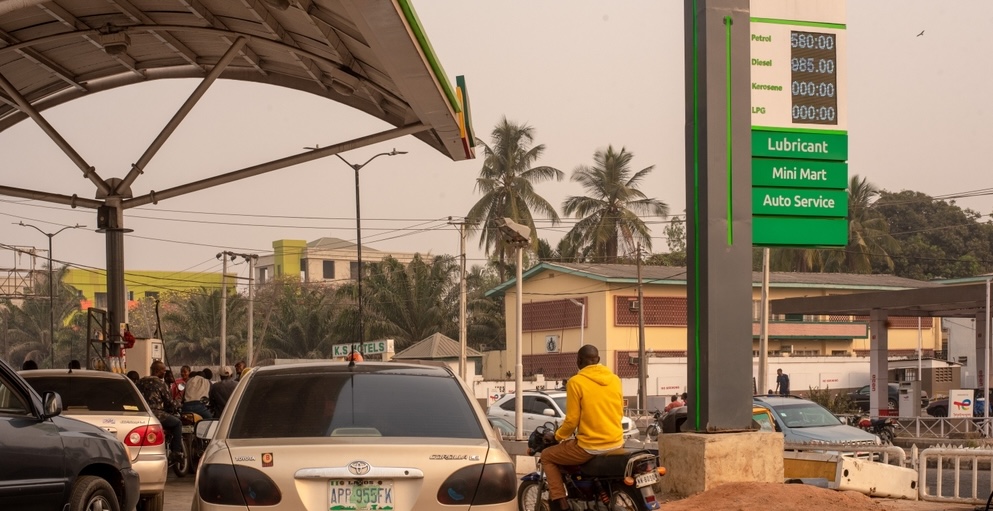
Nigeria’s long fuel saga is one of the clearest illustrations of this mistake, even if it is not the only one. For years, the national conversation about petrol was carried out as though it were a morality play: Good leaders keep prices low, bad leaders let prices rise. But the reality never behaved like a slogan. Cheap fuel on paper did not mean easy fuel in real life. Many Nigerians remember the queues, the days when a full tank became a project, the nights spent waiting in line, the sudden transport fare spikes, the way small businesses went silent when generators could not run. We lived under a contradiction: a country blessed with crude oil, yet anxious about petrol.
The policy logic that sustained this contradiction was always presented as relief. Fix the price, subsidize the difference, protect ordinary people from hardship. It sounded compassionate. It was also, over time, a machine that produced scarcity, rent-seeking, and distrust.
The deeper problem was not simply corruption, even though corruption flourished. The deeper problem was that fixed prices interfere with the language of scarcity. In a functioning market, prices carry information. When supply tightens, prices rise. That rise is not a punishment in itself. It is a signal that prompts adjustment. People economize, producers expand, alternatives emerge, and entrepreneurs move to meet demand. The system is imperfect, but the information travels quickly.
When the state fixes a price and insists it will remain low regardless of currency shifts, global conditions, or supply constraints, it blocks the signal. Consumption continues as if nothing has changed. Suppliers cannot plan honestly. The difference between official price and real cost becomes a prize to capture. Smuggling becomes rational. Paperwork becomes profit. Scarcity does not disappear; it simply shows up elsewhere—in queues, rationing, favoritism, and the quiet knowledge that the system is gamed.
Anyone who has lived through those cycles understands this without needing technical vocabulary. When price is treated as politics, the market stops being a place where information is shared and becomes a place where power is exercised. The station manager becomes a gatekeeper. The tanker driver becomes a negotiator. The ordinary citizen becomes a petitioner. The moral cost is not only the wasted money: It is the way such systems teach people to distrust each other.
That is where Hayek’s insight stops being a clever idea and becomes a civic warning. A society cannot coordinate on the basis of trust if the state continually disrupts the signals people use to plan their lives. If government treats citizens as passive recipients of policy decisions rather than active participants in an economy of knowledge, it will create a population that behaves defensively. People hoard. People speculate. People search for connections. People move fast because waiting is punished.
I saw this defensive posture in small ways during my travels. A trader who raises prices early because replacement cost is uncertain is not necessarily greedy. Often he is protecting himself from policy volatility. A driver who suddenly changes routes or adds a surcharge is not always exploiting passengers. Often he is factoring in fuel uncertainty, police harassment, or road risk. When rules are unstable, people build risk into everything. The whole society becomes more expensive, not only in money, but in mental energy.
This is why central planning is not merely inefficient; it can be dehumanizing. It assumes that the people living inside a system are less capable of responding to reality than the people designing the rules. It privileges formal knowledge over lived knowledge. It treats society as something to manage rather than something to respect.
The irony is that Africans, perhaps more than most, have developed remarkable skill in navigating complexity without central direction. Informal markets coordinate credit and supply through reputation. Transport networks adjust routes and fares in real time. Families run rotating savings systems that spread risk across relationships. Community leaders mediate disputes with practical wisdom that cannot be reduced to a handbook. This is not romanticism. It is the daily intelligence of people solving problems with the tools they have.
Yet policy often behaves as if this intelligence is a nuisance. When officials talk about the informal economy, they sometimes speak as though it is a stain on development rather than evidence of resilience. When they speak about prices, they do so as if prices are moral failures rather than information. When they speak about order, they sometimes mean control, not predictability.
A better approach begins with humility. Hayek’s point was never that government should do nothing. It was that government should recognize what it cannot know and design rules that make use of the knowledge dispersed throughout society. That means reducing discretion where possible. It means making rules simple enough for ordinary people to comply with without begging. It means building predictable institutions that allow people to plan.
It also means being honest about the difference between protecting people and controlling them. Protection is about rights and security. It is about fair courts, reliable policing, and stable rules. Control is about manipulating outcomes by force, pretending scarcity can be legislated away, and treating prices as propaganda.
When Nigeria began moving away from fuel subsidies, the pain was real. It would be dishonest to deny it. But the moral lesson is not that reform is cruel but that delaying reality is often crueler because it forces society to pay in hidden ways. People may prefer a higher price and clear availability to a low price and endless queues. They may prefer a hard truth they can plan around to a soft illusion that collapses without warning.
The question for Nigeria, and for many African countries navigating similar temptations, is whether we will build institutions that respect people’s capacity to respond to reality. Will we create rules that allow knowledge to flow through society, or will we continue to rely on directives that silence those signals and invite corruption?
I return to my travels and to the meetings I held across states and communities because they remind me of something policymakers often forget. People are not inert. They are intelligent. They are adaptive. They are constantly responding to information. The state does not have to micromanage that intelligence. It has to stop blocking it.
If liberty means anything in an African context, it is not simply the right to vote every few years. It is the ability to plan a life. It is the freedom to work, save, trade, and build without living under constant uncertainty created by distant decisions. It is the confidence that rules will be stable enough for effort to mean something.
Hayek did not give Nigeria a fuel policy. He gave us a warning about arrogance. A country that tries to run a complex society as though it were a single household will end up treating citizens like children. A country that respects the scattered knowledge of its people can build something stronger than control: a society capable of coordinating itself through trust, responsibility, and freedom.