European Union leaders are proposing new measures to deepen regional integration on the road to becoming a full-fledged federal state.
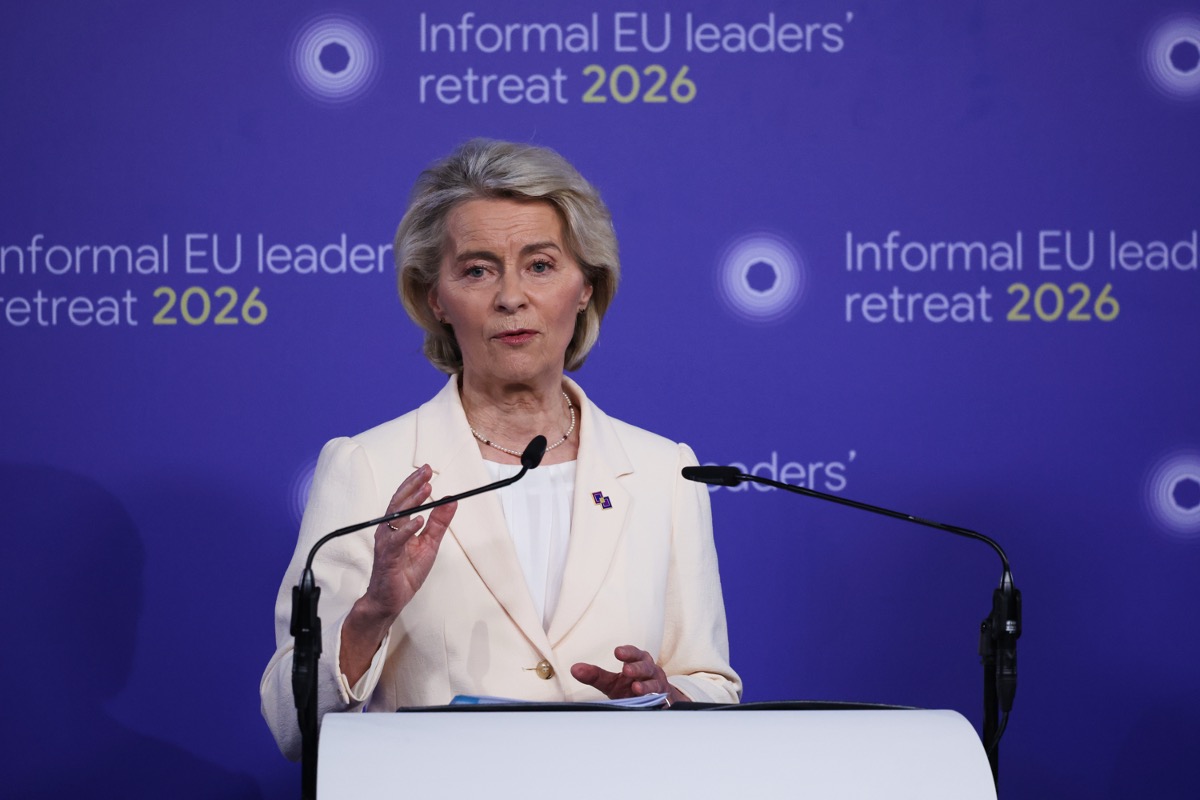
On February 11, President of the European Commission Ursula von der Leyen announced the “One Europe, One Market” initiative, which aims to impose full market integration in all economic sectors. At the EU leaders’ summit held the following day in Belgium, Eurocrats endorsed implementing this initiative by the end of 2027, and von der Leyen is expected to unveil an “EU-wide, single legal framework” on March 18.
Previous Calls for Integration
This proposal has been years in the making. For example, former Italian prime ministers Mario Draghi and Enrico Letta, at the request of the European Commission, published reports in 2024 calling for deeper EU integration.
As we reported in the October 31, 2025 “Insider Report,” Draghi, a Bilderberg Group member who also served as president of the European Central Bank, has called for “a new pragmatic federalism” — consistent with his previous calls for a full-fledged federal European superstate — that would require EU member nations to give up their veto power.
Meanwhile, Letta is advocating for the EU to pass the “One Market Act,” which would implement von der Leyen’s “One Europe, One Market” proposal. In an op-ed published in Politico on February 26, Letta argued:
In a world reshaped by Trump and by the accelerating logic of geopolitical competition, Europe needs an answer that is both realistic and ambitious. The strongest response the EU can offer is to complete the single market….
In the areas that matter most, we still do not have one market. We have the sum of 27 national markets.
This fragmentation is not a technical flaw. It is a political and strategic weakness….
This is why we need a bold political commitment to strengthen and complete the single market. We need an agreement that creates a fast track for the steps required to complete it, endorsed by the presidents of the EU institutions. It should have a name that matches its ambition: the One Market Act.
In 1992, Europe moved from a common market to a single market. Now we need the next step: one market.
Multiple EU member states openly support Draghi’s and Letta’s proposals, As we reported in the February 6 “Insider Report,” European national leaders are working on their own initiatives to promote and implement the same goals. Meanwhile, the European Central Bank is proposing the creation of a “digital euro,” which Eurocrats are framing as a way to ensure financial stability and reduce reliance on the United States. Euronews reports:
Europe is pursuing a two-track strategy: a public initiative, the digital euro, a central bank digital currency issued by the European Central Bank (ECB), and a private initiative, account-to-account payment networks such as Wero, supported by major European banks.
The ECB plans to issue digital cash that is a direct claim on the central bank, rather than on a commercial bank. It will not fluctuate like Bitcoin, will not be processed through the US like a debit card, and will be legal tender, unlike stablecoins.
The Eurosystem will invite European payment service providers to express interest in 2026 for participation in a digital euro pilot scheduled for the second half of 2027. This initiative follows the European Central Bank Governing Council’s decision to move the project forward, with the final decision on issuing a digital euro pending adoption of relevant EU legislation. The 12-month pilot will assess technical and operational readiness through controlled transactions that mirror the design but will not have legal tender status.
All Part of the Plan
None of these developments should surprise us. The EU — originally established in 1952 as an economic union called the European Coal and Steel Community — was intended from the start to eventually become a full-fledged federal state. Furthermore, as a regional union, the EU serves as a steppingstone toward a one-world government.
These developments in the EU demonstrate the need for Americans to educate their fellow citizens about the dangers of regional unions and prevent a similar regional bloc from being imposed over North America.
This article is part of The New American’s weekly online newsletter Insider Report, which is emailed to TNA subscribers each week. Click here to subscribe to The New American to receive the Insider Report and access exclusive content.


![Hegseth Demands Fitness Requirements, Says 'Fat Troops' 'Not Who We Are' [WATCH]](https://teamredvictory.com/wp-content/uploads/2025/09/Hegseth-Demands-Fitness-Requirements-Says-Fat-Troops-Not-Who-We-350x250.jpg)