Modern arguments about wealth and inequality often presuppose that Scripture offers little guidance beyond a general call to generosity, after which technocrats may improvise distribution schemes according to political fashion. Consequently, biblical economics becomes a set of pious slogans rather than a coherent moral vision. This assumption collapses once the Sabbath and Jubilee laws of Israel receive sustained attention, since these institutions reveal a covenantal framework that ordered property, restrained power, and preserved liberty across generations. The result appears less sentimental than modern welfare theories and more demanding of moral responsibility, which likely explains its absence from contemporary policy debates.
At the center of Israel’s economic life stood private property understood as a gift held under covenantal obligation. The land belonged ultimately to the Lord, yet families possessed real and inheritable claims within that divine ownership. Leviticus presents the principle with striking clarity: “The land shall not be sold in perpetuity, for the land is mine; for you are strangers and sojourners with me” (Lev. 25:23). Therefore property functioned as stewardship rather than arbitrary possession, anchoring economic life in responsibility rather than accumulation alone. Carlos Ripoll, author of Judaism and Human Rights, notes that
for the sages all of creation is as sacred as are things dedicated to heaven, for creation belongs to the creator. A man must, therefore, before enjoying those things which are permitted him for his sustenance and pleasure, pronounce a berakhah (blessing) over them to acknowledge that all things belong to God and are used only by His permission. This concept is further developed by Philo. More than any other Jewish philosopher, he voiced the view that creation belongs to the Creator and that whatever dominion man enjoys over creation is limited and dependent upon the will of God.
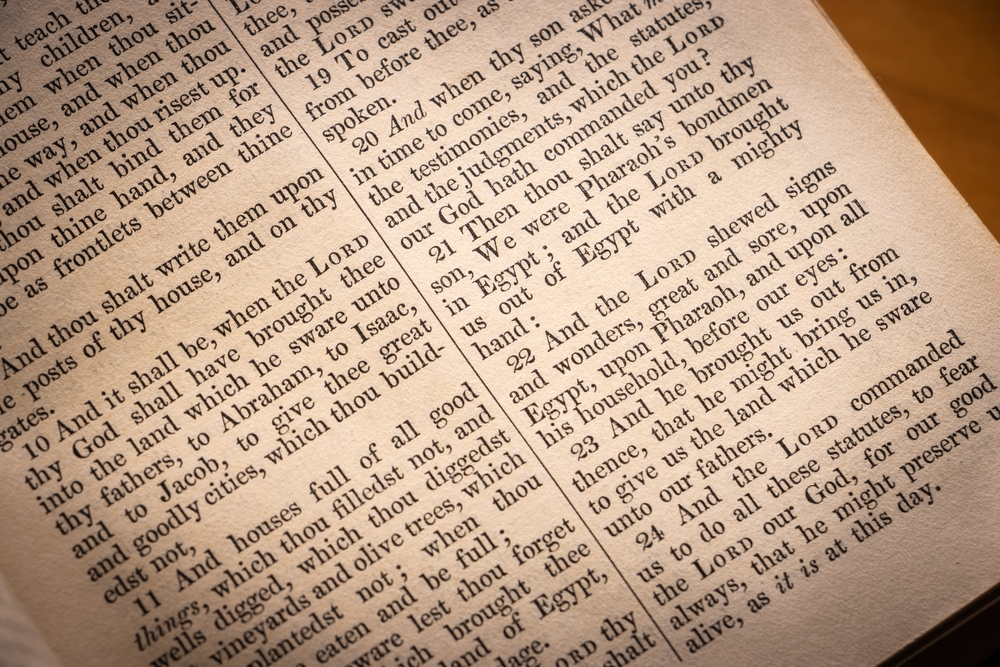
The Sabbath principle structured this system from the ground up. Every seventh day interrupted production, reminding Israel that economic life did not exhaust human purpose. Exodus grounds this rhythm in liberation rather than sentiment: “Remember that you were a slave in the land of Egypt, and the Lord your God brought you out from there with a mighty hand” (Deut. 5:15). Consequently, rest became an economic limit imposed upon ambition, productivity, and coercion. Markets operated within boundaries that honored human dignity, since endless extraction contradicted the covenantal memory of deliverance. R.J. Rushdoony reminds us in The Institutes of Biblical Law (Vol 2: Law and Society) that Sabbath rest extended even to servants and animals, thereby embedding moral restraint into daily economic practice, not as a restraint on life but as a call to a valid way of life.
Beyond the weekly Sabbath stood the sabbatical year, which further clarified the moral logic of biblical property. Every seventh year, debts received release and fields lay fallow. Deuteronomy describes this reset without bureaucratic hedging: “Every creditor shall release what he has lent to his neighbor” (Deut. 15:2). Therefore, long-term debt servitude found no permanent foothold within Israel’s economy. This structure preserved credit markets while denying them absolutism, ensuring that finance served households rather than devouring them. Elliot N. Dorff emphasizes that the sabbatical year prevented generational impoverishment without dissolving personal responsibility, since loans remained binding for defined periods and required prudent judgment from both lender and borrower. The sabbatical year also allowed the poor to have first rights of sabbatical fruits as befitted their needs.
The Jubilee intensified this pattern through a once-in-a-generation restoration of ancestral lands. Leviticus frames the event as a proclamation of liberty rather than redistribution: “You shall proclaim liberty throughout the land to all its inhabitants” (Lev. 25:10). Land returned to original families, slaves regained freedom, and economic fractures received healing through restoration rather than confiscation. Therefore, inequality encountered limits without erasing ownership. Kohler, Weiss, and Schwarzchild in Judaism and Modern Western Philosophy argue that Jubilee law shaped Western legal thought by introducing the idea that law must restrain economic domination in order to preserve freedom, a theme later echoed in constitutional traditions.
Modern welfare states invert this biblical logic in subtle yet decisive ways. Rather than protecting property while limiting its abuse, contemporary systems centralize control through taxation and redistribution managed by distant authorities. Consequently, assistance detaches from covenantal relationships and local accountability, transforming aid into entitlement administered through impersonal structures. The biblical model addressed poverty through structural resets tied to land and labor, whereas modern approaches often address symptoms through perpetual transfer payments. Therefore, dependence expands while dignity contracts even as budgets swell.
Yet Scripture repeatedly frames care for the poor as a matter of access rather than control. Gleaning laws illustrate this approach with quiet precision. Leviticus commands landowners to leave portions of harvest accessible: “You shall leave them for the poor and for the sojourner” (Lev. 19:10). Therefore, the poor engaged directly in productive labor rather than passive receipt. This arrangement preserved agency while cultivating gratitude and restraint on both sides of the exchange. Landowners exercised generosity through obedience, while the poor retained participation in the economic order rather than exclusion from it.
Furthermore, the biblical vision limits state authority by dispersing economic power across families and tribes. Israel possessed judges and kings, yet Scripture consistently warned against centralized accumulation. Samuel’s warning about monarchy reads like an early public finance critique: “He will take the best of your fields and vineyards and olive orchards and give them to his servants” (1 Sam. 8:14). Therefore Scripture anticipated the danger of political extraction long before modern economists formalized the concept. The covenantal system placed economic resilience in distributed ownership rather than administrative expertise.
The moral psychology underlying these laws deserves careful attention. Sabbath economics trained desire through restraint, shaping habits over time rather than issuing abstract ideals. People learned contentment through limits, generosity through obligation, and trust through periodic surrender of control. Deuteronomy captures this formation succinctly: “The Lord your God may bless you in all the work of your hands” (Deut. 15:10). Blessing followed obedience, yet obedience required faith that release would yield provision. Therefore, markets functioned within a moral ecology sustained by trust in divine order rather than confidence in human management.
Modern debates often frame biblical economics as unrealistic, overlooking the historical durability of these institutions. Israel’s system endured centuries and influenced legal traditions far beyond its borders. In essence, sabbatical concepts shaped medieval canon law and early common law protections for debtors, embedding moral limits into legal structures. Consequently, the biblical model demonstrated adaptability rather than fragility, offering a framework capable of restraining both greed and despair.
Critics frequently claim that Jubilee abolishes markets, although the text presents the opposite reality. Prices adjusted according to proximity to Jubilee, as Leviticus instructs: “According to the number of years after the jubilee you shall buy from your neighbor” (Lev. 25:15). Therefore markets accounted for future resets through rational calculation. This mechanism preserved exchange while preventing permanent alienation of productive assets. Daniel Finn in Christian Economic Ethics points out that such pricing mechanisms reveal sophisticated economic reasoning grounded in moral commitments rather than ideological abstraction.
The covenantal economy therefore integrated theology, law, and market exchange into a coherent whole. Property existed, inequality emerged, and poverty appeared, yet each faced boundaries enforced through time-bound resets rather than perpetual intervention. The poor gained access to land, labor, and release, while the wealthy faced constraints that preserved community rather than resentment. Psalmic wisdom summarizes the outcome: “The earth is the Lord’s and the fullness thereof” (Ps. 24:1). Ownership remained real, yet sovereignty remained divine.
In conclusion, the Sabbath and Jubilee laws reveal an economic vision that modern debates frequently overlook. Scripture offers neither laissez faire indifference nor bureaucratic control, instead presenting a covenantal order where property anchors liberty, resets prevent domination, and moral formation sustains markets. Therefore, biblical property rights serve the poor through access, restoration, and dignity rather than perpetual dependence. Recovering this forgotten covenant may unsettle contemporary assumptions, yet it offers a moral logic capable of sustaining human flourishing across generations.