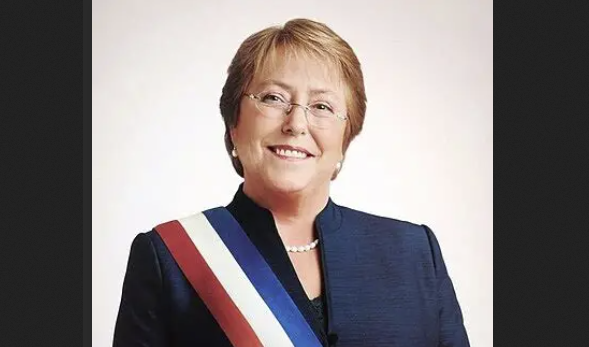
The push to make former Chilean president Michelle Bachelet the next Secretary-General of the United Nations should set off alarms everywhere. This is not a routine nomination. This is a test. Does the U.N. want a leader who respects the limits of the institution and the sovereignty of member states? Or does it want another ideologue who treats abortion advocacy as a moral imperative and national resistance as an obstacle to crush?
Bachelet’s extremist pro-abortion record leaves no room for confusion. She has spent years using positions of authority to advance abortion, weaken protections for unborn children, and dress it all up in the language of human rights. It’s why she is the darling of International Planned Parenthood and every other fringe pro-abortion profiteer. That alone should disqualify her. The Secretary-General of the United Nations should not be a global lobbyist for abortion.
As U.N. High Commissioner for Human Rights, Bachelet reacted to Dobbs with the kind of ideological certainty pro-lifers have come to expect from the U.N. The United States Supreme Court returned abortion policy to the people and their elected representatives. Bachelet denounced that act of democratic self-government as a blow to “human rights.” The charge was false then, and it remains false now, because no international treaty creates a right to abortion.
Click Like if you are pro-life to like the LifeNews Facebook page!
But that is precisely how Bachelet operates. She takes a political demand, wraps it in the prestige of human rights language, and presents it as settled law. From one of the most powerful human rights offices in the world, she pushed the fiction that abortion is a protected international right, as though relentless repetition could turn ideology into legal truth.
And that points to the larger problem. Bachelet did not simply express a personal view. She used public office to apply pressure, not to foster honest debate. She recast abortion as a human right, smeared pro-life laws as abusive, and used the authority of the U.N. to stigmatize nations that protect unborn children while applauding those that permit their destruction.
Bachelet’s tenure at the Office of the United Nations High Commissioner for Human Rights (OHCHR) made that painfully clear.
Under her leadership, the office promoted the now-familiar abortion script: restrictive abortion laws are said to threaten rights, limits on abortion are treated as cruelty, and resistance from sovereign states is cast as backwardness. This is how the game works at the U.N. Activists fail to win a global legal consensus, so they try to manufacture one through bureaucratic repetition, institutional pressure, and shameless moral inversion.
Then there is the time she headed the United Nations Entity for Gender Equality and the Empowerment of Women. Bachelet was its first Executive Director, and she used that platform the same way. She treated so-called “reproductive rights” as central to women’s equality. Everyone at the U.N. knows what that language is used to mean. It is the polished euphemism that keeps abortion advocacy moving through resolutions, reports, and agencies while diplomats are told not to notice what is happening in plain sight.
Her record as president of Chile tells the same story. She worked to dismantle Chile’s protection for unborn children and made abortion legalization one of her major political projects.
So let us dispense with the pretense that she would arrive at the Secretary-General’s office as some neutral manager. She has a record. She has priorities. And she has spent years showing the world exactly what she would do with power.
That is why her candidacy is so dangerous. A Secretary-General does not need formal authority to do great damage. The office has agenda-setting power. Staffing power. Messaging power. Bureaucratic power. A pro-abortion Secretary-General can tilt the whole culture of the institution further against unborn children and against nations that refuse to bow to abortion ideology.
That is the real threat. Not just more bad rhetoric, but more coordinated pressure on countries to abandon their laws, their convictions, and their duty to protect life.
The sovereignty issue matters just as much. Nations do not join the United Nations to have unelected officials invent new “rights” and then weaponize them against democratic self-government. Yet that is exactly what the abortion movement has tried to do for years, and Bachelet has been one of its most reliable instruments. Her elevation would send a blunt message: the U.N. intends to keep pushing abortion politics from above, no matter how many member states reject it.
The absurdity of this nomination becomes even harder to ignore when one considers Bachelet’s broader human rights record. On abortion, she is bold. On actual tyrants, not so much. She showed far less courage when dealing with China than when condemning pro-life laws. That contrast tells you plenty. The unborn child is an easy target in the corridors of global power. Communist regimes are not. Bachelet’s record reflects that moral imbalance with disturbing clarity.
So no, this is not just another diplomatic contest. It is a fight over whether the U.N. will deepen its role as an engine of abortion ideology. It is a fight over whether sovereignty still means anything when powerful officials decide that unborn children have no claim to protection. It is a fight over whether the most vulnerable members of the human family will be erased with bureaucratic indifference and moral swagger.
Michelle Bachelet should not be the Secretary-General. Her record is hostile to unborn life, hostile to pro-life law, and hostile to the sovereign right of nations to reject abortion demands. The United States should oppose her candidacy without hesitation and, if necessary, use its veto.
The world does not need another U.N. chief who treats abortion as progress and sovereignty as a nuisance. It certainly does not need one with Bachelet’s record.
LifeNews.com Note: Raimundo Rojas is the director of Outreach Director for the National Right to Life Committee. He is a former president of Florida Right to Life and has presented the pro-life message to millions in Spanish-language media outlets. He represents NRLC at the United Nations as an NGO. Rojas was born in Santiago de las Vegas, Havana, Cuba and he and his family escaped to the United States in 1968.