As we mark our head, lips, and heart with the Sign of the Cross when the Gospel is solemnly proclaimed at Mass, we signal, by that prayer made with hands, the desire that the living Word of God will touch and convert mind and heart, that we may become those who proclaim the saving message we have heard.
It is an acknowledgement that, particularly in that most serene of liturgical settings, the Gospel is not some dry and dusty volume from ages past, but the voice of the Lord, with His word, as Scripture tells us, “alive and active,” with the power of the “double-edged sword,” to penetrate the very core of our being.
No matter how many times we have heard or read a particular passage of the Gospel, it is always new, with a message for us, if we have the ears to hear. Despite the greatest exegesis, the wisdom of the Fathers, and preachers, including some, as we know, who can always find a new application for a passage to guard and guide us, there is still an unfathomable mystery when we hear the words of the incarnate God.
One of the saints described the Scripture as a fountain that never dries up. That, in itself, should inspire awe. As with the Eucharist, and the mystery of the transformation of bread and wine into the Body and Blood, Soul and Divinity of Christ, the most profound response to the Gospel is worship and adoration. As we kneel physically before the Lord in His sacramental presence, so we kneel, metaphorically, as we hear His word.
Our Eastern brethren, in naming the Eucharist the Divine Mysteries remind us, who lean on the rational mind of the West – so clear, concise, and categorised – of the word “mystery.” This is not hidden esoteric knowledge, imparted to the chosen few, but the reality of Who is speaking when the Word is announced. And that there is, after all our intellectual efforts, much more that we do not know, and never will.
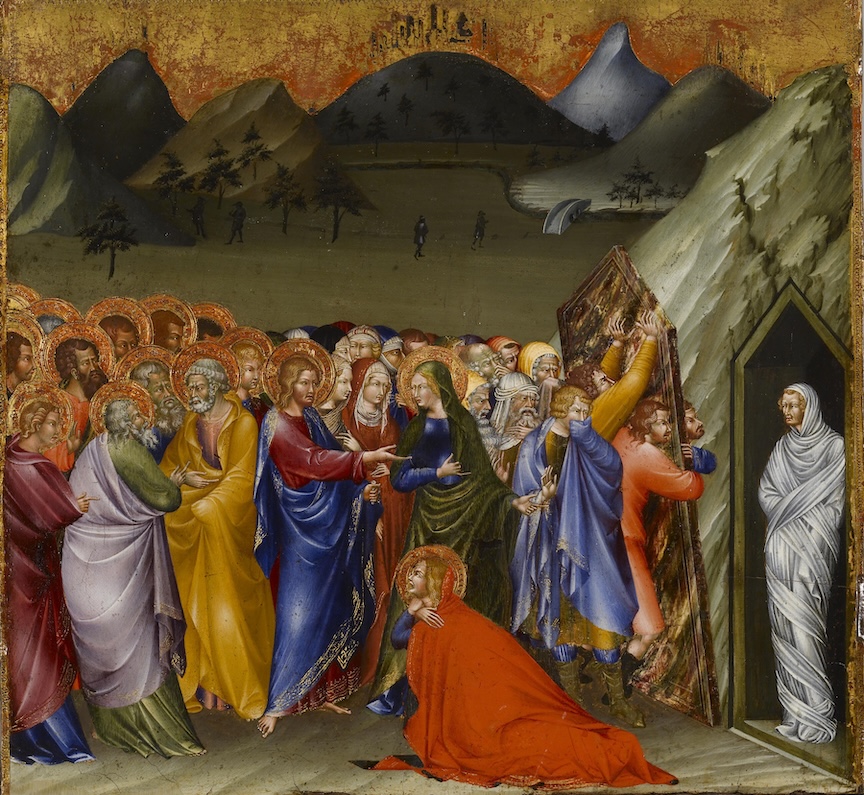
The Gospel chosen for the Fifth Sunday of Lent, the raising of Lazarus, is a perfect example of this awesome mystery that we are privileged to hear and read. Let us approach it with the bare feet of the Copts as they enter the sanctuary, as Moses approached the Burning Bush, trembling before the divine.
Jesus, we are told, “loved” Martha and Mary and Lazarus. Along with St. John the Beloved Disciple, we hear of one other that He “loved” in the Gospel – the Rich Young Man. This human love, so deep He weeps at the human death of His friend, encapsulates the very mystery we described earlier.
He will perform a miracle, but not for the purpose of display, or even to convert those who witness it. This miracle, and the Gospel account, is chosen for this Sunday for a reason, expounded by the Preface of Holy Week.
We are approaching, the Preface says, the “days of His saving Passion and glorious Resurrection.” This is the time, the Preface continues, when the “pride of the ancient foe is vanquished and the mystery of our redemption in Christ is celebrated.” This mystery, the Triduum, which occurs at every Mass, from the smallest hut in the mission fields to the greatest basilica, is why we hear this story of the raising of the one Jesus loved.
There was a time, the Book of Genesis tells us, when the unity and intimacy between God and man, the “original blessing,” was expressed by the image of God walking in the Garden in “the cool of the evening.”
Humanity – Adam and Eve, clothed with light, is tempted by the ancient foe with the original lie – “you will not die.” From that moment until this very day, those who believe the lie and ignore the truth, eat of that fruit, concoct bizarre fantasies to escape reality – from space travel to freezing their brains – and still die.
The ancient foe tarnishes the clothing of light and creates the nakedness of the dark. This nakedness is the fate of Lazarus, the fate of all humanity, no longer in the Garden of peace.
“If you had been here,” Martha says to Jesus, “my brother would not have died.” There is only One who can counter the lie, repair the disunity, restore the light.
“I am the Resurrection and the Life.” No definition, however necessary, no Creed, however true, can surpass the word of truth from the One who is Truth. Jesus, conqueror and King, vanquishes, defeats, subjugates, and destroys the lie of the ancient foe.
Lazarus, who “by now will smell,” the effect of the lie, is summoned from the tomb, with a stone removed, as another stone will be removed, in the approaching days, but on that day not by human hands.
They are commanded to unbind him. Without Christ, without the approaching days commemorated each year, but truly experienced in mysterious form at every liturgy, all of humanity would still be bound, and suffering the smell of death.
All of Lent leads towards the renewal of baptismal vows on Easter Day. The threefold means of achieving clarity – prayer, fasting, and almsgiving – must ready us to say, with utter conviction and fervour, along with Martha and Mary, “I believe that you are the Christ.”
The devil, the ancient foe, vanquished on the Tree of Life, which is the Cross, is renounced. All that has bound us is removed.
It is in order to be restored, unbound, and brought back to life that everything – from the Annunciation to the Ascension and Pentecost – was decreed necessary by the Creator who so loved the world.
We hear, as we can believe Lazarus heard in that moment of unbinding, the ancient Christian hymn sung even in the time of St. Paul (Ephesians 5:14): “Awake, O sleeper and rise from the dead, and Christ will shine on you.”