The feast day of the newest Doctor of the Church, John Henry Newman, is not his dies natalis (death) but 9th October, the day of his conversion in 1845. That date was definitive for the shape of the Catholic Church in England. So much good for the Catholic Church followed.
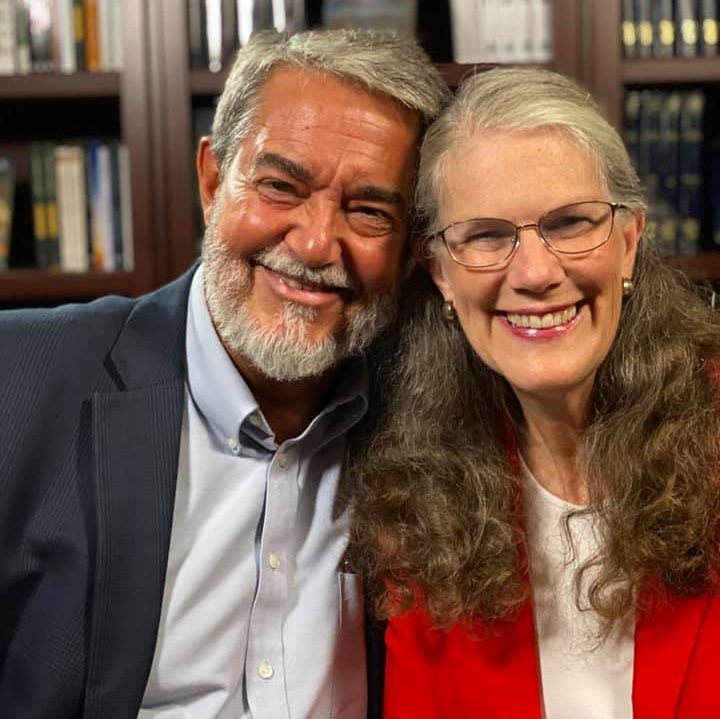
On March 29, 1986, Scott Hahn was received into the Catholic Church at the Easter Vigil. So much good for the Catholic Church followed.
Praising and thanking God in Steubenville on this fortieth anniversary, some three dozen of Dr. Hahn’s family, friends, colleagues and collaborators are gathering in retreat to celebrate the occasion. I consider it a great honor to be serving as chaplain. But preaching to Scott Hahn brings a measure of nervousness!
It’s also the twenty-fifth anniversary of the reception into the Catholic Church of John Bergsma, one of Hahn’s principal colleagues at the St. Paul Center for Biblical Theology, which is also marking its twenty-fifth anniversary. Preaching to Bergsma runs the risk of bringing coals to Newcastle, as I have for years relied upon his four-volume commentary on the Sunday lectionary in my own homiletic preparation.
Hahn, Bergsma, the St. Paul Center – much indeed for which to praise God!
Hahn would be embarrassed by the comparison to St. John Henry. The two are not in the same ballpark as theologians. But in terms of impact on ordinary Catholic life? Hahn, Bergsma, and other Protestant pastors – now Catholic – have taught millions of Catholics to know the Word of God better, and thus to love it more. Add to that list Jeff Cavins of the Great Adventure Bible and the massively influential Bible-in-a-Year podcast.
Twenty-five years ago, I graduated with my STB from the Gregorian in Rome, and had come to loathe the Scriptures. Not exactly. I loathed my Scripture classes, which sucked both spirit and life out of the Bible. Our Johannine course included excruciating weeks of dissecting John 2 into ever more minute fragments, so much so that it was years after ordination before I got over my aversion to preaching on the wedding at Cana. Our professor never mentioned that Augustine had written on John.
The period of emaciated Scripture study is over. The leading figure in restoring the Bible to the entire Church as the “sacred page” and “soul of theology” – Vatican II’s language – is certainly Joseph Ratzinger. But the St. Paul Center in Steubenville, founded in 2001 to multiply Hahn’s Biblical approach, has played a key role. The books it publishes – both scholarly and popular – and the retreats it runs – especially for priests – have transformed the Catholic Biblical landscape.
I grew to truly know the Scriptures – and love them – only after my theological studies were no longer impeding me. Three converts were key: the sermons of Newman and Msgr. Ronald Knox (still my favorite) and Frank Sheed’s To Know Christ Jesus. (Sheed was a quasi-convert, baptized Catholic but raised Protestant.)
Hahn and his happy band of former Protestants were teaching Catholics how to read and understand the Bible – and that it was the book of the Church. The Ignatius Catholic Study Bible volumes were perfect for parish Bible studies. And A Father Who Keeps His Promises is the best introduction to Hahn’s covenantal theology.
There was a time when I led pilgrimages to the Holy Land regularly, and Hahn’s book was the required advance reading. There was a graphic of successive covenants, which I insisted pilgrims memorize, from the original couple (Adam and Eve), to the family (Noah), the tribe (Abraham), the nation (Moses), the kingdom (David), and the Church (Jesus). Hahn accompanied us along the paths of salvation.
Throughout the English-speaking world, I doubt there is a parish where some of the key lay leaders have not read Rome Sweet Home, his conversion account written jointly with his wife Kimberly, or The Lamb’s Supper, on the Biblical character of the Mass. Hahn’s popular works, littered aplenty with painful puns (!), show him the rare scholar who has mastered his subject to the extent that he can explain it outside the guild.
For more learned readers, there is Covenant and Communion, one of the best introductions to Ratzinger’s theology; Hahn’s volume in the Yale Anchor Bible Series (Kinship by Covenant); as well the Catholic Commentary on Sacred Scripture (Romans). His wholly Catholic approach is evident in The Kingdom of God as Liturgical Empire: A Theological Commentary on 1-2 Chronicles.
Kimberly described March 29, 1986, as the worst day of her life. The faithful Christian woman who married a Presbyterian pastor had to endure him becoming Catholic – which he did not do without her (tearful) consent. Four years later, Kimberly converted, and has been a stalwart colleague in her own right at the St. Paul Center, an institutional powerhouse of Biblical literacy and devotion across America and abroad.
The English-speaking Catholic world has been shaped to a large degree by converts. In addition to Newman and Knox, the great Cardinal Henry Manning was archbishop of Westminster in the late 19th-century. In the century after came Chesterton and Belloc, and Greene and Waugh.
In my own life, two convert priests were decisive. Father Richard John Neuhaus, a treasured mentor who preached at my first Mass, and Father Paul Pearson, who preached at adoration the evening before my ordination. He had taught me philosophy at St. Philip’s Seminary in Toronto. Father Pearson later wrote three volumes entitled Spiritual Direction from Dante (entitling him to special mention at The Catholic Thing).
Pope Leo XIV just chose a Norwegian-by-way-of-Cambridge convert to preach his first Lenten retreat as pope: Bishop Erik Varden. When Archbishop Fulton Sheen is beatified in September, he might be considered the patron saint of English-speaking converts, given the sheer number he instructed, as well as influenced.
That Professor Hahn achieved what he has as a layman is another fruit of Vatican II, uniting the mandate to return to the sacred page with the baptismal mission to evangelize. To him a Biblical blessing: May his tribe increase!