Around the corner from my old office in the Apostolic Palace is the Torre dei Venti, a sixteenth-century tower housing the sundial Pope Gregory XIII used to correct the Julian calendar. Aided by a team of brilliant Jesuits, Gregory tracked the movement of sunlight across the floor to ascertain the precise timing of the vernal and autumnal equinoxes. This led to the removal of ten days from the month of October in 1582. With very few exceptions (Iran being one of them), the “Gregorian calendar” has been the standard mode of computing the annual cycle ever since.
Few people know that the Vatican continues to collect astronomical data assiduously for the international scientific community. Its primary instrument is the Vatican Advanced Technology Telescope (VATT) located in southeast Arizona, which observes light in the optical and infrared ranges. Among the notable discoveries made by VATT are astronomical bodies in our neighboring Andromeda Galaxy called Massive Compact Halo Objects (MACHOs), which may help explain the presence of the mysterious and controversial “dark matter” that keeps our galaxy together – “dark” because it does not emit, absorb, or reflect light, and is thus invisible to telescopes.
A public-school product of the 1970s, I had neither heard of Gregory XIII nor known of the Vatican Observatory’s existence. My fourth-grade teacher taught me that Columbus set sail to prove Catholic monarchs wrong for believing the world was flat and that Galileo was locked up for thinking the sun was at the center of the universe. The former is patently false, and the latter is a gross simplification.

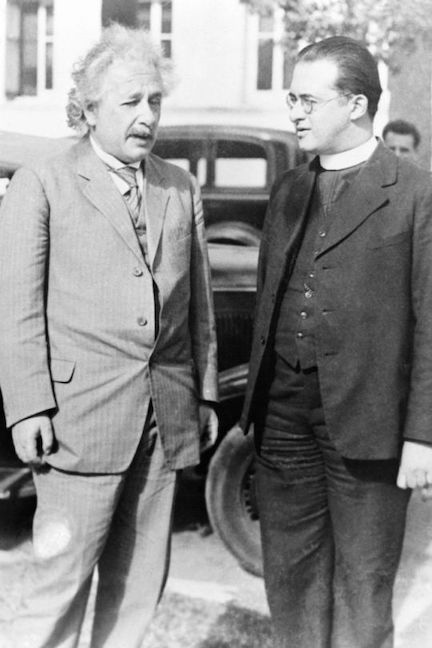
Georges Lemaître, the twentieth-century priest and astronomer, was also entirely unknown to me until I took an astronomy class in college. It was Fr. Lemaître who first hypothesized that the universe was formed from a single particle that exploded at a definite point in time. His theory, which eventually became known as the “Big Bang” theory, continues to emerge as the best cosmological model for explaining the expanding universe.
I’ve been obsessed with space exploration ever since watching the Apollo 17 mission unfold on television, an event I am barely old enough to remember. So, it was only with great enthusiasm that I listened to NASA recently announce plans for a permanent lunar base. The Artemis II mission is, even as this column appears, carrying a crew around the Moon. If all goes according to plan, we’ll be watching humans walk on the moon again in 2029.
In 1969, Pope Paul VI hailed the famed Apollo 11 mission for opening “a threshold to the wide expanse of boundless space and new destinies.” The saintly pontiff entrusted a handwritten copy of Psalm 8 to astronauts Armstrong, Aldrin, and Collins to be left on the Moon. There it still sits, silently proclaiming, “I will sing of your majesty above the heavens with the mouths of babes and infants.”

How easy we forget the primacy of “singing God’s majesty” in the Christian life. “Praise,” we read in the Catechism, “is the form of prayer which recognizes most immediately that God is God.” (2639) If we principally know God from His works and praise Him thereby, how much more elevated our praise should be when we recognize the grandeur of His works.
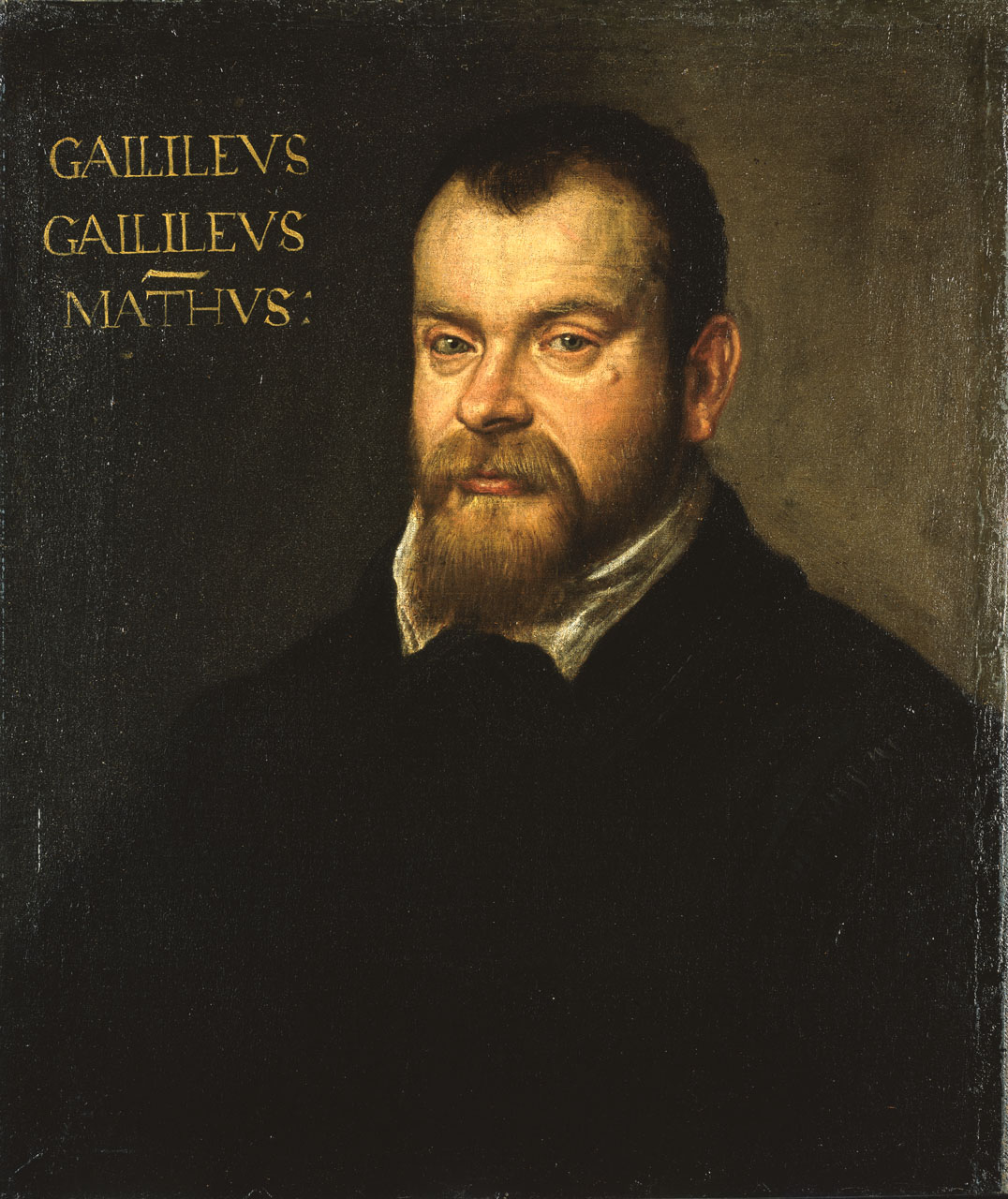
In Dante’s Paradiso, Beatrice directed the pilgrim’s gaze to the Moon to demonstrate the insufficiency of man’s sensory and intellectual powers for understanding Paradise. Three centuries later, Galileo pointed his telescope at the Moon and found it irregular and mountainous, something that deeply troubled the prevailing opinion that the Moon was perfectly smooth and reflective of the Earth’s surface. In a famous letter to the Grand Duchess of Tuscany, Galileo lamented that his detractors “seemed to forget that the increase of known truths stimulates the investigation, establishment, and growth of the arts; not their diminution or destruction.”
By “the arts,” Galileo meant everything that contributed to the betterment of mankind and his ability to express the beautiful and the good. In Galileo’s mind, the sciences were no less equipped than the arts for glorifying God. Quoting Tertullian, he wrote that “God is known first through nature, and then again, more particularly, by doctrine; by nature in his works, and by doctrine in his revealed word.”
Theologians may quibble over the subtlety of Galileo’s distinction, but we are more in need of knowing God through his works than ever. Discussions concerning technology are increasingly couched in terms of power instead of discovery. AI entrepreneur Ray Kurzweil is striving to “improve” the human body by fusing it with nanotech in order to reverse the aging process. Aiming a rocket at the Moon may once again turn our attention to discovering nature rather than mastering it – something much different than “subduing” it. (Genesis 1:28)
There’s no denying NASA wants to get back to the Moon and set up base there before anyone else does. The “Ignition” initiative is geared toward ensuring “American leadership in space.” “The clock is running in this great-power competition,” said NASA Administrator Jared Isaacman, “and success or failure will be measured in months, not years.”
Quite simply, politics will drive the Artemis program no less than it did the Apollo program in the 1960s. But the takeaway message from the latter was not ultimately “we won.” It was, rather, “May the spirit of peace in which we came be reflected in the lives of all mankind,” as the commemorative plaque left on the Moon by the Apollo 17 crew reads.
Politics did not detract from the sense of adventure and discovery surrounding the Apollo missions. Catholics are free to dismiss NASA’s current aims as a foolish waste of resources or to welcome them enthusiastically as the next chapter in the story of Gregory XIII, Fr. Lemaître, and the wonderful team of Jesuits at the Vatican Observatory. Maximus the Confessor already recognized the cosmic dimension of the Sacred Liturgy in the seventh century. Further exploring the mysteries of the cosmos can only enhance our wonder at Holy Mass.



![Hegseth Demands Fitness Requirements, Says 'Fat Troops' 'Not Who We Are' [WATCH]](https://teamredvictory.com/wp-content/uploads/2025/09/Hegseth-Demands-Fitness-Requirements-Says-Fat-Troops-Not-Who-We-350x250.jpg)