
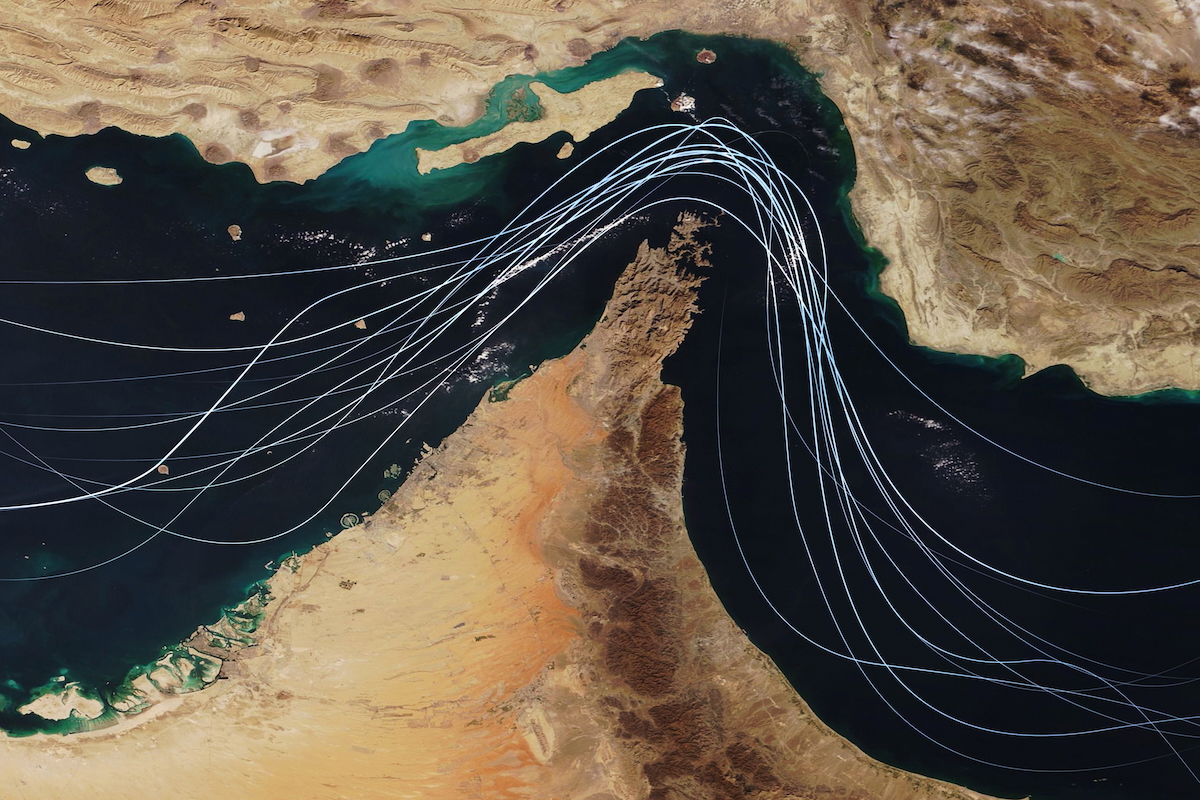
A major commercial satellite imaging company, Planet Labs, announced to its customers it is no longer openly posting imagery from Iran and nearby war zones. The company said it was acting after a U.S. government request.
The move lands as reports mount of U.S. and Israeli strikes on civilian infrastructure. That includes bridges, power facilities, educational and cultural sites, churches, and petrochemical plants — targets that may amount to war crimes under the Geneva Convention. It also comes as President Donald Trump has just gone fully unhinged and genocidal in his threats. He declared in a Tuesday Truth Social post, “A whole civilization will die tonight.” That followed an expletive-laden Easter post promising “hell” if Iran failed to reopen the Strait of Hormuz.
At the same time, estimates of how much Iran’s military capabilities have actually been degraded remain highly contested, undercutting official claims of “overwhelming” success. Meanwhile, Iranian officials and analysts describe serious damage to U.S. facilities and assets in the region, claims Washington largely denies.
Planet Labs’ decision makes the fog of unconstitutional war even darker.
The Email
The policy shift surfaced in an email to journalists and other users who depend on Planet’s images. Planet said on Saturday that, after a request from the U.S. government, it was moving to a “managed access model.”
That means imagery will no longer flow normally. It will now be released only on a “case-by-case basis,” and only for “urgent,” “mission-critical,” or “public interest” uses, as determined by the company. This policy will be in place “through the end of the conflict.”
According to the email, the government “request” concerned not just Planet, but “all satellite imagery providers.” The core of the ask is this:
Voluntarily implement an indefinite withhold of imagery in the designated Area of Interest (AOI).
The restriction applies to imagery collected starting March 9. The company had already imposed a 14-day delay on releases from the conflict zone. Now even that limited pipeline is being tightened further.
For reporters, researchers, and rights monitors, the effect is immediate. Commercial satellite imagery has become one of the few tools that can test official claims in near real time. It can show whether a bridge was hit, whether a fuel depot burned, whether a missile battery moved — and whether a government is lying. When access to that record narrows, public knowledge narrows with it. That is why Washington Post reporter Evan Hill suggested that the decision would cut access to one of the main U.S. imagery providers on which many newsrooms rely.
U.K. campaigner Sarah Wilkinson wrote that the message was plain. Images of the war, she argued, are being suppressed to “hide the truth.” Kenneth Roth, the former head of Human Rights Watch, echoed the sentiment. The demand to restrict imagery, he posted, would “make it much more difficult to monitor US-Israeli bombing there, which seems to be the point.”
What Planet Is
Planet is not a niche startup with a few cameras in orbit. It is one of the central firms in the commercial satellite industry. On its investor materials, the company says, “Our fleet of approximately 200 earth imaging satellites, the largest in history, images the whole Earth land mass daily.”
It sells that data to companies and governments alike. That matters because Planet sits at the junction of journalism, intelligence, and state power. It is a private company, but it also serves government customers and works inside the infrastructure of the U.S. national-security state. Planet uses AWS GovCloud to process and deliver Earth imagery for U.S. government customers and sensitive workloads that must meet federal compliance standards.
Therefore, when Planet says it changed access after a U.S. government request, that is not just a private-business choice. It shows how quickly a commercial data stream can bend when state power leans on it.
Why This Matters
The timing is everything. The blackout arrives in the middle of an expanding war in which imagery has become one of the core tools of verification. Satellite images have helped journalists track bomb damage, verify military claims, and document attacks, such as that on the elementary school in Minab, that might otherwise disappear into propaganda. Without that record, the public is forced to rely far more heavily on government and military accounts of their own actions.
The concern is sharper because the strikes themselves have moved beyond purely military targets, with the United States openly rejecting “stupid rules of engagement” meant to minimize destruction and casualties.
One of the most recent alarming incidents involved the area around the Bushehr nuclear plant. Satellite imagery helped confirm the strike and brought renewed warnings about the risk of a broader nuclear disaster with consequences that could last for generations.
At the same time, the broader military picture remains disputed. U.S. officials insist Iran’s missile capabilities have been badly weakened. Other reporting suggests Tehran still retains a meaningful share of its arsenal, including mobile launchers. Iran, meanwhile, says it has inflicted significant damage on U.S. diplomatic and military assets across the region. A Friday Wall Street Journal report said a March 3 drone strike on the U.S. embassy in Riyadh caused more damage than first disclosed. Later attacks reportedly hit U.S. aircraft at Prince Sultan Air Base. These reports do not prove every Iranian claim, but they do suggest the retaliation has not been insignificant.
That is where satellite imagery becomes indispensable. It can show impact sites, burn scars, damaged aircraft shelters, and disrupted infrastructure. It can clarify what happened when official accounts diverge. A “case-by-case” blackout cuts off exactly that kind of scrutiny when it is needed most.
Who Gets to See the War?
Planet’s move says something larger about the reach of state censorship. The U.S. government has long relied on pressure campaigns, media management, and narrative control across major communications channels. It has leaned on social-media platforms, shaped coverage through favored outlets, and built a long history of influence operations around wartime messaging. Now it can also pressure the companies that provide the raw visual evidence of war itself. If that evidence is delayed, filtered, or withheld, the public sees less, knows less, and challenges less.
Planet built its brand on seeing the Earth every day. Now, under government pressure, it has chosen not to let the public see one of the most consequential wars unfolding on it. In plain terms, one of the world’s leading commercial eyes in the sky has been told to blink.








![WHAT POLICY? Crockett Trips Through MS NOW Softball Question on Her Agenda if Elected to Senate [WATCH]](https://teamredvictory.com/wp-content/uploads/2025/12/WHAT-POLICY-Crockett-Trips-Through-MS-NOW-Softball-Question-on-350x250.png)