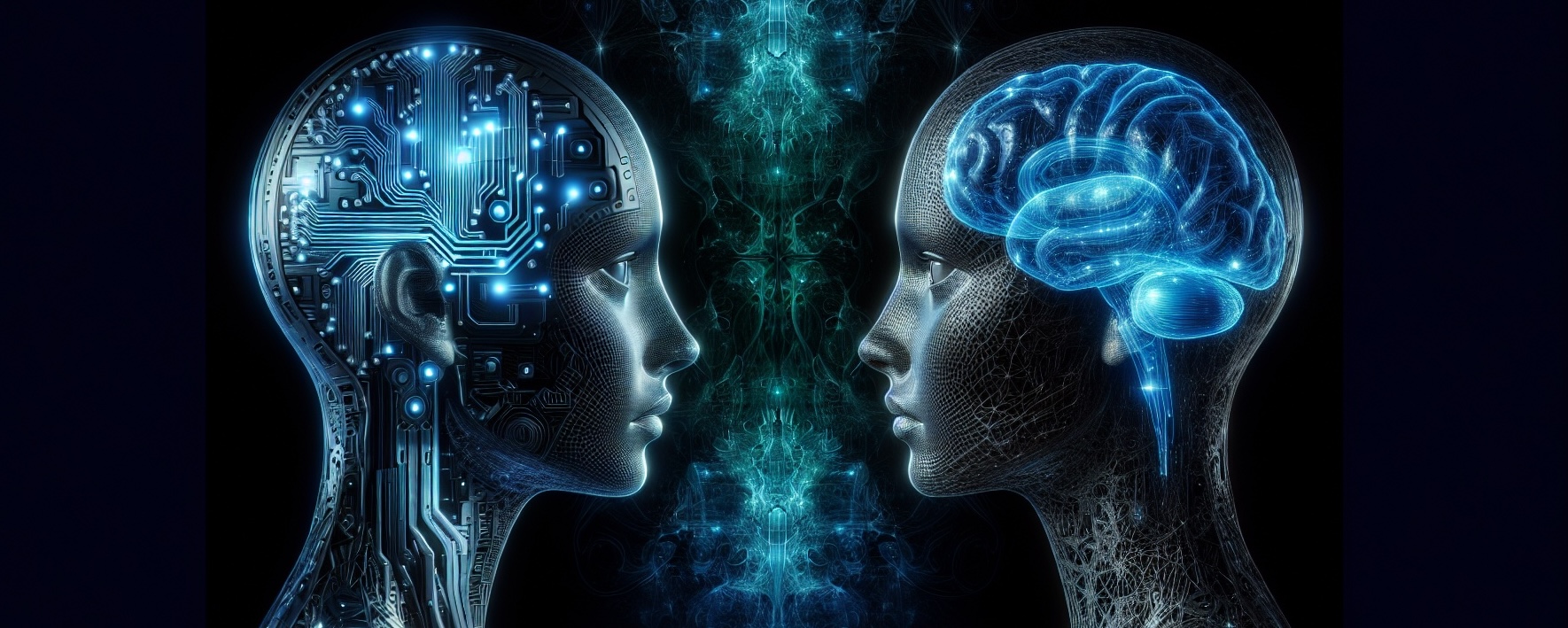
Are scientific advancements always ethically neutral? The ethics, it seems, is in the eye of the beholder. Consider this experiment—fictional rather than real—of keeping alive a head severed from its body.
In 1925, Alexander Belyaev, a sci-fi literary master of the then-new Soviet Union, published a curious novel, Professor Dowell’s Head. The premise: Professor Dowell is a prominent scientist who has pioneered a new (and secret) technique for keeping organs alive apart from the rest of the body. It all seems quite promising—until he is murdered by his highly ambitious younger research partner, Dr. Kern. But the murder in this case is not the end of life—at least not entirely.
Eager to become a great sensation in the scientific world himself, Kern uses Dowell’s own scientific inventions to keep his head alive in the lab, making the captive and disembodied head advise Kern on his ongoing research agenda. Without Dowell, Kern is simply not sufficiently brilliant to achieve the success he so desires—and he clearly realizes it himself, even as he takes all credit for his mentor’s work. And because for Dowell the greatest cause of all is the advancement of science, he is reluctantly willing to work even with his own killer for the sake of making further progress. The scheme eventually falls apart, though, when a new lab research assistant, Marie, discovers the secret of the head and Dowell tells her the truth of what really happened to him.
Twenty years later, C.S. Lewis published the concluding work of his Ransom Trilogy, That Hideous Strength. In this novel as well, a head that has been severed from a man’s body is kept alive in a secret lab. In this case, though, the head in question belongs to a highly unlikable figure—a vicious murderer who had been rightly executed for his crimes.
But this does not in any way deny or diminish this head’s significance. Those keeping it alive see it as the first fruits of a new glorious creation—a world in which heads like these can live forever, untethered to bodies and the awkward demands all human bodies impose and the unfortunate limits they have. Up next: cosmic dominion, as befits true fictional villains. All who hunger to extend and surpass the natural limits of the human body are essentially endeavoring to become the lords of time and nature. The cost of such quests, though, is always humanity itself—both that of the scientists involved in such projects and that of their unfortunate subjects.
I don’t know if C.S. Lewis was aware of Belyaev. The premise of a head without a body at the heart of both novels is certainly striking. And yet reading these two novels side by side, we must acknowledge not merely similarities but also ideological differences. The differences stem from the very different worldview from which each author operates—the material atheism of the Soviet Union for Belyaev and orthodox Christianity for Lewis.
Belyaev sees nothing wrong with the science-for-science’s-sake in the experiments of Dowell and Kern. Scientific advancement is always to be lauded in his view. Some sacrifices are required even if unfortunate. (One can see here the rationalization that would be endemic in both Lenin’s and Stalin’s regimes as they each grasped for more and more social control.) This is a theme that comes across in his other novels, even as his characters repeatedly consider the ethics of misusing truly remarkable scientific breakthroughs and inventions.
Indeed, in another of Belyaev’s works, The Amphibian Man, a scientist finds that the only way to save his gravely ill son’s life is to graft shark gills into the boy’s body. The child recovers, his life is preserved, but he becomes largely separated from human society: His shark gills require him to spend most of his time in salt water rather than on land. When we meet him in the novel as an adult, he has no friends, no connections to other people, and lives alone in the water. He is longing desperately for human relationships, but his quest is doomed.
So what is the cost of such scientific advancements? Is every method of preserving a life, such as it is, to be celebrated? Or might shark gills on humans or heads kept alive apart from their bodies be crossing some ethical line? Writing in an atheistic country that unconditionally lauded all science as progress, these are not questions that Belyaev seems to worry about. Indeed, while Belyaev condemns the viciousness of Dr. Kern in murdering Dr. Dowell, he expresses nothing but admiration for Dr. Dowell’s scientific achievements that have made possible this keeping alive of human heads severed from their bodies. Perhaps someone else will someday use this technology for good, the implication goes.
By contrast, C.S. Lewis makes his distaste for the concept of severed heads animated without bodies abundantly clear. The sight is meant to elicit horror, not interest or approval or even praise of the science that made it all possible. And so Lewis uses the bodyless head—and the vicious N.I.C.E., the organization keeping it alive—as an example of a grave wrong in modern society. This is, in fact, not merely a bodily wrong but one with cosmic repercussions—because every wrong against persons is also a wrong against their Creator. Scientific advancements that desecrate the imago Dei that each person bears amount to outright sacrilege. There is no redeeming value to such discoveries.
A little over a century since the publication of Professor Dowell’s Head, the concept of organs separated from the body is no longer science fiction. Modern technocrats find the idea of immortalizing brains particularly alluring. A decade ago, Dmitry Itskov, as one example, was dreaming of advancements that would make it possible for people to live forever by exporting their brain to a computer. Shortly after, a method was developed to do pretty much this—upload the human brain to the cloud. It has reportedly been successfully tested on rabbits (whose brain capacity is legendary, of course). The catch, though, is that this preservation of the brain can only be done through killing the person.
We’re right back to Professor Dowell and his severed head, it seems—and a direct perversion of Jesus’s teaching that “For whoever would save his life will lose it, but whoever loses his life for my sake will find it” (Matt. 16:25). Perhaps this will indeed be the form that modern-day disembodied heads will take—not as severed heads kept alive but rather as attempts to use the human brain as nothing but just another machine, a computer that can be synced to a cloud computer for accessing and downloading regardless of location. If it comes at the cost of the person’s life, so be it. Such is the path to immortality for the new self-proclaimed tech gods.
While the modern scientific imagination remains transfixed by the idea of severed, immortal organs, the part of the body for which the greatest scientific progress has been made in the direction Belyaev and Lewis imagined is not the brain but the womb. Artificial wombs are presently in development and are examples of ethically fraught reproductive technologies about which journalist and theologian Katelyn Walls Shelton would like us to ask more questions—and better ones, too. These technologies do not require killing anyone and would instead make new life possible without the inconvenience of pregnancy for living women. What could possibly be more humanity-friendly or generally equitable, proponents ask? Except the concern around artificial wombs isn’t new; it’s connected to the same ethical quandaries as those surrounding bodyless heads.
Wombs severed from bodies—or, rather, artificially engineered to begin with—feature prominently in Aldous Huxley’s dystopian novel Brave New World, published in 1932. In the opening scenes of this now-classic, readers find themselves in the middle of a school tour of the baby hatchery—the place where this futuristic society’s babies are grown in carefully curated lab conditions, in state-of-the-art artificial wombs rather than in the imperfect and scientifically less predictable bodies of human mothers. The effect is harrowing—yet for the novel’s protagonists, it has become a perfectly natural part of their world. All other dystopian elements of Huxley’s novel derive from this one—the disordered sexuality, the disregard for all persons, the eradication of marriage and families in this society, and the state-sponsored mandatory euthanasia sometime in late middle age.
Relationships require bodies, the stories in all these novels remind—too often through tragic relationship breakdowns that at times lead to deaths both physical and spiritual. The disembodied heads are not truly and fully alive, the man with the shark gills is doomed to live alone, and the babies grown in artificial wombs in a dehumanizing society feel an absence of something key without realizing what it is. Why is that? Because intellectual friendships, conversations, and true collaborations require an embodied communion of minds and souls in a way that is fully, irreplaceably human. Something special and ineffable happens in the relationship of the mother and her baby in pregnancy. And something special happens in friendships and intellectual conversations we have with others that cannot be replicated in the communion of unfeeling computers or “the cloud.”
In a fallen world and in the communion of fallen people, risks of abuse, rejection, even tragic loss are inevitable. Still, if we commit to friendships and relationships with others, we too might discover, just like Jane, the protagonist of C.S. Lewis’s That Hideous Strength, that what we would miss in mechanically engineered substitutes is delight—the delight of truly seeing, hearing, and understanding someone else, and being seen, heard, and understood in return.