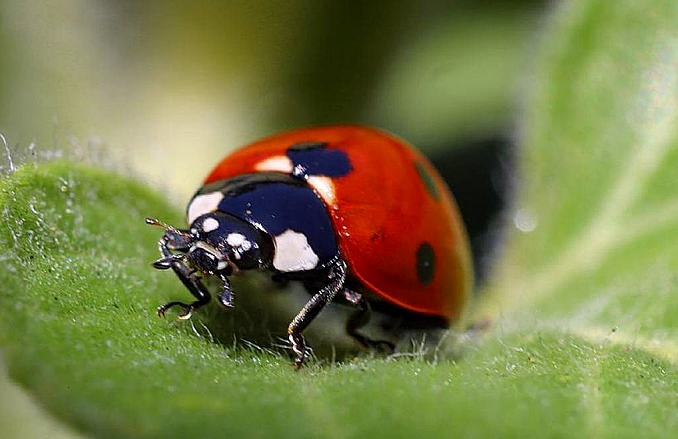
At a hotel in Irondale, Alabama, a note on my pillow asked me to be careful not to harm any ladybugs I might see because the establishment had adopted them as pets. As it turns out, some North American species of the beloved spotted insects are declining in numbers.
While the ladybugs are not considered endangered, some 16,000 species of wildlife are, and enjoy significant protections as a result. The plight of many of these species is highlighted every year on Earth Day, observed on April 22.
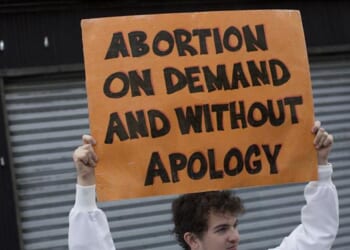
But not protected by law in a majority of U.S. states are children in the womb. If the numbers are to be believed, a million unborn babies are killed by abortion every year.
The contrast between our passionate efforts to save endangered animals and our acceptance of legal abortion across all three trimesters is deeply ironic.
Please follow LifeNews.com on Gab for the latest pro-life news and info, free from social media censorship.
For protected wildlife, governments pass strict conservation laws, activists dedicate their lives to preserving habitats, and individuals donate money or change their lifestyles to prevent extinction.
The underlying principle is clear: When a form of life is rare, defenseless, and at risk of disappearing, it deserves protection.
On the other hand, abortion is allowed to masquerade as healthcare, as a human right, as “reproductive justice,” whatever that is. In some states, governments pass laws to allow abortionists to evade laws in other states, taxpayer money is allocated to buy deadly abortion pills and insurance policies have to cover the procedure.
For those of us who understand that the child in the womb, from the earliest stages, is a human being, the intense concern shown toward endangered animals contrasted with the elimination of baby humans is just perplexing. Resources and passion are extended to non-human life forms, while human life may be legally terminated.
While it’s true that humans are not yet endangered, plummeting fertility rates in a number of nations, including the U.S., is real a concern. The U.S. fertility rate is at an all-time low, with just 1.6 children born per every woman. That puts us well below the replacement rate, which is 2.1 children per woman.
This trend is not confined to the U.S. Fertility rates everywhere are dropping, with long-term projections suggesting that most countries will fall below the replacement rate within 25 years.
Some environmentalists applaud these numbers, believing that every human being is a blight upon the earth. But a falling fertility rate poses significant long-term challenges for the U.S. and other nations, particularly in terms of economic stability, workforce sustainability and social support systems.
When fewer children are born, the population gradually ages, leading to a higher proportion of retirees compared to working-age individuals. This demographic imbalance places strain on programs like Social Security and Medicare, which rely on a steady flow of tax contributions from younger workers to support older generations.
A shrinking workforce can also hinder economic growth by, among other things, decreasing consumer demand, a key driver of our economy.
Demographers say many factors contribute to this recent phenomenon – better education for women; the high cost of raising children and easy access to birth control among them. Nowhere is abortion mentioned, but the fact is that since Roe v. Wade in 1972, some 66 million children have been deprived of a birthday. Even now, nearly four years since Roe was overturned, a million children a year are not making it out of the womb alive.
Those concerned with the environment tend not to care about aborted children, but maybe they should. Chemical abortion now accounts for the majority of legal child killing in the U.S. The drugs ingested by mothers undergoing this kind of abortion are excreting lethal substances into our waterways. All too often, babies’ bodies are being expelled into toilets and then flushed away.
Human tissue, human remains and dangerous chemicals in our waterways should be of more concern to those who care about the environment – and to all of us – than falling numbers of ladybugs.
LifeNews Note: Janet Morana is the executive director of Priests for Life and co-founder of the Silent No More Awareness Campaign.