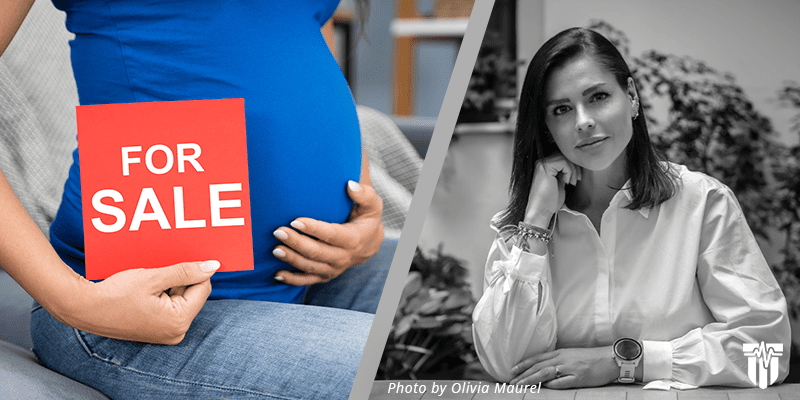
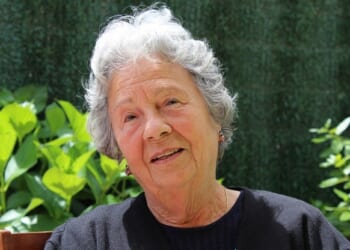
Olivia Maurel grew up in a wealthy household where she had everything she could ever want. What she did not have was a sense of belonging or security. From an early age, something felt off, even if she could not fully explain it.
“I always kind of knew. I mean, I always felt like I didn’t fit in. My entire life, I was kind of awkward with my parents. Up until I was 16 to 17 years old, when I started getting more questions popping up in my head, concerning my birth, and I had to get answers.”
As a teenager, she began searching for those answers. When she looked up Louisville, the city listed as her birthplace, she discovered it was a hub for traditional surrogacy. Even before she had proof, she says she felt certain that this was her story.
Get the latest pro-life news and information on X (Twitter). Follow @LifeNewsHQ
Growing up, she never experienced a true mother-daughter relationship with the woman who raised her. That absence followed her into adolescence and adulthood, shaping how she saw herself and others.
“I had difficulties with addictions such as drugs and alcohol…. I always felt the trauma of abandonment. So I was always in this position where I was scared that people would leave me…”
That fear never fully left.
“I still have that void. My biological mother, my surrogate mother, she left me at my birth. She left me. She exchanged me for a check.”
“That left a void. And that void I tried to fill it up my entire life.”
For Maurel, the pain is inseparable from the way she was brought into the world. She believes the system itself creates the very loss she has spent her life trying to overcome.
“Surrogacy prescribed abandonment. That’s exactly what it is.”
During the conversation, Allie Beth Stuckey pointed out what she sees as a key difference between surrogacy and adoption.
“She conceived you purposely with the intention of abandonment. Which is a little different than if you find yourself with a surprise pregnancy, and you can’t take care of your child, and you give your child to a loving family. This was much more transactional. I just imagine that compounds the feelings of loss you have.”
She later added, “Adoption redeems a broken situation. Surrogacy creates one.”
Maurel agrees and argues that the bond formed during pregnancy cannot be dismissed or replaced.
“Every surrogacy is a bad surrogacy to me. This child that’s in the womb that’s connecting with his mother, because she will be the birth mother in every single case. This baby is connecting with his mother for nine months. He’s eating what she’s eating, he’s feeling what she’s feeling, he’s just living every single day with her. He’s hers, and she’s his. So when he’s going to come out of that womb, he’s going to be looking for her. And if she’s not there, that trauma of abandonment will still be there. So in 100% of cases, you will cause the trauma of abandonment.”
Her story reflects a larger concern raised by many in the Pro-Life movement. Surrogacy separates pregnancy from motherhood and turns carrying a child into a service that can be bought and sold. It risks treating women’s bodies as a means to an end and children as products to be delivered rather than human beings to be welcomed.
There are also concerns about inequality. Surrogacy arrangements often involve wealthier individuals paying women in more vulnerable situations to carry children. Even when contracts are agreed to, the imbalance of power and money remains difficult to ignore.
At its core, surrogacy raises the question of whose desires come first. Every child has a natural connection to their mother and father and to the woman who carried them. When a child’s beginning is shaped by contracts and agreements, that child can be treated more like a product than a person with inherent dignity.
Wanting children is good. Loving children is good. But not every path to having a child respects both the dignity of women and the humanity of the child. For Olivia Maurel, that reality is something she has lived with every day.
LifeNews Note: Ashlynn Lemos is the communications intern for Texas Right to Life.