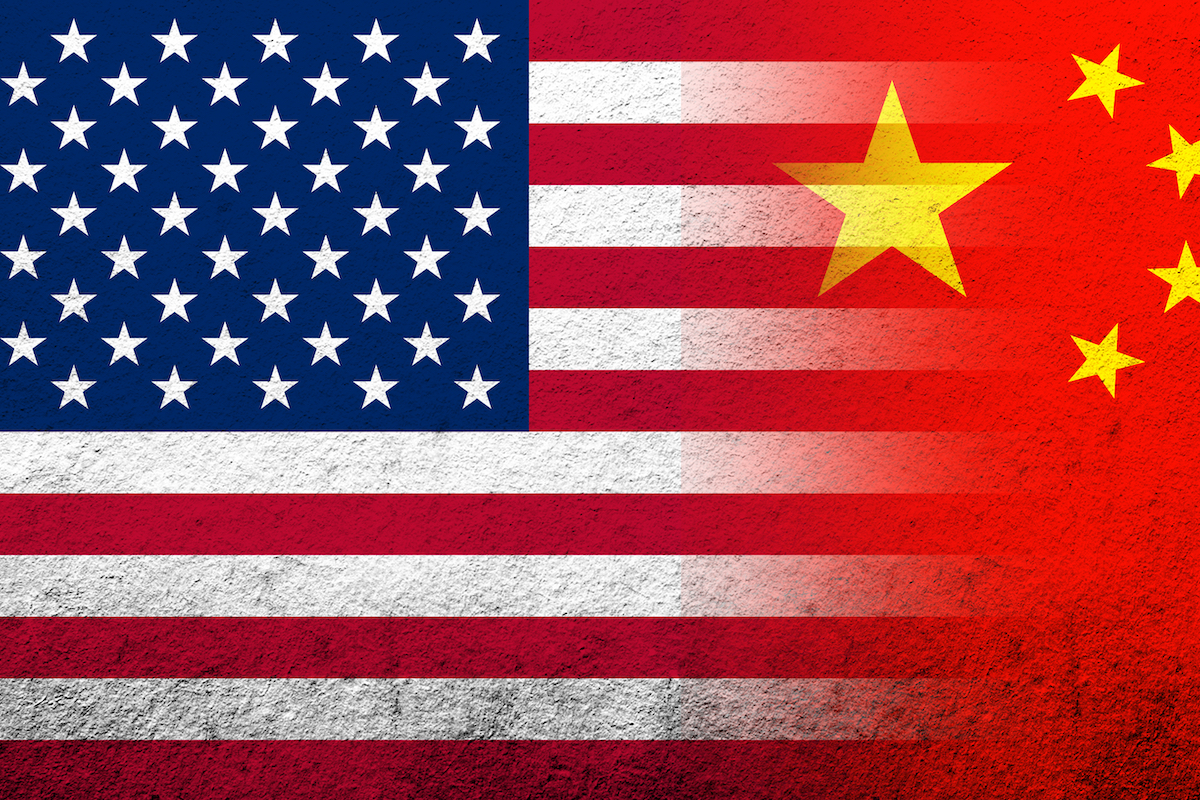
The war against Iran has not only depleted American weapons stockpiles, but also given China a good look at U.S. military capability and strategy and the chance to portray the United States as an out-of-control superpower flailing away in another reckless imperial adventure in the Middle East.
That assessment appears in a confidential intelligence analysis leaked to The Washington Post. It says that China “is exploiting the war in Iran to maximize its advantage over the United States across military, economic, diplomatic and other fields,” said two officials in summarizing the report for the newspaper.
China is exploiting the war to cozy up to long-standing U.S. allies who need energy supplies and might fear that the U.S. now lacks the firepower to defend them.
Prepared for Joint Chiefs of Staff Chairman General Dan Caine by the group’s intelligence directorate, the report assessed China’s response to the war in four ways, the Post reported: “diplomatic, informational, military and economic.”
China sold weapons to American allies in the Persian Gulf “as they struggled to defend their military bases and oil infrastructure from Iranian missile and drone attacks,” the Post explained about the report:
Beijing has also assisted countries around the world struggling to meet their energy needs after the U.S.-Israeli attacks prompted Iran to close the Strait of Hormuz, a corridor for the transport of one-fifth of the world’s oil and gas.
The war has also drained the U.S. of massive stocks of munitions that would be critical in a potential standoff with China over the fate of Taiwan, the report notes. The Iran conflict, which has resulted in the damage or destruction of U.S. military hardware and facilities throughout the Middle East, has allowed Beijing to observe how the U.S. fights wars and learn how to plan its own future operations.
The report notes that Beijing has incorporated popular criticisms of the war into its public messaging, labeling the conflict “illegal.” China has long sought to undermine the image of the U.S. as a responsible steward of the rules-based international order, and it views the Iran conflict as emblematic of Washington’s cavalier approach to military hostilities.
Not surprisingly, spokesmen for President Donald Trump’s administration say the report is much ado about nothing. Any suggestion that the United States is no longer the world’s dominant superpower is “fundamentally false,” Pentagon spokesman Sean Parnell told the newspaper. As well, America “decimated the Iranian regime’s military capabilities in 38 short days and is now strangling what’s left of their economy with one of the most successful naval blockades in history,” White House spokesman Olivia Wales told the newspaper:
The United States military is the greatest fighting force on the globe with unmatched power on display for the entire world to see.
China Steps In to Help U.S. Allies
Reacting to the report, national security experts told the Post that the war has shifted the global balance of power to China. Jacob Stokes, a senior fellow at the Center for a New American Security, said “the war in Iran is massively improving China’s geopolitical position.”
While President Trump has claimed that China relies on Gulf oil and a closed Strait of Hormuz harms the country, “the intelligence report notes that China has weathered the shortages because of its development of renewable energy and its vast oil reserves,” the Post continued:
“China is the second-most-insulated country in the world to the energy crisis, after only the United States,” said Ryan Hass, a China expert at the Brookings Institution.
That is allowing Beijing to win friends abroad, Hass said.
“China is presenting itself as a solutions provider in providing access to jet fuel and other products that are in short supply as a bridge for the short term,” he said.
Since the war started, Beijing has reached out to Thailand, Australia, the Philippines and other countries to help them manage their energy needs and is offering access to Chinese-produced green energy technology as a longer-term solution.
While previous administrations have attempted to help allies during energy crises, the Trump administration has not. So China, Hass told the Post, is stepping in to help.
Weapons Supply Low
A major concern for U.S. military officials is the expenditure of billions of dollars of munitions. During the first 48 hours of the war, the military expended almost $6 billion of munitions. The war has now cost American taxpayers almost $81 billion, the Iran War Cost Tracker reports. Daily price tag: $1 billion.
“The U.S. has expended huge numbers of missiles, bombs and interceptors, many of which are expensive and require a long time to produce, to defend Israel and Gulf allies from Iranian counterattacks and destroy Tehran’s arsenal,” the Post observed.
Important munitions such as Tomahawk missiles, Patriot air-defense batteries, and high-altitude interceptors are running low, which “has left Taiwan, Japan, South Korea and other allies worried about U.S. military readiness and Washington’s ability to intervene in the event of a Chinese attack,” according to the paper.
Stokes said the expenditure invites speculation about how rapidly the defense industry can resupply those munitions.
The war is a propaganda bonanza for China. “China has an opening to portray the United States as an aggressive, unilateralist power in decline,” Stokes said, “because Washington cannot stop itself from getting embroiled in bloody and costly Middle East wars.”


![Hegseth Demands Fitness Requirements, Says 'Fat Troops' 'Not Who We Are' [WATCH]](https://teamredvictory.com/wp-content/uploads/2025/09/Hegseth-Demands-Fitness-Requirements-Says-Fat-Troops-Not-Who-We-350x250.jpg)