The Second Vatican Council grappled with how to approach the “signs of the times” in Gaudium et Spes, giving the following warning:
The modern world shows itself at once powerful and weak, capable of the noblest deeds or the foulest; before it lies the path to freedom or to slavery, to progress or retreat, to brotherhood or hatred. Moreover, man is becoming aware that it is his responsibility to guide aright the forces which he has unleashed and which can enslave him or minister to him.
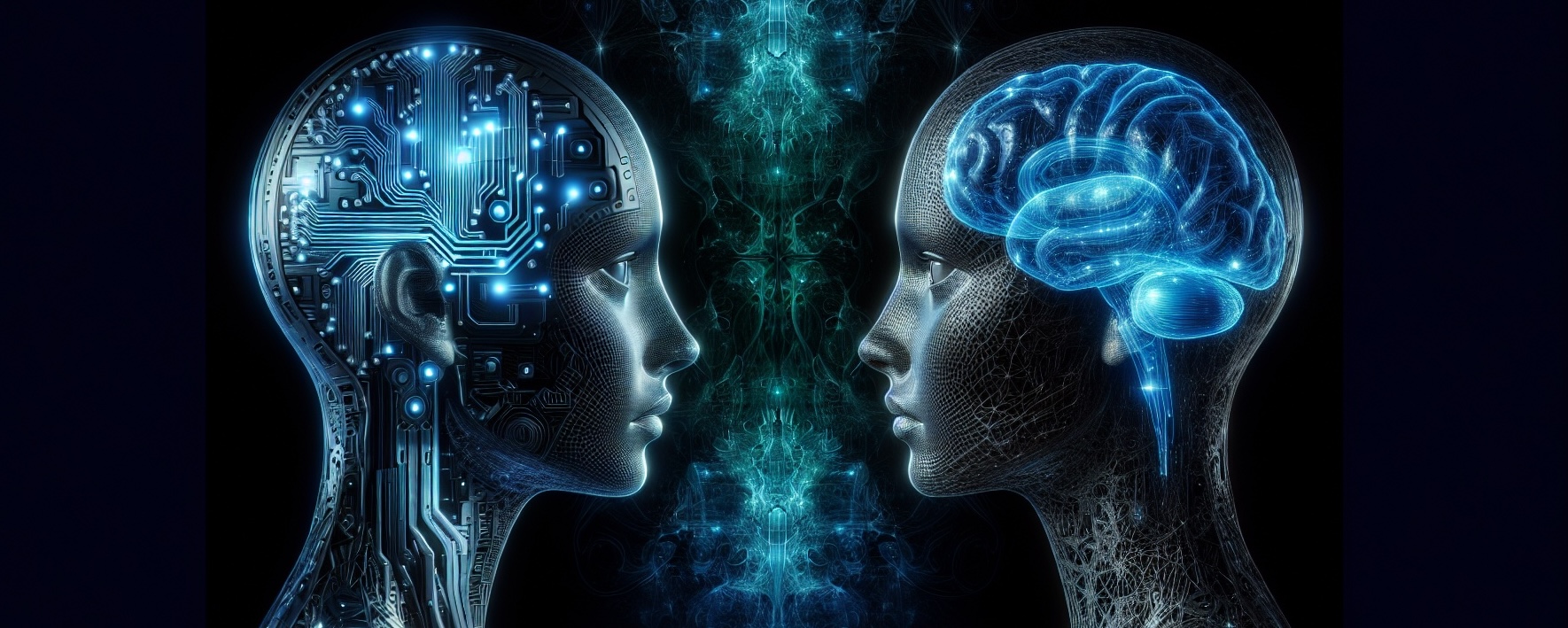
In Magnifica Humanitas, the first encyclical letter of Pope Leo XIV, we see a pastor who understands that artificial intelligence is one of these forces.
And yet, Magnifica Humanitas is not an anti-technology manifesto.
Rather, it gives us an insightful, theological analysis of the complexity of political, social, and economic life in the digital age. Leo XIV encourages Christians “to accept the weakness of humanity without considering them an error to be corrected.” The “mystery of the human person,” says the pope, cannot be translated “into data and performance” (MH, 10, 12).
Leo XIV draws heavily on Saint John Paul II in Magnifica Humanitas. Indeed, one way to characterize Magnifica Humanitas would be to say that it brings what Leo calls “the rich social teaching of Saint John Paul II” into dialogue with Pope Francis, who emphasized the universal destination of goods while criticizing a technocratic paradigm “that seeks to reduce everything to an object to be dominated” (MH, 43). In turn, both popes are placed within a long line of historical and doctrinal development that starts with Rerum Novarum and runs through Vatican II.
The tradition of Catholic Social Doctrine, says Leo, contains an “unchanging core of revealed truths regarding the human person and society” that “is constantly intertwined with a renewed capacity for listening to historical situations and for responding to contemporary issues.” Saint John Paul II, Pope Leo XIV reminds us, “regarded this approach as a ‘lasting paradigm’” of the “right and duty” of the Church to “examine social realities, make pronouncements about them and indicate paths for finding just solutions” (MH, 28–29).
Numerous times in the encyclical, Leo speaks of “freedom and responsibility” together and how the digital revolution can sever their connection in seen and unseen ways. In light of this, I want to highlight seven major points about Magnifica Humanitas.
First, this encyclical is the product of a systematic focus on the digital revolution, especially artificial intelligence, given what it means for the dignity of the human person and the common good. For Leo, “artificial intelligence” is not “another theme to be studied or an emergency to be managed, but rather . . . a development that challenges the categories of Social Doctrine from within, entailing its further development in fidelity to the Gospel” (MH, 17).
Second, Leo XIV reaffirms Saint John Paul II’s openness to “the contributions of the social sciences,” including the discipline of economics. The Church is interested in the truth of things even as she recognizes that “it is unrealistic to think that the Church’s Social Doctrine can propose a single response valid in all contexts” (MH, 24, 26). In other words, in Magnifica Humanitas, Leo XIV acknowledges the need for disciplines that investigate and help us make sense of the complexity of human life and society. “Understood in this way, Social Doctrine becomes a theology of communion in history, a history in which the Word made flesh continues to be present through dialogue, memory, and prophecy” (MH, 27).
Third, in terms of doctrinal development, Leo XIV places the universal destination of goods on par with what the Compendium of Catholic Social Doctrine calls the four fundamental principles of Catholic Social Teaching: the dignity of the human person, the common good, subsidiarity, and solidarity. “Today, we are called to recognize that this universal destination of goods applies not only to material goods, but also to immaterial and cultural goods.” These include “new forms of property, such as patents, algorithms, digital platforms, technological infrastructure and data” (MH, 65–67).
Fourth, we live in an age of what the pope calls an “imposed interdependence” owing to technology, global trade, and instantaneous communication. The challenge is how to transform this interdependence into “a willed and chosen solidarity” (MH, 187). Freedom means there is always a choice. Responsibility means we must cultivate virtue and act with moral purpose. We are not at the mercy of unstoppable technological progress. In fact, surrendering to technological progress as if we have neither freedom nor responsibility actually perpetuates violence and slavery, diminishes solidarity, and ultimately harms justice.
Fifth, subsidiarity and solidarity go together. “When subsidiarity is not linked to solidarity, it ends up becoming merely the protection of particular interests; when solidarity is not supported by subsidiarity, it degenerates into a form of welfare that does not foster responsibility” (MH, 73). Magnifica Humanitas shows how the principle of subsidiarity “applies especially in the context of the digital revolution.” For the first time in centuries, states are not the highest-level entities; instead, they are those “major economic and technological actors that exercise de facto power over the conditions of everyday life” through algorithms, data, expertise, and platforms (MH, 71).
Sixth, an important risk to truth and freedom that has been exacerbated by the digital revolution is “a disconcerting loss of historical memory.” Without, for example, “first-hand accounts of the Holocaust and the two World Wars,” it is much easier to fall for “a selective or distorted rewriting of the past, in a context where fake news and the manipulation of narratives obscure the lessons that have been learned” (MH, 191). The result, given that algorithms and digital media often thrive on discord, is polarization and a further loss of any sense of freedom in human affairs.
Painful events in the human past, Leo tells us, are like the sufferings of an individual. We flourish through them, not in spite of them. The deep theology of suffering in Magnifica Humanitas is really a call for the primacy of truth. And so the concern is clear: In an age when truth is sacrificed at the algorithmic altar of efficiency and immediacy, the long and patient task of cultural sanctification that seeks to enhance human dignity can fall to the wayside. Enter the transhumanist, who wants to transcend what is human rather than sanctify it, or the technocrat, who promises to fix humanity through technique alone.
Seventh, Magnifica Humanitas is thick with an Augustinian sense of history that distinguishes “between ecclesiastical and political spheres of competence” (MH, 22).
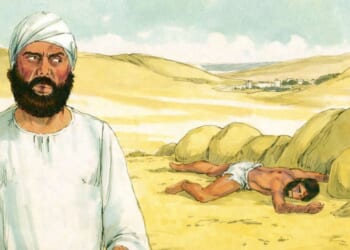
The Church, says Leo, “upholds the freedom of men and women in the unfolding of history.” In so doing, she “does not claim to assume the functions belonging to the state. On the contrary, “she esteems those who serve the common good” while addressing human suffering. “When the Church intervenes, she does so following the example of the Good Samaritan, with discretion and closeness, aware that what arises from urgent necessity cannot become the norm, nor replace the institutional responsibilities proper to civil community” (MH, 21).
History “is not solely a record of human violence,” for there is also “evidence that humanity is capable” of great good. Pope Leo XIV cites many historical instances of Catholics saints and others who took human dignity seriously and acted. Thus, “the age of AI is no exception: the construction of Babel or the rebuilding of Jerusalem begins within each one of us” (MH, 130).
This is a call for Christians to integrate personal holiness with human action to play their part in human history, no matter how large or small that part may be. The pope quotes the words of Gandalf, in J.R.R. Tolkien’s The Return of the King, to drive home this point: “‘It is not our part to master all the tides of the world, but to do what is in us for the succour of those years wherein we are set, uprooting the evil in the fields that we know, so that those who live after may have clean earth to till.’”



![Hegseth Demands Fitness Requirements, Says 'Fat Troops' 'Not Who We Are' [WATCH]](https://teamredvictory.com/wp-content/uploads/2025/09/Hegseth-Demands-Fitness-Requirements-Says-Fat-Troops-Not-Who-We-350x250.jpg)