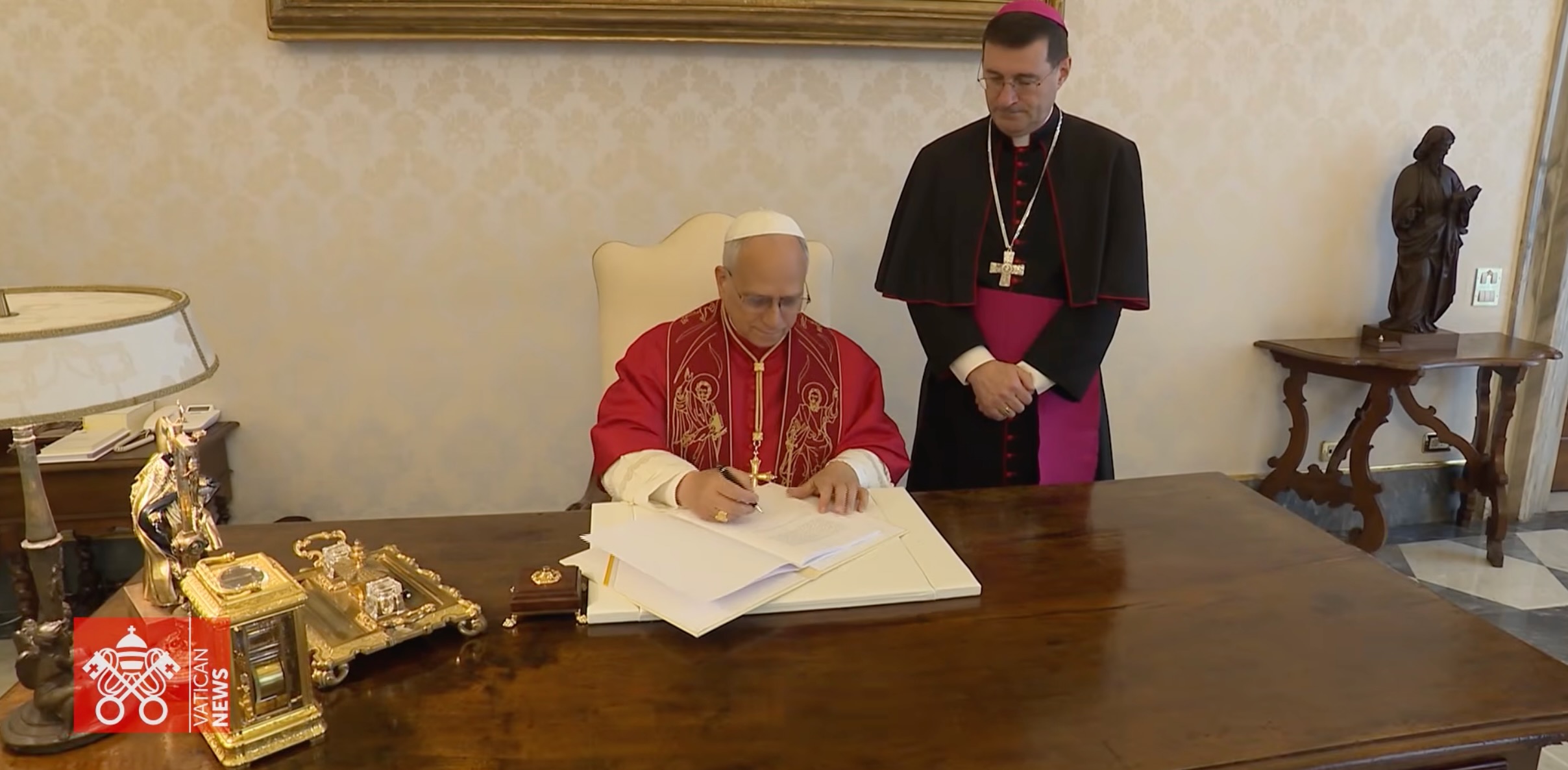
Pope Leo XIV’s encyclical Magnifica Humanitas thoughtfully speaks to one of the great anxieties of our moment: whether artificial intelligence, data platforms, robotics, and global capital will serve the human person or reduce us to a disposable input. Its concern for workers, the poor, families, and the marginalized is recognizably Catholic. The economy exists for man, not man for the economy.
On that much, Catholics should readily agree.
But good moral ends do not guarantee sound economic means. The encyclical criticizes market economics for allowing profit, technological efficiency, and concentrated ownership to outrun solidarity. It warns that automation may displace workers, data may become an instrument of control, and the benefits of innovation may be captured by a narrow elite.
It therefore calls for stronger public oversight, redistributive taxation, social criteria for innovation, protection of workers, and regulation of AI and data so that economic life becomes more inclusive from the beginning rather than corrected after the fact.
The moral worry is serious. Yet the policy instinct is less convincing. Historian Thomas E. Woods, in The Church and the Market, makes a distinction that Catholic social thought badly needs: the Church speaks authoritatively on moral principles, but technical economic analysis is a matter of prudence, evidence, and reason.
A pope may rightly condemn indifference to the poor; it does not follow that wage controls, industrial planning, redistributive schemes, or technology regulation will actually help them.
Markets are often caricatured as cold machines for rewarding greed. At their best, they are systems of social cooperation.
- Prices communicate information that no official can fully possess. Profit and loss discipline production by showing whether resources are being used to serve real human wants.
- Competition limits power more effectively than many regulations, because it gives customers, workers, and entrepreneurs alternatives.
- When property rights, contracts, sound money, and the rule of law are secure, markets draw dispersed knowledge and talent into productive service.
This matters, especially for labor. Wages are not simply the result of employer benevolence or employer oppression. Over time, wages rise when workers become more productive, when capital per worker increases, when firms compete for labor, and when people are free to move, learn, start businesses, and bargain with multiple potential employers.
Policies that make hiring more costly or innovation riskier may protect some visible jobs today while preventing the creation of better jobs tomorrow.

Automation offers a clear example. A robot or AI system may replace a particular task. That loss is concrete and painful. But productivity gains also reduce prices, improve quality, create new firms, and free labor for uses no planner could have specified in advance.
The poor often benefit first from cheaper necessities: food, energy, transport, health tools, education, communication, and financial services. When regulation slows innovation in the name of protecting workers, it may instead preserve stagnation and deny low-income families the gains that innovation makes possible.
The same caution applies to AI and data rules. Some law is necessary: fraud, coercion, theft, privacy violations, and genuine abuses should be punished. But heavy, vague, or premature AI regulation may entrench the very corporate power Catholics fear.
Large firms can hire compliance departments and lobbyists. Small firms, universities, charities, parishes, and startups cannot. A regulatory regime designed to humanize technology could easily leave the field to the largest incumbents while excluding the new entrants most likely to challenge them.
Higher taxation raises a parallel problem. The encyclical urges those with greater resources to bear more of the social burden. That can sound like simple justice. But taxes do not merely transfer money; they change incentives. They can reduce investment, entrepreneurship, risk-taking, and innovation.
Over time, less capital formation means lower productivity and weaker wage growth. The burden may be formally imposed on the affluent, but workers and consumers often pay part of the price through fewer opportunities and more expensive goods.
Nor should Catholics assume that government is a neutral guardian standing above self-interest. Public choice economics reminds us that politicians, regulators, bureaucrats, and interest groups respond to incentives too. Subsidies are captured. Regulations are shaped by incumbents. Public programs become vehicles for patronage. Agencies seek larger budgets and broader authority.
The state can do necessary things, but it is not exempt from Original Sin. Concentrated public power can be as dangerous as concentrated private power, and often less easily escaped.
Catholic social teaching already contains the principle that should discipline these policy debates: subsidiarity. Higher authorities should not absorb the responsibilities of persons, families, churches, local associations, and free communities. Solidarity without subsidiarity becomes centralized management. Subsidiarity without solidarity becomes indifference.
The challenge is to help the poor enter productive life, not merely to redistribute after politics has decided who deserves what.
An alternative Catholic economic agenda would emphasize removing barriers to work, enterprise, ownership, education, family stability, and local association. It would welcome innovation while insisting on legal accountability for concrete harms. It would favor competition over privilege, entrepreneurship over dependency, and civil society over bureaucracy. It would trust charity and local knowledge where they are superior to distant command.
Magnifica Humanitas is right to ask whether technology serves human dignity. But prudence requires asking whether proposed interventions will actually serve the poor and workers or unintentionally harm them.
Medieval and late-scholastic Catholic thinkers understood much about exchange, price, money, and property. The Vatican should recover that inheritance. When encyclicals address economic policy, they should consult market economics carefully, lest well-meant recommendations undermine the very justice they seek to advance.



![Hegseth Demands Fitness Requirements, Says 'Fat Troops' 'Not Who We Are' [WATCH]](https://teamredvictory.com/wp-content/uploads/2025/09/Hegseth-Demands-Fitness-Requirements-Says-Fat-Troops-Not-Who-We-350x250.jpg)