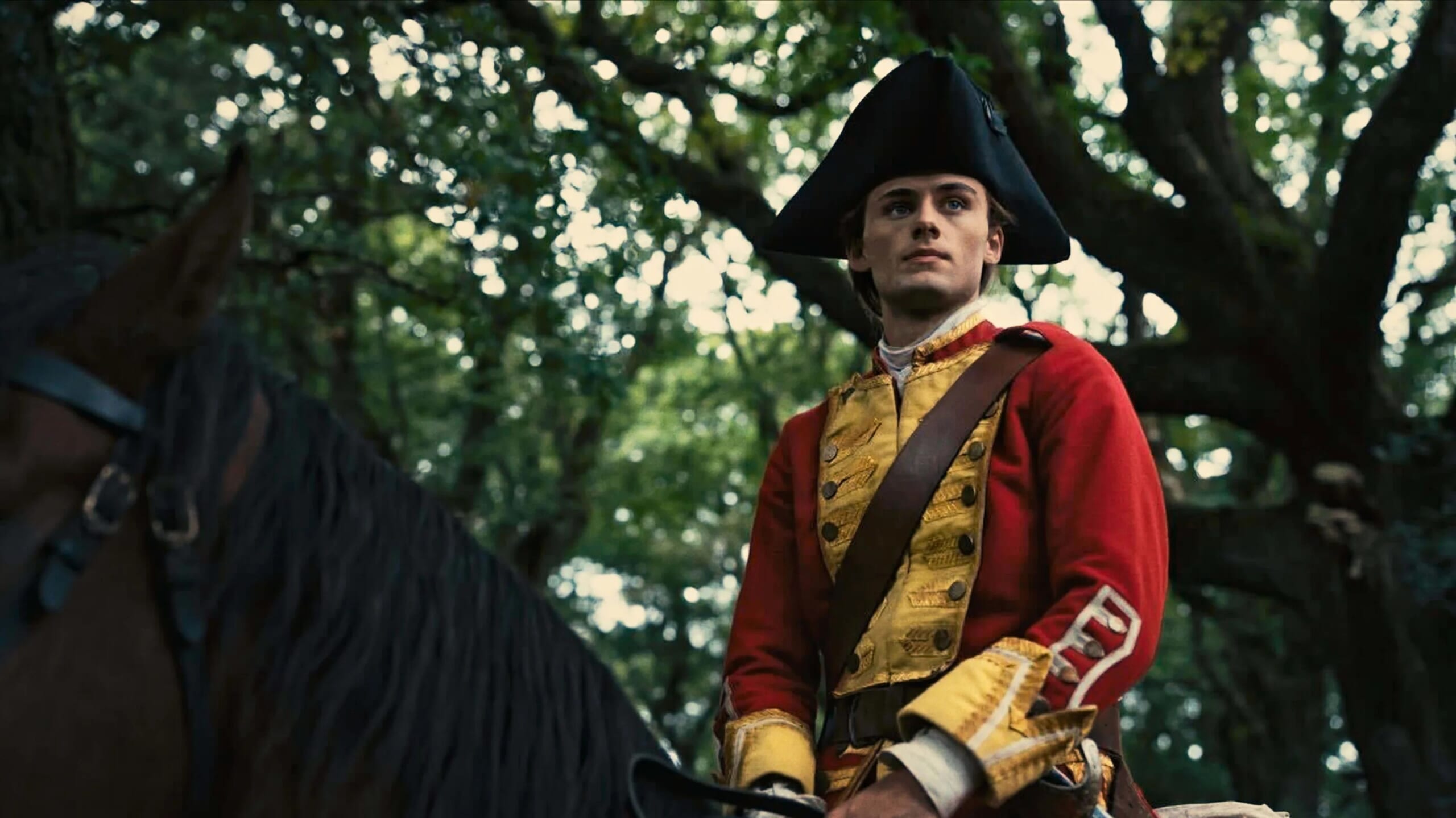
At an advance screening on June 9 at the Kennedy Center, a fortunate audience saw Angel Studios and Wonder Project’s Young Washington, which opens in theaters July 3, on the eve of America’s 250th birthday.
The movie feels refreshing because it returns George Washington to a human scale. Before the statues, portraits, stamps, and schoolbook certainty, there was a young man searching for his place in the world. This story of formation is exactly the one young Americans need in 2026.
Why? This year, Americans will hear many tributes to the Founders, figures who can too easily become distant symbols, names on monuments, or faces on currency. Young Washington tells the story of the first president’s early life as a journey through ambition, failure, discipline, purpose, and adaptation, and it leaves young Americans with three lessons they urgently need: merit matters, purpose must be found, and every generation must learn to adapt to new battlefields.
The first lesson is merit. George Washington came from Virginia’s planter world and had real advantages, including family connections and land. Yet he still stood far from the highest ranks of imperial power, in a British system shaped by class and purchased opportunity. Washington pressed against the limits of the order he inherited. His schooling was practical rather than elite, especially after his father’s death. He learned mathematics, reading, surveying, and the habits of self-education. As a teenager, he became a surveyor, a profession that taught him geography and land.
He then moved from surveyor and planter to major, and later to colonel, in colonial military service. Washington sought a royal commission because he wanted the status and authority that the imperial system often withheld from colonial officers. He did not want to inherit the life assigned to him. In one of the film’s more memorable moments, Washington’s older half-brother Lawrence teaches him chess and tells him that “even a pawn can take a king.” The line captures one of America’s deepest promises long before America as we know it today was even founded: Birth is not destiny. George Washington’s example shows that with hard work and perseverance, the status quo can change.
The second lesson is that young people need a purpose. The Ohio Country became Washington’s hard-knocks school in finding his way. The conflict there was not only about British and French rivalry in general but also about land and trade routes, as well as Native nations pursuing their own interests and alliances. In 1754, at Fort Necessity, Washington learned a difficult lesson at close range: French and Native allies surrounded Washington’s Virginia men, and he was forced to surrender—the first and only time he would so submit.
This defeat could have ended his military career and reduced him to humiliation, resentment, or complete retreat from public life. Instead, it became a test of whether his ambition was merely a desire for rank or a calling to lead.
At this turning point, Washington’s mother reminded him that failure is not the same as disgrace unless he allowed it to become so. She encouraged him back toward his purpose, urging him to learn from defeat rather than to be defined by it. That support matters because Washington returned to Ohio. The next year, in 1755, he joined General Edward Braddock’s expedition as a volunteer aide-de-camp, arriving back in the Ohio Country with the memory of his own failure still fresh. He warned General Braddock about the dangers, but he was not taken seriously.
When Braddock’s expedition collapses near Fort Duquesne, Washington is no longer the young officer who had surrendered at Fort Necessity. He is a man who has learned from pain, and with renewed energy helps carry out orders, rally fleeing troops, and coordinate the retreat after Braddock is wounded. Though he was not in command, his conduct helped save what remained of Braddock’s army and restored his reputation as a serious leader.
That lesson speaks to young Americans in 2026 who often live inside a culture of performance—often without a clear purpose. Washington’s story treats difficulty in finding one’s purpose as a way of formation. The movie shows a young leader becoming serious by carrying real responsibility.
The third lesson is about adaptation. Young Washington shows an old military imagination colliding with a new world. Early in the film, the Virginians, led by Washington, rely on European methods of warfare in a frontier that does not obey European rules. They settle in an open field and build a fort, only to be surrounded and forced to surrender. The lesson is brutal: One must understand the changed rules of battle before building a future in the new world.
That lesson becomes even clearer when Washington returns to Ohio with General Braddock’s expedition in 1755. French troops and Native allies used woods, ravines, cover, movement, and surprise to their advantage. Washington saw what Braddock did not: The enemy will not always appear in an open field and announce itself. Washington, during his surrender at Fort Necessity, had to give up inherited assumptions about old warfare. The methods that may have looked disciplined in Europe proved to be deadly on the American frontier.
This speaks directly to America at 250, as today’s battlefields are often intangible. They run through cyberspace, artificial intelligence, social media platforms, financial systems, supply chains, universities, and public opinion. The new adversary may not wear a uniform. It may arrive through cognitive warfare, a hacked network, a manipulated algorithm, a disinformation campaign, an economic dependency, or a technology presented as convenience.
America cannot afford Braddock’s mistake: marching confidently into a changed world with an old map. That is what makes Young Washington such a timely gift for America’s 250th birthday. The movie reminds us that before Washington became the Father of his Country, he was a young man forced to master unfamiliar ground—proof that a pawn can take a king, failure can form a leader, and even an old nation can renew itself by learning the next battlefield.