The Anglo-American poet, T.S. Eliot (born in St. Louis), wrote “The Hollow Men” in 1925. The poem concludes with this haunting quatrain:
This is the way the world ends
This is the way the world ends
This is the way the world ends
Not with a bang but a whimper.
The poem appeared two years before Eliot joined the Church of England. (He had grown up in Unitarianism.) Eliot had a kind of conversion experience in Rome, falling to his knees in front of Michelangelo’s ‘Pietà, but despite his love for the Italian language and Dante, Catholicism seemed. . .foreign to him. Having settled into England and Englishness, the established religion there made sense to him, albeit in its “High church” version, often called Anglo-Catholicism or Anglicanism.
What would Eliot think of the Church of England today? By the time he died in 1965, he had become deeply concerned about the leftward drift in British culture. Eliot’s major prose works – The Idea of a Christian Society (1939) and Notes Towards the Definition of Culture (1948) – are extended laments that England was ceasing to be Christian.
And it’s just this downward and escalating slide from orthodoxy that seems to be driving so many English young people, men especially, toward Catholicism in 2026. Something similar is going on in the U.S.

Some are calling it a “quiet revival,” although that may be because liberal Anglicans don’t want to hear about it. Here are some facts that speak loudly about what’s happening: According to the Catholic Herald, among churchgoers aged 18–34, Catholics now make up 41percent compared to just 20 percent Anglican – an astonishing turnaround from just 2018, when Anglicans made up 30 percent of that group and Catholics only 22 percent.
Attendance at Mass continues its upward trajectory, and the numbers would likely be higher were it not for COVID shutdowns that, in Great Britain as in the United States, broke patterns of religious practice – for Catholics, Anglicans, and everyone else.
In my view, the Anglican Communion was dead on arrival 492 years ago. But let me say straight away that there have been, still are, and likely will be many great and holy adherents of the Church of England. C.S. Lewis is a notable example. The problem is the Church of England’s genesis.
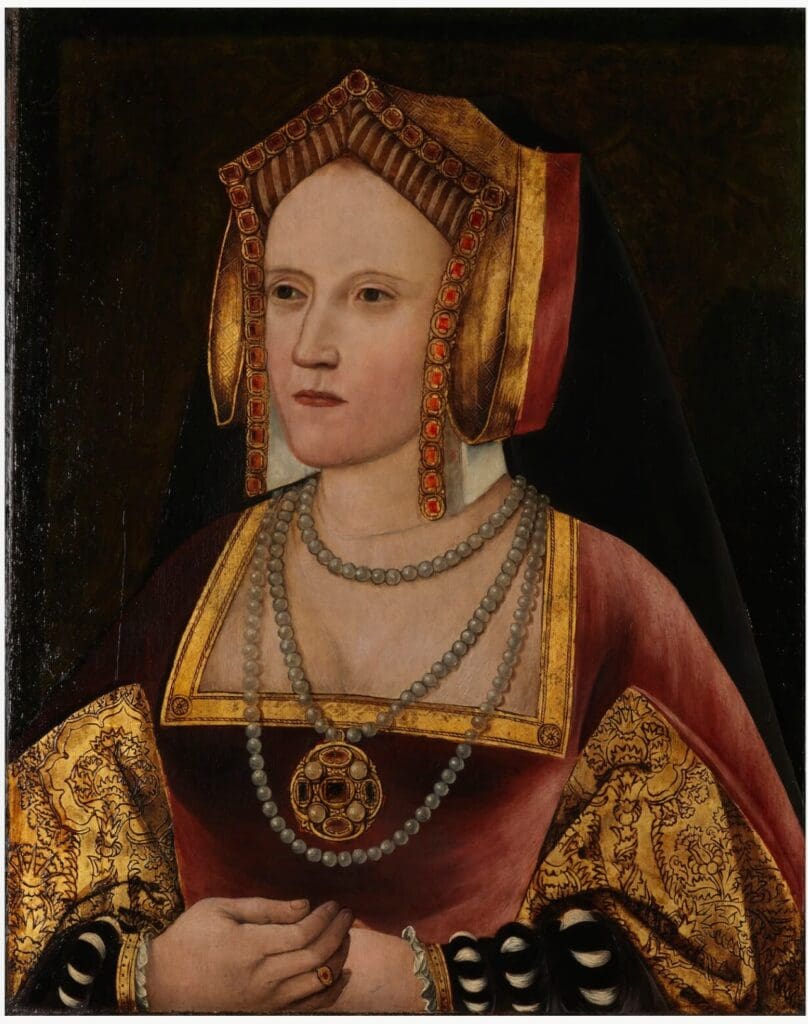
It all begins with a divorce, of course – of Henry VIII, who was hardly a holy man, from his first wife, Katherine of Aragon, an exemplary woman. The daughter of the Spanish monarchs, Ferdinand and Isabella, Katherine had come to England in 1501 to marry Henry VII’s oldest son, Arthur. She was 16, and he was 14. Five months later, Arthur died.
Katherine stayed in England, effectively becoming the Spanish ambassador – among the first female ambassadors in European history. Then, in 1509, she married her brother-in-law, the 18-year-old Henry VIII. They were amicably joined, although Henry had a roving eye, as monarchs often do.
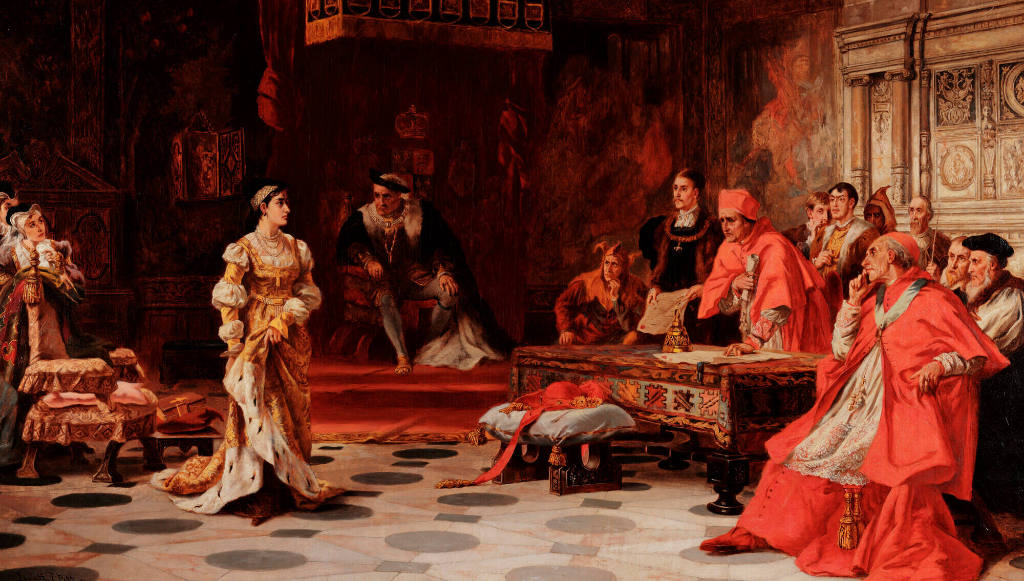
In 1510, Katherine miscarried (a daughter). In 1511, their son, Henry, was born but died 52 days later. This was followed by two more stillbirths, both sons, in 1513 and 1514. Their only other child, the future Mary I, was born in 1516. “Bloody Mary” the Protestants would call her, although she never outdid her father’s anti-Catholic atrocities. Finally, Katherine gave birth again, but this infant was also stillborn.
Henry wanted a son, not a daughter, as his heir. Thus: the “King’s Great Matter.” Henry sought an annulment from Pope Clement VII in 1527. The pope refused, and the religious crisis ensued.
Henry had received the title “Defender of the Faith” from Pope Leo X in 1521 for his written defense of the Seven Sacraments, Assertio Septem Sacramentorum, a broadside against Martin Luther and a robust defense of papal authority.
At the start of the annulment controversy, the king argued that Leviticus forbade his marriage to Katherine: “Thou shalt not uncover the nakedness of thy brother’s wife” (18:16) and called such a union “an unlawful thing.” (20:21) Katherine, however, always swore that her marriage to Arthur had never been consummated, which mooted Henry’s argument. Besides. Pope Julius II had issued a bull allowing the marriage – a dispensation that applied whether or not the marriage to Arthur had been consummated, and had been arranged by the fathers: Henry VII and Ferdinand II.
Some have suggested that Clement VII may have been willing to accede to Henry’s wishes. Perhaps, moral considerations aside (and in the spirit of realpolitik), it would have been better if he had. But the most powerful monarch in Christendom, the Holy Roman Emperor, Charles V, had Pope Clement’s ear, and Charles was Katherine’s nephew.
Henry then jettisoned the Faith of his birth and his nation’s nearly thousand-year tradition to initiate a new church. St. John Henry Newman would argue that the question was not whether doctrine could develop, but whether a development would be governed by authority or by opinion. Catholicism in England was sundered by Henry VIII’s opinions. Anglicanism claims that it is semper reformanda, always reforming. But that’s madness, no?
But, with Henry VIII’s canonical marriage to Katherine ended, his union with the next lady in line, Anne Boleyn was legitimized.
Boleyn gave him a daughter who would become queen and dominate the following age: the Elizabethan. Anne Boleyn would be beheaded, as would Henry’s fifth wife, Catherine Howard. There were six wives in all. Jane Seymour, wife # 3, did give Henry a son.
That son, Edward VI, died at age 15 and was succeeded by Katherine of Aragon’s devoutly Catholic daughter, Mary, who would reign for four-and-a-half years.
Henry and Elizabeth would upturn English life and faith, establishing what historian Michael Wood has called a “police state,” with thousands of Catholics displaced, tortured, and killed. And, yes, Mary did kill hundreds while failing to restore Catholicism.
But Henry is now “Buff King Harry,” Elizabeth is “Good Queen Bess,” and Mary, of course, is. . .“Bloody.”
Henry VIII is an odd “founder” of a Christian denomination. Catholicism in England was sundered by Henry VIII’s opinions and by successive Archbishops of Canterbury. And the king no longer defends The Faith, but, in recent days, has re-titled himself Defender of Faith (unspecified).