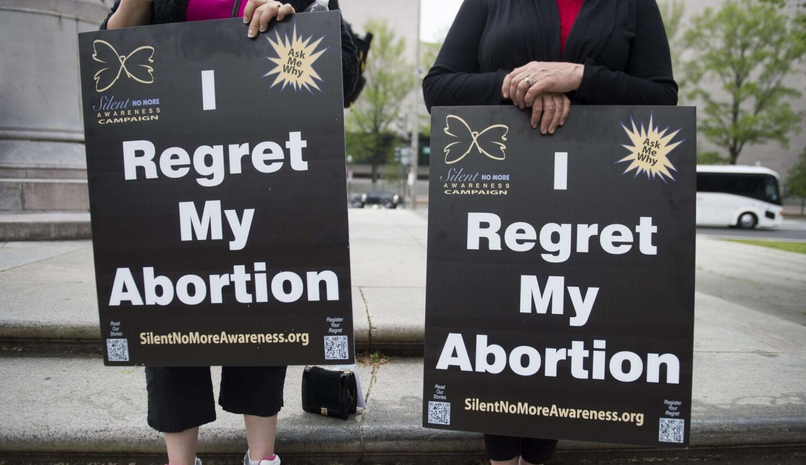
With close to 100,000 pregnancies ended by abortion each month, and over a million a year, it is important to ask the question, can voluntary pregnancy termination be experienced as an emotional trauma?
Emotional trauma results from a deeply painful experience that overwhelms a person’s normal coping skills, such as a serious injury or accident, war, or physical and sexual abuse. These painful events are accompanied by feelings of fear, helplessness and horror. Women and men may experience flashbacks and nightmares rooted in their traumatic experiences, and the avoidance of sights, sounds, smells or feelings associated with the trauma.
Susan had an abortion procedure that used a vacuum source to remove the fetus through her cervix:
“I had nightmares after the abortion. I avoided driving near the abortion center. When I ran the vacuum in my apartment soon after the procedure, I was hit with a wave of panic and anxiety – it reminded me of the suction machine.”
Follow LifeNews.com on Instagram for pro-life pictures and videos.
To cope with these painful feelings and memories, women and men often turn to drugs and alcohol in a desperate attempt to find relief, and restore a sense of internal peace and safety. Research has confirmed an increase in substance abuse after abortion.
Men can also experience their involvement with an abortion as a traumatic event. Jason tried desperately to convince his live-in partner to continue with her pregnancy, and assured her of his loving support:
“She had gone to the clinic and had the abortion while I was at work. Her sister paid for the procedure and was the one who told me that it was done. The last thing I remember after hearing the news was lying in the parking lot of a bar screaming at the top of my lungs.”
The deep emotional pain that followed the abortion brought Jason to the brink of self-destruction. Thankfully, he learned of an abortion healing program to help him work through his pain, grieve his loss, and reconnect in love with his child, entrusted to the Lord.
Self-destructive behaviors and relationships can also serve as an outlet for the complex emotions that often accompany this loss, leading to repeat abortions. Joanne shares her story:
“I had my abortion freshman year of college. I became the party girl and starting drinking a lot and sleeping around…something I never did prior to this loss. Sadly, this led to another unplanned pregnancy and abortion before I got a hold of my drinking and became less promiscuous.”
The Abortion Pill
Nearly 7 out of 10 abortions in the United States are chemical abortions, and this number will likely continue to rise.
Couples are tempted to see chemical abortion as an easier solution than a surgical procedure at an abortion center. However, can the actual experience of the abortion pill be a uniquely traumatic event?
A woman shares her experience:
“I was six weeks pregnant and after an extended period of severe cramping, the child was delivered in our bathroom. My partner had to fish the tiny child out of the toilet.”
Cullen Herout has served for a number of years as a counselor for women and men suffering after pregnancy loss. He writes that chemical termination, far from being a simple solution, presents some unique complications. Chemical abortion changes the locus of the trauma from a surgical center, to what should be a place of emotional and physical safety – the home.
Herout shares:
“It is no longer possible to take a different route home from work to avoid reminders of the trauma…Now these triggers and reminders wait for the woman [or man] at home, and there is nowhere to flee.”
With the increase in telehealth abortions, and distribution of the pills by mail, there is often little to no medical oversight. Given the psychological as well as the physical complications common after the experience, it makes sense to pause, and re-examine the personal and financial costs before further expanding easy access to these drugs.
Given the prevalence of surgical and chemical abortion in our communities, it is past time for our public officials, religious leaders, and medical and counseling professionals to recognize that abortion trauma is real, and presents a public health crisis.
The good news is we have the information and resources for raising awareness, as well as safe and effective emotional and spiritual healing programs for women and men in your community.
LifeNews Note: Theresa Burke, Ph.D., and Kevin Burke, MSS, are the founders of Rachel’s Vineyard and pastoral associates of Priests for Life.