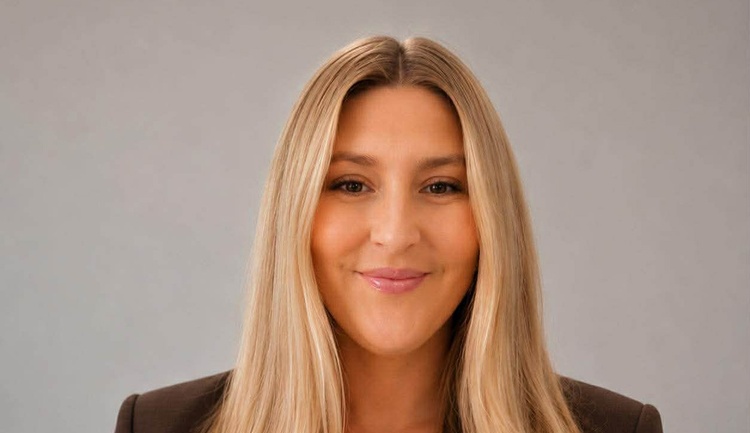
Hannah Strege was stored for years in a canister of liquid nitrogen, identified by an inventory number rather than a name.
On Dec. 31, 1998, she was born — the first known child to enter the world after being adopted as a frozen human embryo.
Now 27 and a licensed social worker, Strege says her life did not begin at birth or even at implantation.
“Embryo isn’t a different kind of being. It’s the earliest stage of a human life. I didn’t become human later. I simply grew,” she said.
LifeNews is on GETTR. Please follow us for the latest pro-life news
John and Marlene Strege adopted 20 frozen embryos from a couple who had undergone in vitro fertilization but were unable to parent more children. Marlene carried Hannah and gave birth to her. The embryos had already existed for nearly three years in storage before the adoption.
Strege recently testified in Missouri in support of a Personhood Amendment. In those remarks she described the legal category she once occupied.
“Before I had a heartbeat in a womb, before I had a birth certificate, before I had a name, I had an inventory number. For two years and nine months, I existed in a frozen canister of liquid nitrogen. My legal status was not child, it was property,” she said. “My name is Hannah Strege. I’m 27 years old, a licensed social worker, and to my knowledge, the first adopted frozen embryo in the world. When my parents adopted me and my 19 siblings, we had already existed for nearly three years, not in a nursery, not in a home, but in storage — biologically human, yet treated under property law.”
She contrasted the treatment of human embryos with legal protections given to some animals.
“There are federally protected animal species in this country whose embryos and eggs receive explicit legal safeguards. Bald eagle embryos are protected. Certain turtle eggs are protected. Yet human embryos, children like I once was, may be bought, sold, abandoned, and destroyed. In many jurisdictions, they are handled through property law frameworks. I am before you now as someone who has once lived under that classification.”
Before pursuing the adoption, Marlene Strege sought counsel from several Christian leaders, including James Dobson.
“Dr. James Dobson was one of four that I asked the question, ‘What would God think about adopting frozen embryos?’” she said. “We did our first broadcast with him when Hannah was five months old. At the end of the broadcast he said, ‘I just feel like this child’s godfather. May I have that role?’”
The Streges agreed.
Estimates of frozen human embryos remaining in storage in the United States range from 1 million to 10 million, created through IVF. Some are later transferred, some are discarded, some are given to research, and others remain frozen indefinitely. Children born after embryo adoption have often been called snowflake babies.