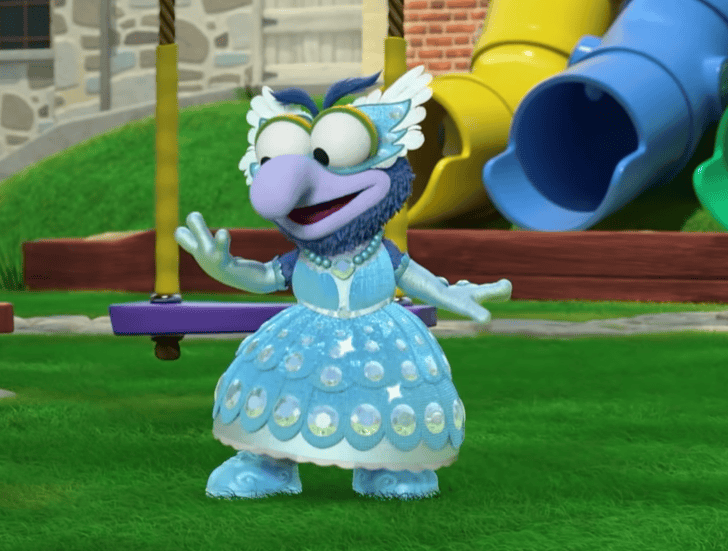
If children’s television programming includes “transgender” ideology, should parents be warned?
If Gonzo dresses up as Cinderella on Disney Jr.’s Muppet Babies, or Nickelodeon’s Rubble and Crew has a “nonbinary” character, should that be reflected in the shows’ ratings and content description?
That question has Federal Communications Commission Chair Brendan Carr at odds with the Congressional Equality Caucus, a group of U.S. representatives who support and promote homosexuality and transgenderism.
The caucus thinks it’s wrong to even ask the question about labeling children’s shows with transgender-identified characters, sending Carr a letter in June, stating:
Transgender people are part of every community, and many recognize their gender identity at a young age. Transgender people, including transgender young people, deserve to see themselves represented in media – and the public agrees.
Yes, you read that correctly. These legislators believe cartoon-watching young children can “recognize their gender identity.”
Carr responded with a letter of his own on September 22, accusing the caucus of fighting “transparency and common sense.”
He said:
You stake out the radical position that parents have no right to know whether controversial gender identity ideologies are being promoted in children’s television programming. In your view, parents should not be empowered to make informed choices about the programs their children watch.
Gender ideology teaches children lies: There aren’t just two sexes, but a multitude of genders; the physical body doesn’t matter – only thoughts and feelings; and people can change from one sex to the other by just saying so.
Parents should know if these falsehoods are being promoted in children’s shows – and be able to make decisions accordingly.
The fracas began when the FCC’s Media Bureau properly solicited comments about the TV Parental Guidelines age ratings system in April 2026. The agency said parents had “raised concerns that controversial gender identity issues are being included or promoted in children’s programs without providing any disclosure or transparency to parents.”
In asking for feedback from the public, the FCC asked questions such as:
• Is the general public aware of the ratings system and how to provide feedback to the TV Oversight Management Board (TVOMB)?
• What more could the board do to include family-oriented perspectives – which are not well represented in the media industry – in its ratings process?
• Do descriptions of the content provide a sufficient basis for parents to make informed decisions concerning viewing decisions for their family, including when gender identity themes are discussed or displayed?
Television guidelines were created by entertainment industry executives after Congress passed the Telecommunications Act in 1996, well before gender identity themes were being promoted to children.
The Act required the entertainment industry to voluntarily provide parents with information about children’s entertainment content, or the FCC would establish a ratings system.
Industry representatives chose to create the TVOMB and developed the TV Parental Guidelines age ratings system, which is still in use today.
The system provides ratings for programs that are appropriate for all children (TV-Y); appropriate for children over seven (TV-7); and suitable, but not specifically designed for, children (TV-G). The system also includes ratings for older children and adults: TV-PG, TV-14 and TV-MA.
In addition, parents are given content descriptions for sexually suggestive dialog (D), fantasy violence (FV), coarse or crude language (L), sexual situations (S), and/or violence (V).
The Congressional Equality Caucus opposed the FCC’s Media Board seeking comments from the public about transgender ideology in children’s programs, calling it “censorship.” In their letter, the U.S. representatives wrote:
We are deeply concerned that the questions you pose, such as whether programs should be rated differently because they discuss gender identity, indicate that you believe there is a role for the FCC to play in determining these ratings.
The caucus added:
The rating system is intended to address “sexual, violent, or other indecent material,” and we reject the idea that the inclusion of transgender characters or topics is “sexual, violent, or indecent.”
Chairman Carr took the caucus to task for opposing ratings that would inform parents about “the promotion of transgender and gender non-binary programming” in children’s television.
The FCC commissioner wrote he was “deeply concerned” by the House members’ position “regarding the right of parents to know whether their sons or daughters are being exposed to controversial gender identity ideologies … in television shows that are rated as appropriate for young children.”
Carr listed a number of children’s networks and shows that promote gender ideology. He told the Congressional Equality Caucus the FCC would move forward with giving parents more control over what their children watch:
Opposing transparency puts you on the wrong side of the issue. Parents are nearly unanimous in wanting to know what their children are watching and to determine for their own families what shows are appropriate. Despite your opposition, the FCC will continue its work to empower parents and continue to engage with stakeholders as part of the agency’s open and ongoing proceeding.
Related articles and resources:
‘Blue’s Clues & You!’ Celebrates LGBT Pride with New Alphabet Song
Disney Uses ‘Muppet Babies’ Show to Promote Transgender Ideology
Feds Ask Parents: ‘Did You Know Gender Ideology Can Be Promoted in Kids TV Shows?’
Increase in LGBT Characters in Children’s Entertainment – Focus’ Plugged In Gives Advice for Parents
Parenting Tips for Guiding Your Kids in the Digital Age
Rep. Hageman Introduces Resolution Demanding Transparency in TV Show Ratings
Report Shows Hundreds of LGBT-Identified Characters in Children’s Cartoons
TV Parental Guidelines: Understanding the TV Ratings and Parental Controls