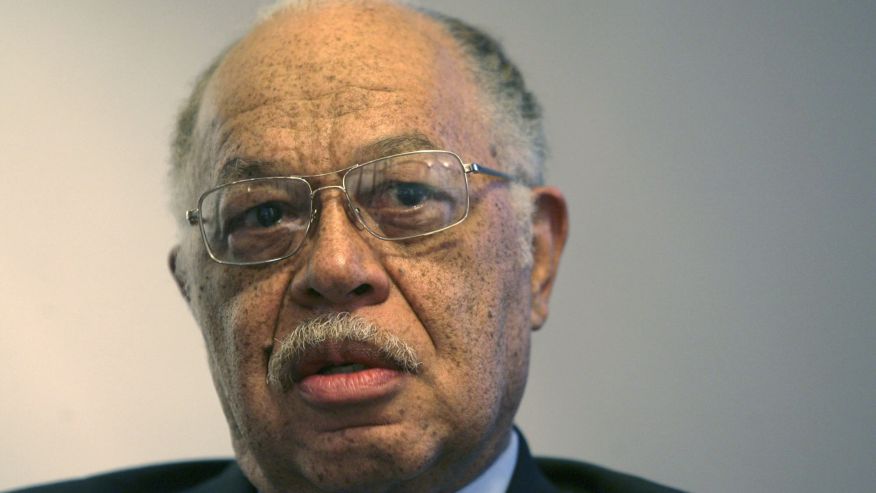
Kermit Gosnell, the former Philadelphia abortionist convicted of first-degree murder in the brutal killings of three infants born alive during illegal late-term abortions at his notorious “house of horrors” clinic, has died in prison. He was 85.
Gosnell, who was serving three consecutive life sentences without the possibility of parole plus an additional 30 years on federal drug charges, died at SCI Huntingdon, according to sources familiar with the matter.
His cause of death was not immediately released, though he had reportedly been in declining health in recent years.
The news emerged publicly via pro-life journalist Ann McElhinney, who extensively covered his 2013 trial, interviewed him in prison, and co-authored a book on the case.
HELP LIFENEWS SAVE BABIES FROM ABORTION! Please help LifeNews.com with a donation!
In her announcement, McElhinney described Gosnell as “the abortion doctor who is thought to have murdered thousands of babies in a 30 year killing spree” and called him “a chilling monster who could sometimes come across as charming.”
She added: “Gosnell is gone, but we should take time to think of the thousands of innocent babies who were his victims. They lived for a short period of time but must not be forgotten. They achieved some measure of justice with Gosnell’s prosecution and incarceration. I think in particular of Baby Boy A, who was so big that even Gosnell’s workers were shocked by the barbarity of his killing and took a photo of him after he was murdered. … Baby Boy A lived for about an hour before he was killed.”
A Philadelphia grand jury, in its investigation of Gosnell’s Women’s Medical Society abortion center, labeled it a “house of horrors” and initially sought charges for hundreds of murders of babies born alive and then killed.
Charges were ultimately limited to seven murder counts “after pressure from senior political and law enforcement officials,” according to accounts from those covering the case.
The facility functioned as a “pill mill by day and an ‘abortion mill’ by night,” federal authorities noted.
A leading pro-life advocate in Pennsylvania responded to the new and remembered his victims.
“Convicted serial killer Kermit Gosnell left a path of destruction in Pennsylvania which shook the Commonwealth to its core,” said Maria V. Gallagher, executive director of the Pennsylvania Pro-Life Federation, the Keystone State affiliate of National Right to Life, told LifeNews. “Tragically, public officials allowed his House of Horrors abortion facility to operate for years without being inspected. As the grand jury stated, hair and nail salons received greater scrutiny than Gosnell’s catastrophic abortion center.
“We continue to grieve the loss of the babies and women who fell victim to Gosnell’s violent crime spree. And we hold out hope that the lessons learned from Gosnell’s reign of terror will not be forgotten,” Gallagher added.
In May 2013, a jury convicted Gosnell on three counts of first-degree murder for the deaths of infants identified in court as Baby A, Baby C, and Baby D. Testimony revealed that these babies were delivered alive during prohibited late-term procedures and then killed by severing their spinal cords with scissors—acts performed by Gosnell or his unlicensed staff.
He was acquitted on a fourth murder charge involving Baby E.
Witnesses described shocking details: Baby A was large enough that employees took photos after the killing, with Gosnell joking the baby was “big enough to walk around with me or walk me to the bus stop.”
Other infants showed signs of life, including breathing and movement, before being killed.
Gosnell was also convicted of involuntary manslaughter in the 2009 death of 41-year-old patient Karnamaya Mongar, a Bhutanese refugee who died from an overdose of anesthesia during a botched abortion.
He faced more than 200 additional counts and was found guilty on most, including 21 felony counts of performing illegal abortions beyond Pennsylvania’s 24-week limit and violations of the state’s 24-hour informed-consent law.
In a separate federal case in December 2013, Gosnell pleaded guilty to illegally distributing OxyContin and other controlled substances through his clinic, which prosecutors described as enabling street sales by addicts and dealers. He received an additional 30-year sentence. Gosnell told the court he was “only trying to help addicts through his novel treatment program.”
U.S. District Judge Cynthia Rufe remarked that he “did more harm than good in the neighborhood.”
The clinic raid in 2010, prompted by federal drug concerns after years of ignored complaints, uncovered horrific conditions: blood-splattered facilities, expired medications, flea-infested animals, rusty instruments, and fetal remains stored in jars, freezers, and other containers.
Detective Jim Wood, who led the investigation, commented on Gosnell’s death: “May God have mercy on his soul but his soul was filled with evil so there may be no mercy for him, like there was no mercy for the babies.”
McElhinney reflected on her encounter with Gosnell: “Meeting Gosnell was one of the few times in my journalism career that I felt I was face to face with evil.”
The case highlighted failures in oversight of abortion providers and sparked national debate over late-term procedures and protections for born-alive infants. Gosnell, who maintained his innocence throughout, claimed he would eventually be exonerated.
He is survived by his victims’ memory and the justice secured through his long-overdue conviction and imprisonment.