The Island of Mozambique is a speck on Google Maps, a tiny patch of land two miles off the East African coast. Today, it’s a sleepy UNESCO World Heritage site. It’s also a magnet for hardcore tourists. One reason is its beauty. The other is its history. Five hundred years ago, it was a vital, heavily fortified Portuguese trading and administrative center. It stood midway between Europe and Portuguese possessions in the Far East, and thus had immense strategic value. I first saw the island in the early 1970s, reporting on Portugal’s colonial wars. From the mainland, it looked like the ends of the earth; an exotic jumble of poverty and decaying wealth floating on the horizon.
At the time, though, that’s not what piqued my interest. Remembering a particular saint did. My family, when I was a child, had a special love for the missions, and (St.) Francis Xavier spent seven months on Mozambique Island, August 1541 to March 1542, on his way to India. He devoted himself to preaching, baptizing, hearing confessions, and working among the sick and dying in the island’s hospital. He almost certainly celebrated Mass in the island’s Chapel of Nossa Senhora de Baluarte (“Our Lady of the Bulwark”). Built in 1522 by Portuguese sailors, it still exists today. It’s the oldest European structure in the southern hemisphere.
So much for memories and geography. Why do they matter?
Here’s why: On the Church calendar, Catholics mark today, December 3, as the Feast Day of St. Francis Xavier. Born in 1506 of a noble Basque family, he came to maturity in the turbulent early years of the Reformation. Francis studied at the University of Paris and was originally resistant to, even sarcastic toward, a religious vocation. It didn’t last. His friend and fellow student, and also a fellow Basque – Ignatius of Loyola – gradually convinced him otherwise. Once persuaded, he was fully committed. Francis went on to be co-founder of the Society of Jesus and one of the original seven Jesuits. He’s widely acknowledged today as the greatest Christian missionary since St. Paul.
The record supports exactly that claim. He was a man of astonishing stamina and zeal. In little more than a decade of tireless ministry, in an era when “social communications” meant direct in-person contact, Francis Xavier baptized somewhere between 30,000 and 100,000 souls in India, Southeast Asia, and Japan. Nor did he merely baptize and abandon. He ensured ongoing pastoral support for the communities he created, adapted his evangelizing to local needs and culture, and worked hard to develop an educated native clergy.
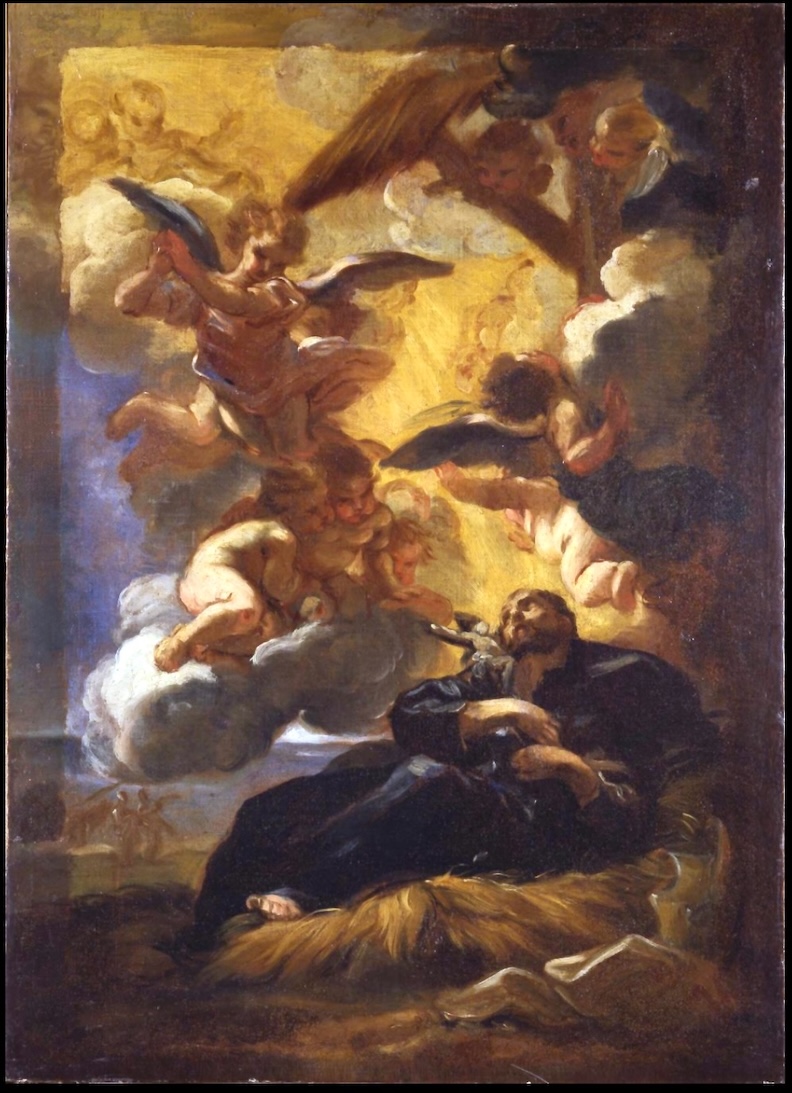
He died of fever and exhaustion in 1552 on Sancian (Shangchuan) Island off the coast of China, waiting for permission to enter and evangelize the mainland. He was barely 46 years old. Having left Lisbon for missionary service in April 1541, he never returned to Europe. He was canonized in 1622. And in 1927, Pope Pius XI named him co-patron, with Thérèse of Lisieux, of the foreign missions.

Advent prepares us for the birth of Jesus and his Second Coming at the end of time. We remember and celebrate these things each year in the weeks before Christmas. If Jesus Christ is who he said he is – the Son of God; God’s Word made flesh for our salvation – then his birth is the decisive event in human history; the central truth of creation. Nothing is more important.
This makes Francis Xavier the perfect saint for the season. He believed in Jesus Christ without reservation, and he gave himself wholly to the Church and her mission without counting the cost. To borrow from the Epistle of James, Francis Xavier was a doer of God’s word and not a hearer only. And we Christians each have the same vocation. Few of us may be called to the foreign missions; but all of us are called to mission in the circumstances we inhabit here and now. Mission is hardwired into the Christian identity.
Which leads to a final thought.
While I was reading a book recently on “cultural Christians” through the centuries, the following passage jumped out with special force:
Instead of thinking of cultural Christianity as the exception, a phenomenon that could only flourish in very specific kinds of conditions, perhaps we should think of it as a default, a natural result of the fallen and sinful state of humanity. . . .[and, because] so many of us too are cultural Christians, then trying to fix the world through politics or just through particular policies on marriage, for instance, will never work. Rather, we need to pursue genuine conversion and sanctification.
True, that. From the Apostolic Age to the present, Christians have always faced the task of being good leaven, and thus transforming a broken world. There’s never been a “pure” Christian golden age because all of us struggle with our sins. But along with Christ’s command to make disciples of all nations comes the temptation to find a comfort zone in our daily lives; to be respected by a culture’s leaders; to fit in and avoid conflict; to compromise with the world in ways that slowly preclude “genuine conversion and sanctification.”
And here’s an example, easily missed: The book I mention above, written by a Christian historian, for a Christian audience, and released by a Christian publisher, repeatedly uses CE (“Common Era”) and BCE (“Before the Common Era”) in its dating of events and trends, rather than AD (“Anno Domini”) and BC (“Before Christ”).
It’s a little thing. It’s also a revealing one. The standards of a profession, including history, reflect its underlying beliefs and pretensions. If Jesus Christ really is the Son of God, the source of humanity’s redemption and eternal life, then excluding Him from the way that we organize and chronicle the most precious human resource, time, seems a curious choice.
What would a man like Francis Xavier think of that? What would he say about us? Count them as questions for reflection this Advent, in the year of Our Lord 2025.