This year marks the centennial of the institution of the Solemnity of Christ the King. Pope Pius XI published the encyclical Quas primas on December 11, 1925, which sketched the theology and announced the new feast of the “Kingship of Our Lord Jesus Christ.”
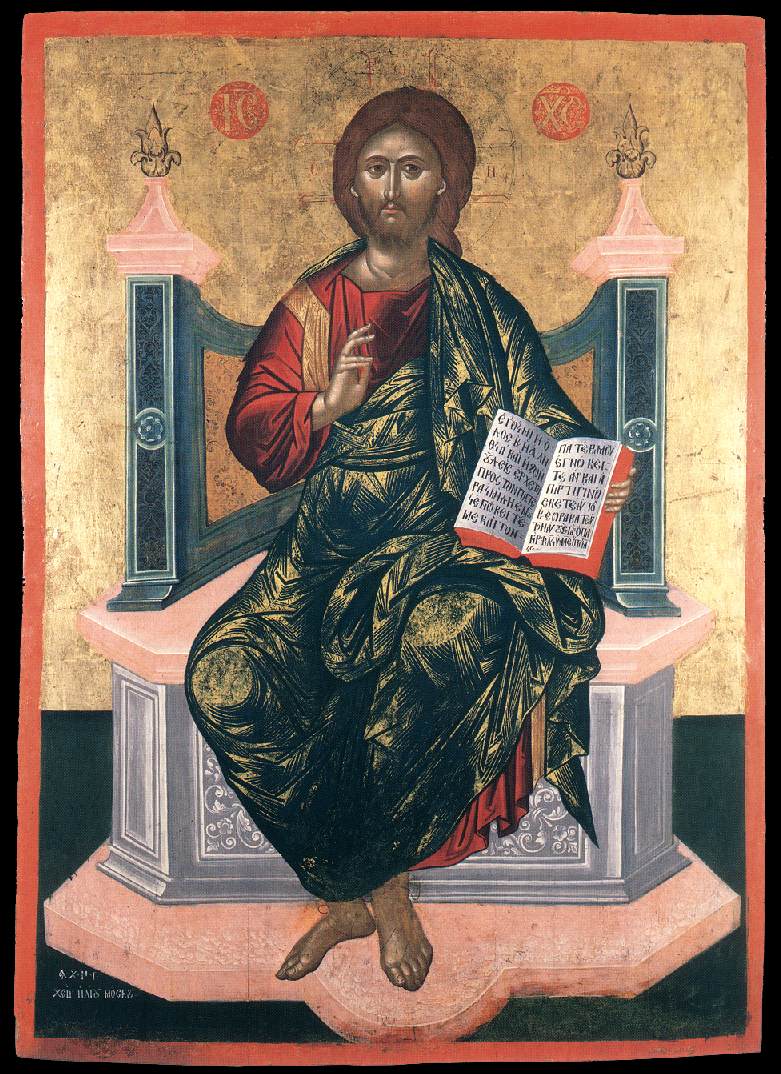
Contrary to this year’s protest rhetoric, America does have a king. All men have a king, because the Kingdom of God encompasses all men. As the Preface for the feast observes, Christ presents to His Father “an eternal and universal kingdom.”
The claims of Christ’s Kingship might seem to most people today inflated, even triumphalist. They are an offense to a modernity that makes its peace with secularism, something of which even some clerics urge us to see as a positive development.
But one should not forget the historical context that motivated Pius XI. The world had passed less than a decade since the “Great War,” which didn’t acquire the appellation of “First World War” until a Second one outstripped it. The horrors of World War I profoundly marked that generation, shocked that a Europe which prided itself on its mission of exporting “civilization” could be so basely uncivilized.
Nor were the pope’s concerns limited to the Marne, the Argonne, and Amiens. As nuncio, then-Archbishop Ratti was the last diplomat who stayed in Poland to witness the “Miracle on the Vistula,” which halted the Bolsheviks’ Western offensive in 1920. The Battle of Warsaw probably saved Western Europe from Communism for a generation.
The papal diagnosis of the previous decade – both of the mutual butchery of Europe’s old order as well as the threat posed by the new regimes – was man’s abandonment of God and His Law: “[T]he majority of men had thrust Jesus Christ and his holy law out of their lives; that these had no place either in private affairs or in politics.”

That same dismissal of the Deity and Divine Law also would send men down futile rabbit holes of human-designed peace and security, culminating in the risible 1929 Kellogg-Briand Pact, which solemnly proclaimed war to be forever outlawed – just a decade before the next World War. Pius XI had a different vision: “[A]s long as individuals and states refused to submit to the rule of our Savior, there would be no really hopeful prospect of a lasting peace among nations.”
A century later, those of us stuck in the postmodern condition may imagine the pope’s warnings to be quaint in a world where “democracy” demands a strict separation of church and state, exiling God from the public square.
The truth is that democracy demands no such thing, though we pretend that it does to avoid the demands binding every human being by virtue of natural law – another reality unfortunately consigned to unjustified silence.
The Gospels may speak of the “things of God and the things of Caesar,” but – while respecting the legitimate “autonomy of created things” – Christians never understood that division to make both sides equal, as if there were things of Caesar that were not first and always things of God.
The human temptation to build a world without God dates back to man’s origins. It was, in fact, the temptation of the first sin: to be as gods, by which we, not God, defined good and evil. It was also the temptation of Babel: to reach heaven by human means.
It is precisely against those temptations that the Kingship of Christ stands. His is a Kingship rooted in spiritual truth, grounded in “justice, peace, and love.” It is a Kingship that recognizes man’s desire to reach Heaven is fulfilled through his union with the Crucified and Risen King, not by human self-sufficiency.
Contrary to those who would argue claims of human freedom, Quas primas explicitly connects “the blessings of real liberty” with recognition “both in private and in public life, that Christ is King.”
The problem of genuine freedom is arguably a leading moral problem of our day. Is freedom the end in itself, self-justifying so that whatever is done freely is good? Or – as Catholics understand it – is freedom but a means to the realization of the good, the way in which what is objectively good also becomes subjectively one’s own good?
This, in turn, leads us back to the problem of the relationship of human self-realization and divine obedience: God is not a threat to human liberty. Religion is not alienating; man’s spiritual fulfillment and his human authenticity proceed in direct, not inverse ratio.
The pope’s encyclical assigned the Feast of Christ the King to the last Sunday of October. The post-Vatican II liturgical reforms moved it to the last Sunday of the liturgical year, because Christ is the “Alpha and the Omega, the beginning and the end.” (Revelation 22:13) He in whom all things were created (John 1:3; Colossians 1:16) and who brings them to fulfillment (Revelation 1:8).”
Which is to say that the Kingship of Christ cannot be dismissed as merely a Catholic dogma with no further import in human affairs. The question of the Kingdom of God is the question of human subjection to man’s Creator and Redeemer, the flight from whom does not free man as much as make him a slave of finitude and evil.
Whether or not we admit it, all men are subject to divine dominion. All men – even Americans – have a King.