Lord Charles Falconer has spent more than a decade pressing variations of an “assisted dying” bill in the United Kingdom, each time promising strict limits and firm safeguards. At the same time, doctors’ groups, disability advocates, and pro-life voices have warned that such laws in other countries expanded from rare, tightly defined cases to routine death on request.
His latest proposal, now before the House of Lords, would permit doctors to provide lethal drugs to patients who say they wish to end their lives. It is within this renewed push to rewrite the rules on life and death that last week’s exchange over pregnant women and euthanasia took place.
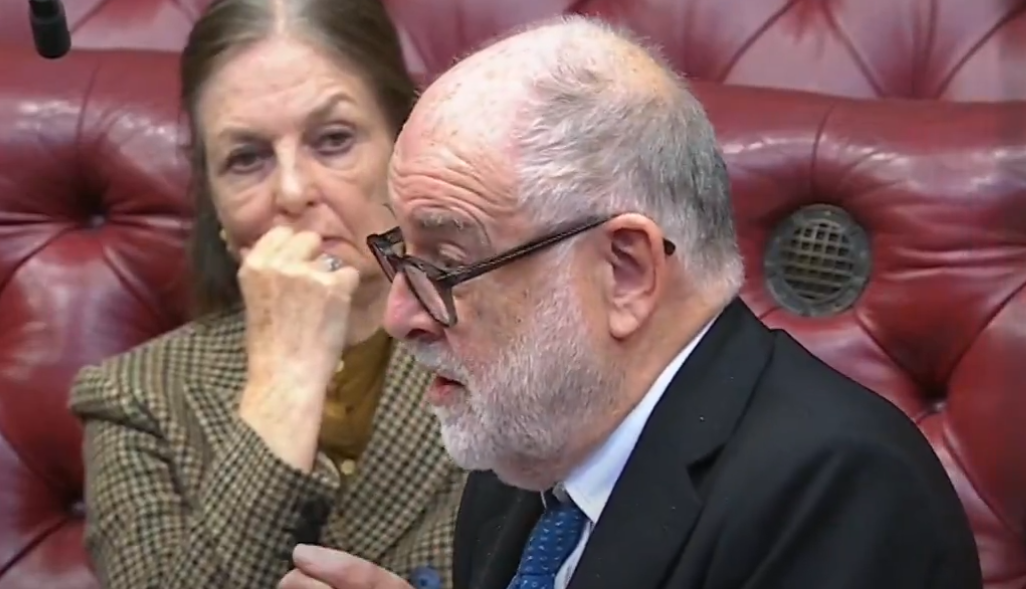
During a measured debate on the now infamous euthanasia bill, a brief exchange revealed the real stakes of the proposal with unusual clarity. The chamber spoke in the usual language of “safeguards” and “choice.” But when Lord Craig Mackinlay pressed Falconer about what would happen to a pregnant woman and her unborn child, the discussion shifted from abstract policy to the stark question of who may live and who may die.
Lord Craig Mackinlay stood up and asked the question everyone else tried to avoid.
Follow LifeNews.com on Instagram for pro-life pictures and videos.
“There is a big issue here,” he began.
He then set out the real stakes with brutal clarity. In Oregon, which has allowed assisted suicide since 1997, doctors must keep a pregnant woman alive as long as possible when there is a viable fetus.
In the Netherlands, Mackinlay noted, doctors take a different path. They kill the baby first, often with an injection of potassium chloride into the child’s heart, he explained, and then they euthanize the mother.
Mackinlay reminded the chamber that the royal colleges oppose this whole project. He warned that Parliament cannot leave the most challenging questions to them. If peers vote this law through, someone will need to write the protocol that decides what happens to a viable child when the mother asks for euthanasia.
There was no theatre in his voice, only the steady concern of a man who could hardly believe the Lords had come this far. So he put the hard question to Falconer: “Which end of the scale does the nobleman’s law prefer these things…?”
You could hear in his wording that he knew what he was asking. Would Lord Falconer’s bill drag Britain toward a Dutch-style regime, where doctors first poison the unborn child so they can proceed to kill the mother? Or would the law at least admit that a pregnant woman always carries a second patient worthy of a modicum of consideration?
Lord Falconer replied.
“The noble lord puts it accurately; some countries have taken one view, and other countries have taken another. It’s clear from the choice that I am supporting that we take the view that pregnancy should not be a bar to it.”
There it is: scrape off the polish and the cruelty stands naked and deliberate. Falconer said it without flinching. The presence of a living child must not stand in the way of a lethal dose for the mother. The agenda will be obeyed. Two heartbeats must not stand in the way. An ultrasound image of a moving baby must not stand in the way. The bonds of motherhood must not stand in the way.
Falconer’s answer was clinical. Detached. “Some countries have taken one view, and other countries have taken another.” As if comparing tax codes. He nailed his colors to the mast when he blithely said, “Pregnancy should not be a bar.”
Imagine a young woman in late pregnancy, frightened, alone, perhaps depressed, told that euthanasia can solve her “problem.” Under Falconer’s logic, the child inside her must not become a hurdle. If the mother qualifies for assisted death, the baby must not get in the way.
This is where decades of abortion rhetoric have led us. Once a society accepts that a child in the womb can be killed for the sake of adult autonomy, it becomes easy to treat that same child as collateral damage when adult death becomes the goal. The culture of abortion glides into a culture of euthanasia without even needing to change its vocabulary.
Last week’s exchange in the Lords should shock every conscience that still works.
On one side stood Lord Mackinlay, repeating, “There is a big issue here,” and pleading for honesty about what this bill will do to mothers and their unborn children.
On the other side stood Lord Falconer, cruel and untroubled, insisting that being pregnant should not disqualify a mother from her own state-sanctioned death.
The question now lies before the House of Lords: will they side with Mackinlay’s human and humane common sense, which sees a mother and her child and seeks to protect both? Or will it follow Falconer’s path, where even pregnancy cannot interrupt the machinery of death? May the House of Lords maintain its humanity; the only thing that merits death is this bill.
LifeNews.com Note: Raimundo Rojas is the Outreach Director for the National Right to Life Committee. He is a former president of Florida Right to Life and has presented the pro-life message to millions in Spanish-language media outlets. He represents NRLC at the United Nations as an NGO. Rojas was born in Santiago de las Vegas, Havana, Cuba and he and his family escaped to the United States in 1968.