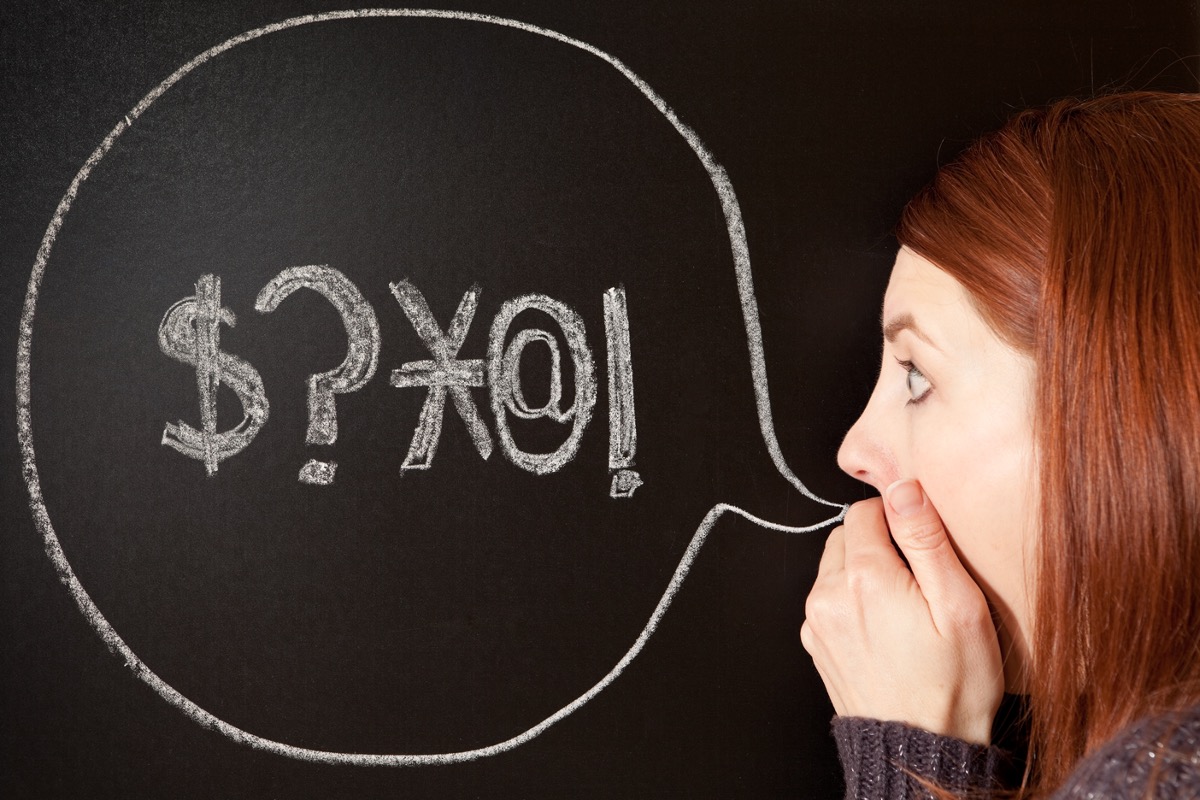
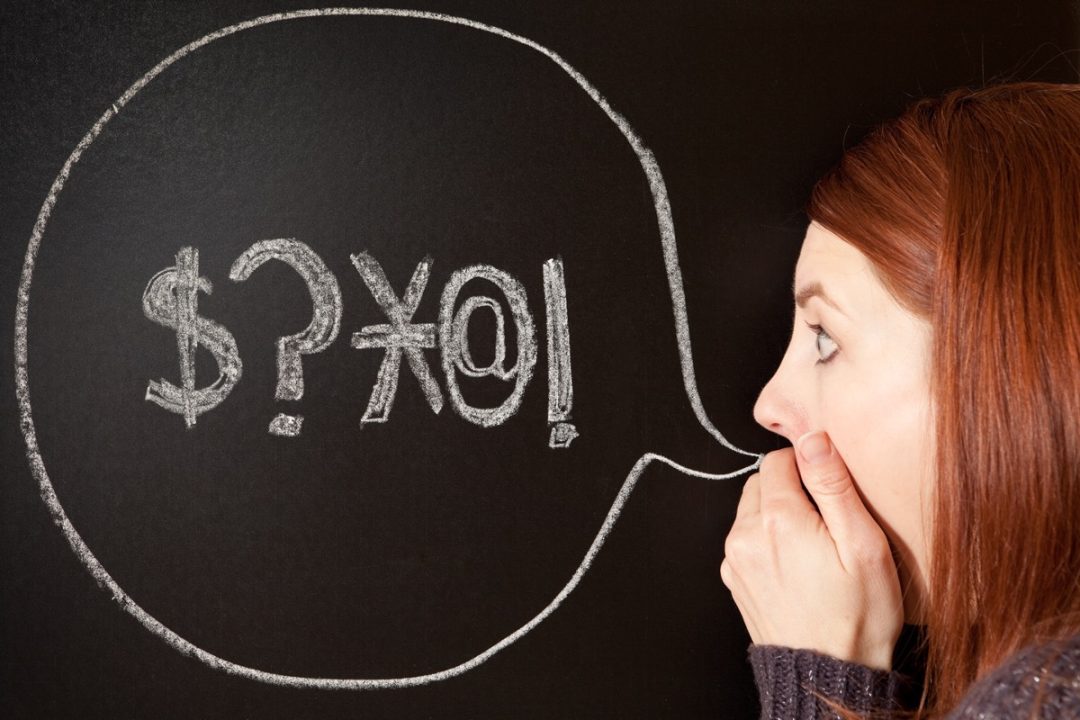
When you’re discussin’ cussin’, many fancy it too much fussin’. I learned this years back when, after editorializing against it years ago, a reader responded that “we aren’t all Little Lord Fauntleroys.” (Why, that #$@&%*!) In truth, though, objections to vulgarity go beyond 19th-century fictional characters. Some observers warn that its acceptance is a sign of cultural decay. And none other than the Father of our Nation, George Washington, inveighed against it. It “is a vice so mean and low, without any temptation,” he wrote in 1776, “that every man of sense, and character, detests and despises it.”
If that doesn’t give you pause for thought, maybe who is on the “other side” pushing vulgarity will. Just consider the following prescription:
Eliminate all laws governing obscenity by calling them “censorship” and a violation of free speech and press.
That was Goal No. 6 of the “45 Goals of Communism,” commentator Michael D. Giammarino pointed out recently. It’s drawn from a list assembled by ex-FBI agent W. Cleon Skousen in his famous 1958 book The Naked Communist.
Now Mainstreamed
And if 1950s communists wanted to legitimize vulgarity, well, they’ve been successful beyond their wildest dreams. Cursing is everywhere today: entertainment, media, and even politics. For example, an analysis informs that foul-language frequency in films/TV programs in 2022 was ninefold greater than in 1980. Just consider, too, how vulgarity in singer Taylor Swift’s albums has increased over time. To wit: She has gone from one mild swear in her debut work to 57 in her most recent album. This is a 5,600 percent rise — in one generation.
Politics and media are only somewhat more genteel. We now sometimes hear elected representatives and commentators publicly use curses such as s***, b******t, and even the f-word. Regrettably, even President Donald Trump has been thus guilty.
Really, though, all this is just stating the obvious. Anyone unaware that vulgarity has burgeoned more than the national debt has been asleep longer than Rip Van Winkle.
As to how this happened, we need look little further than the profanity permeating entertainment. Kids grow up watching vulgarity-infused movies and films and, of course, life starts to imitate art. But what does this phenomenon mean, and what is the effect?
Fightin’ Words
Now, many will shrug off these concerns, saying that at issue are “just words.” As Giammarino points out, however, the words in question retain their vulgar meaning. (How about if I said of your teen girl, “You’ve got a f****** nice looking daughter” there? Would this “intensifier” sit well with you?) Note that I addressed this and more in my 2017 magazine essay “Cussing & Cultural Decay.” As I wrote, too, vulgarity’s true
nature is perhaps best revealed by examining when people are most likely to use it: When they’re angry and lose control. When a man painfully stubs his toe, a vehicle runs into his brand-new car, or he’s facing off with a fellow challenging him in the street, the expletives are more likely to fly. This is when they’re uttered most passionately and constitute vulgarity in its purest form, and it is clear what it is….
That would be verbal pseudo-violence or “anger words.” I then continued:
It’s born of a desire to lash out, to rage against the object of one’s ire, be it the table he stubbed his toe on or the man with whom he’s arguing. When you say “[Expletive] you!” or “You’re just a little [expletive],” it’s not constructive criticism or even any kind of substantive criticism. It’s a verbal punch. Much as with actual fisticuffs, it signals that the dialogue (in the sense of negotiation) has ended and the fighting has begun. This is why back-and-forth swearing often precedes an actual fight: It can be an intermediate step to physical violence.
Of course, vulgarity isn’t always spewn in a spirit of rage. Yet what does it say about our society when verbal pseudo-violence, anger words, now commonly pepper conversations? Are we just an angrier people than we used to be?
Vulgarity Is Divisive
Actually, a number of studies say yes — Americans are angrier than in days past. Also note that according to some research, liberals use vulgarity more than conservatives do. This is instructive because other research shows that liberals are angrier than conservatives, too (and have worse mental health).
This anger is partially due to (and exacerbates) political divides. “And language, especially profanity, plays a role in deepening those divides,” wrote news agency JNS.org in July. The website then continued:
A study found, “Profanity signals group membership and leads to more negative perceptions of opposing groups, exacerbating the polarization cycle.” And it doesn’t stop there. Strong words actively “push individuals toward extreme political positions.” When public figures swear, they’re not just venting, they’re marking tribal lines. And making them.
The rise of profanity in public life isn’t just a cultural quirk. It’s a warning sign, a crack in the foundations of civil society and the norms that once held it together.
It’s also not entirely accidental. Giammarino points out that it isn’t just communists who wanted to legitimize vulgarity. It was (and is) cultural devolutionaries such as satanists and feminists, too. As he writes, providing a representative example:
Feminist thinkers like Mona Eltahawy declare, “Profanity is an essential tool in disrupting patriarchy and its rules. It is the verbal equivalent of civil disobedience.”
This strategy makes sense. After all, consider that, as I’ve illustrated, so-called “leftism” is actually movement toward moral disorder. (That is, leftists ever attack virtue and encourage vice.) Then consider that as the book The Tyranny of Words informs, the side that defines the vocabulary of a debate wins the debate. Now, given this, if you were advancing moral disorder, wouldn’t you want to normalize language disruptive to the moral order?
Can We Control Our Tongues?
There’s an irony to all this, too. The 2006 film Idiocracy portrays a dystopian future United States in which dysgenic factors have lowered IQs to moronic levels. And with moral degradation being the norm, vulgarity is used by all — media, politicians, and the president included. Shouldn’t it matter to us that we’re starting to imitate this art, that we’re sleepwalking toward Sodom?
The truth is that great minds have admonished against vulgarity for millennia. As Giammarino also writes, offering two examples:
The Greek philosopher Epictetus warns, “It is dangerous to lapse into foul language.” Roman statesman Seneca writes, “Exactly as each individual man’s actions seem to speak, so people’s style of speaking often reproduces the general character of the time, if the morale of the public has relaxed and is given itself over to [weakness, immorality, etc.].”
The good news is, as George Washington stated, vulgarity is a vice “without any temptation” — meaning, it’s easy to avoid. We just have to make a decision for virtue, a decision for good, a decision for posterity, a decision for a better tomorrow. No, it’s not the end-all and be-all, but it’s something we can do right now.
What’s more, for my young (and older) friends, know that it will make you a rebel with a (great) cause. For in a time of degradation, exercising virtue is an act of rebellion.