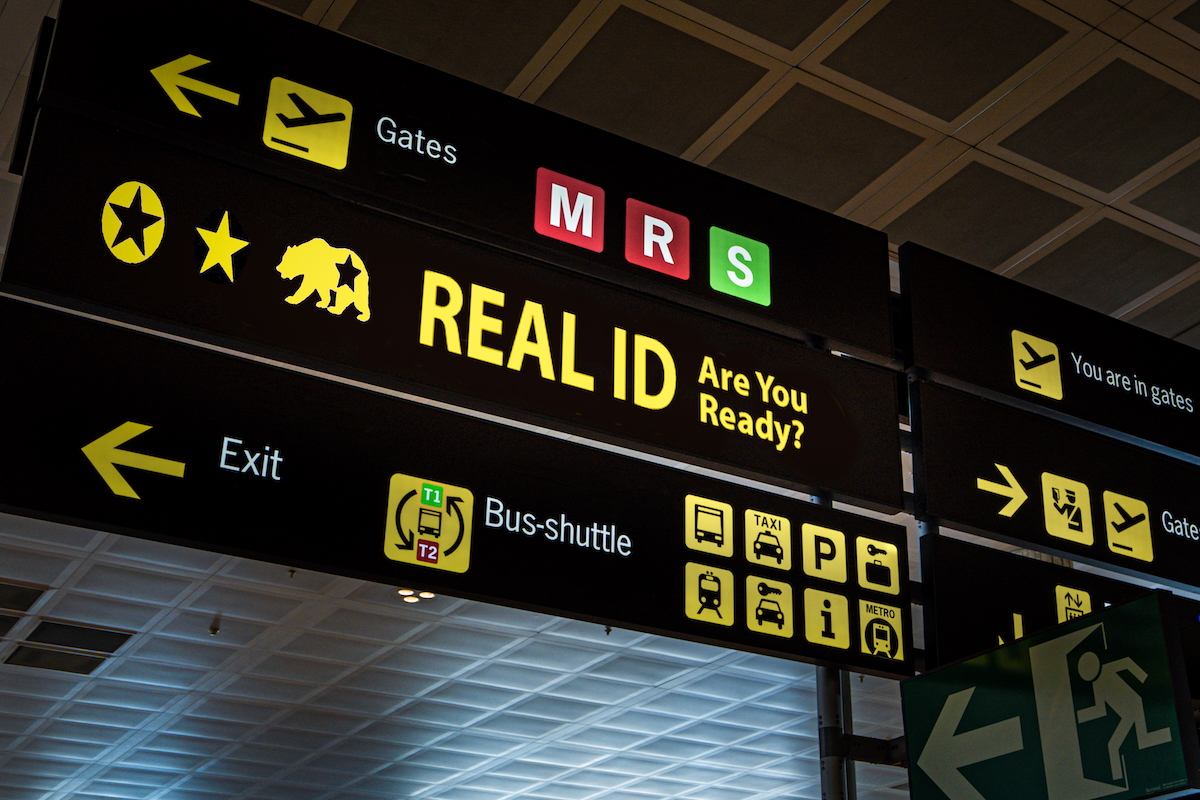
The Department of Homeland Security (DHS) admitted in a recent court filing that REAL ID is unreliable for confirming U.S. citizenship, citing varying state laws on issuing REAL IDs to noncitizens. This disclosure came to light through a civil rights lawsuit filed by Leo Garcia Venegas through the Institute for Justice. Venegas, a U.S. citizen, was detained multiple times in 2025 during warrantless immigration raids.
DHS officers disregarded Venegas’ Alabama REAL ID and detained him, stating that DHS “needed to further verify his U.S. citizenship because each state has its own REAL ID compliance laws, which may provide for the issuance of a REAL ID to an alien and therefore based on [Homeland Security Investigations] Special Agent training and experience, REAL ID can be unreliable to confirm U.S. citizenship.”
Enacted in 2005 under President George W. Bush and introduced by former Representative Jim Sensenbrenner (R-Wis.), who also authored the Patriot Act, REAL ID mandates federal standards for state IDs, effectively creating a de facto national identification database. Enforcement was delayed several times, but eventually began under DHS Secretary Kristi Noem on May 7, 2025, prohibiting Americans with noncompliant IDs from boarding flights and entering federal buildings.
REAL ID Critics
Critics argue that REAL ID exceeds congressional authority under Article I, Section 8, and violates the 10th Amendment by usurping state power over issuing driver’s licenses. At least 25 states initially resisted, but threats to cut federal funding coerced compliance. This federal overreach prioritizes Deep State surveillance over individual privacy and state sovereignty. Former Representative Ron Paul (R-Texas) called it a mandatory national ID:
With the utmost sincerity and a deep conviction, I am quite confident that this bill — if you vote for it, you will be voting for a national ID card. And I know some will argue against that. They say this is voluntary, but it really can’t be voluntary. If a state opts out, nobody’s going to accept their driver’s license, so this is not voluntary.
The federal government lacks authority to impose a national identification system, and REAL ID’s lack of reliability only highlights the threat to privacy and freedom. This disclosure undermines the DHS security claims used to justify REAL ID requirements. If REAL ID cannot reliably confirm citizenship, which the agency now admits, its value for national security, election integrity, and fraud prevention is nonexistent. Americans must urge Congress to repeal the REAL ID Act of 2005, and nullify enforcement at the state level.