
The Justice Department released to the public and posted hundreds of thousands of Epstein File documents to the agency website today. But, strictly speaking, the release does not comply with the law Congress passed — and President Donald Trump signed — requiring their release by December 19.
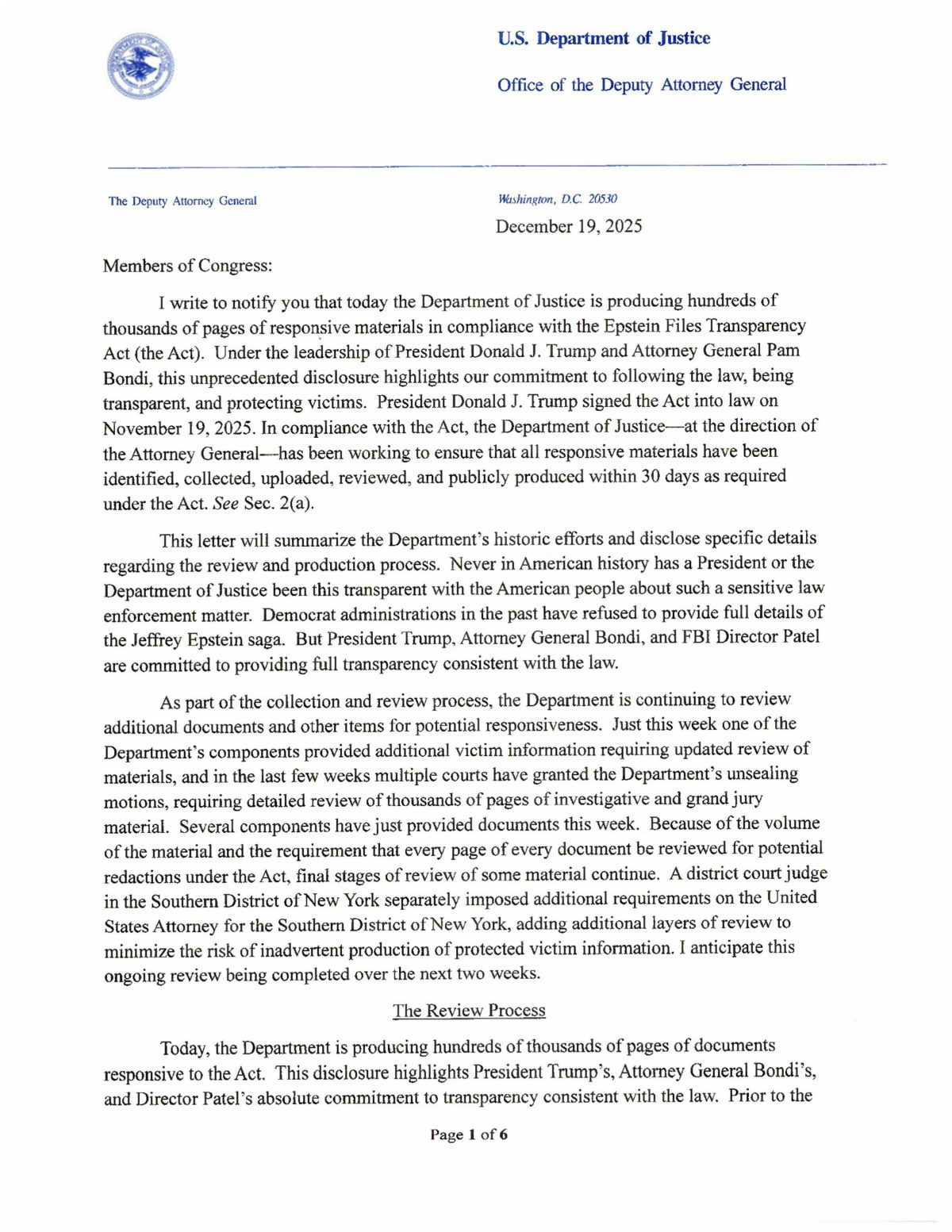
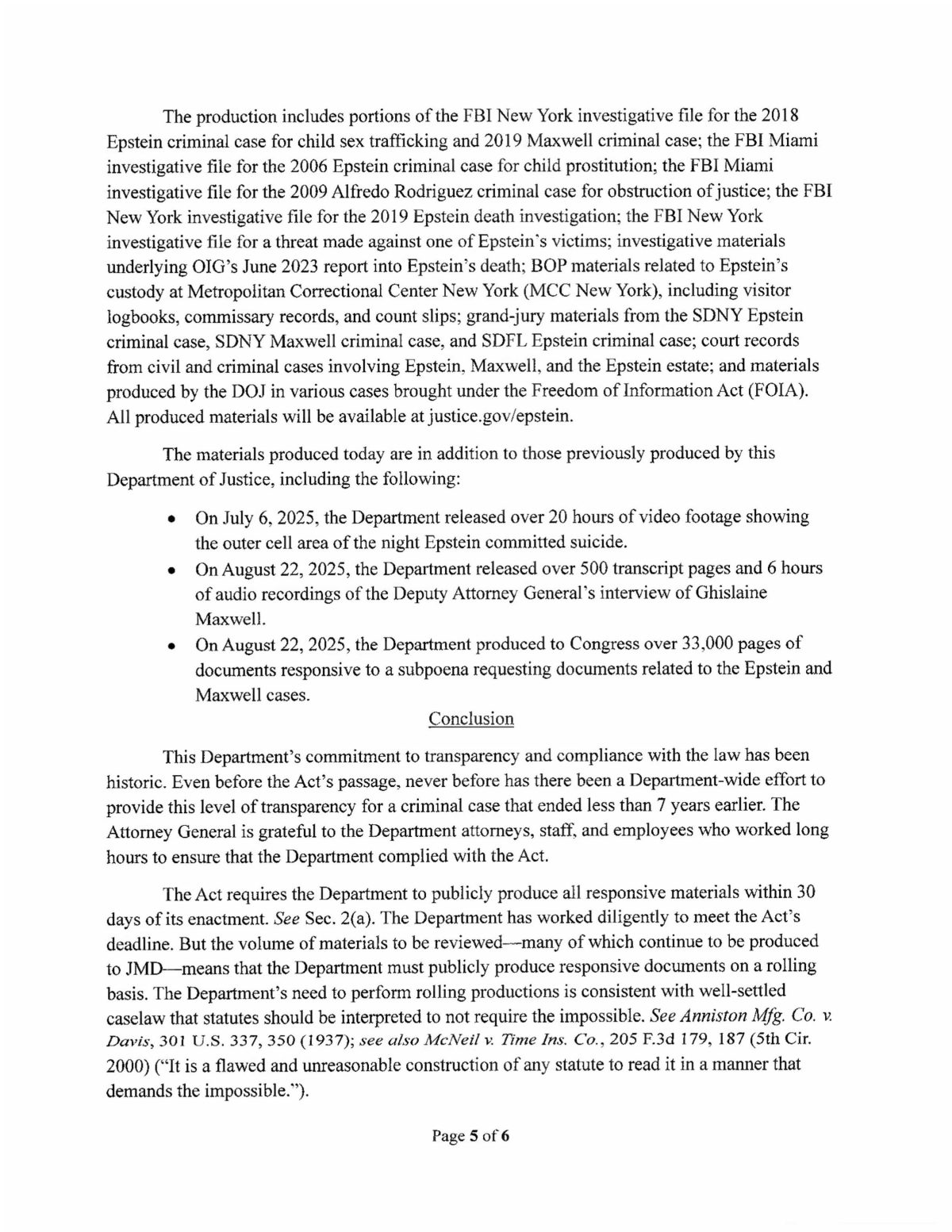
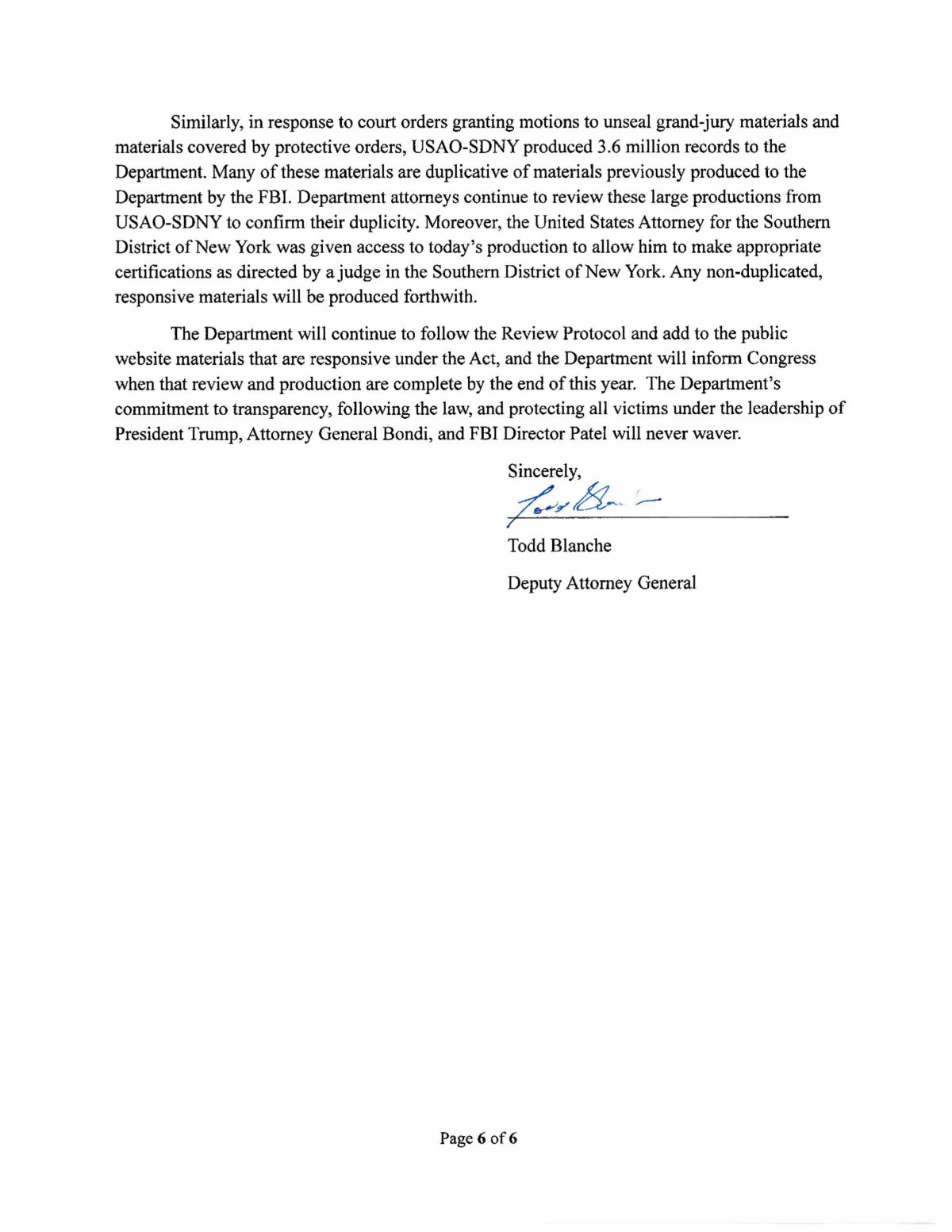
In a six-page letter to Congress, Deputy Attorney General Todd Blanche explained that DOJ will release more documents on a “rolling” basis, and that collating and vetting all the documents that can legally be released with respect to privilege or classification was not possible within the law’s 30-day time frame.
As it is, Blanche revealed that the files identified more than 1,000 victims of Epstein’s perverted sex-trafficking operation, which included the help of now-imprisoned Ghislaine Maxwell, the notorious, jet-setting party girl.

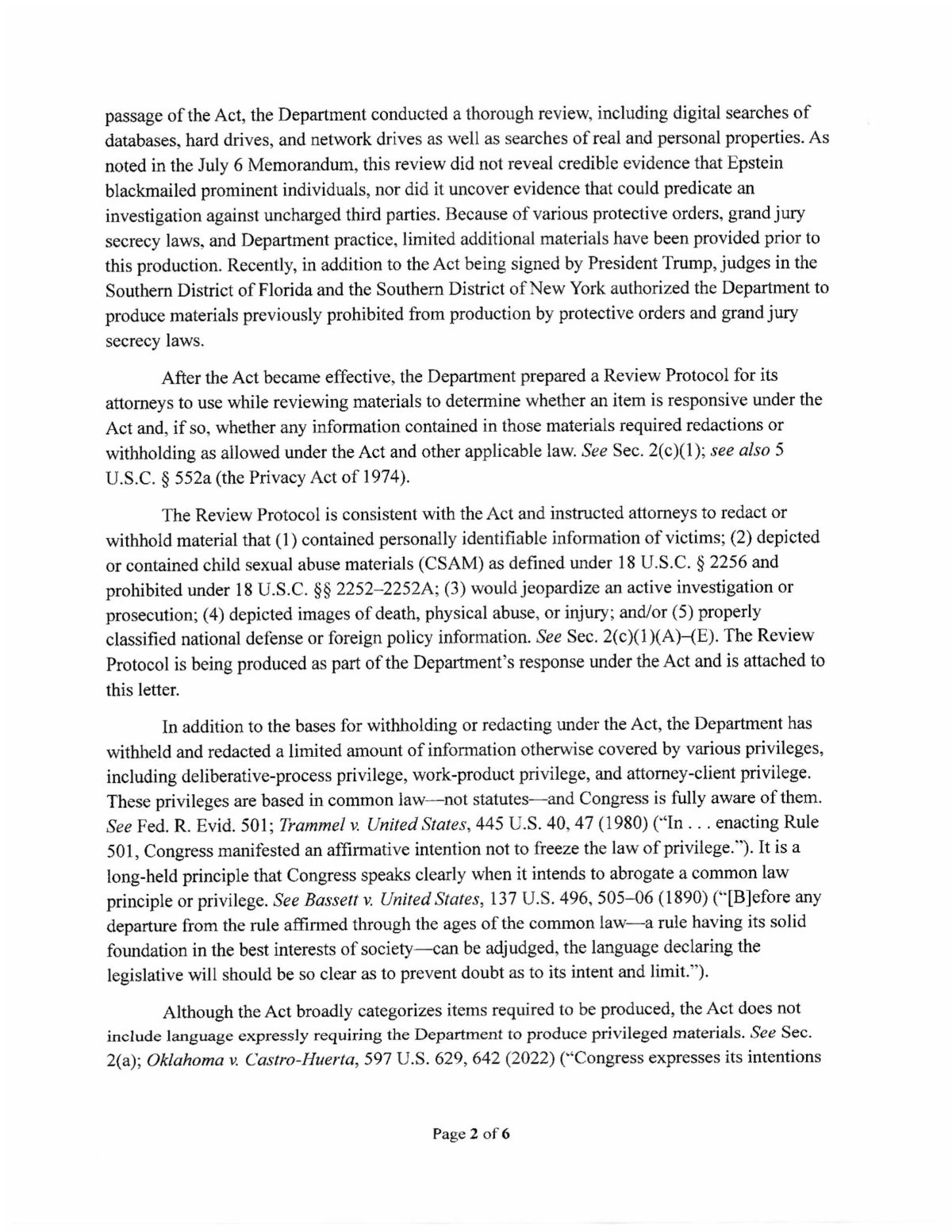
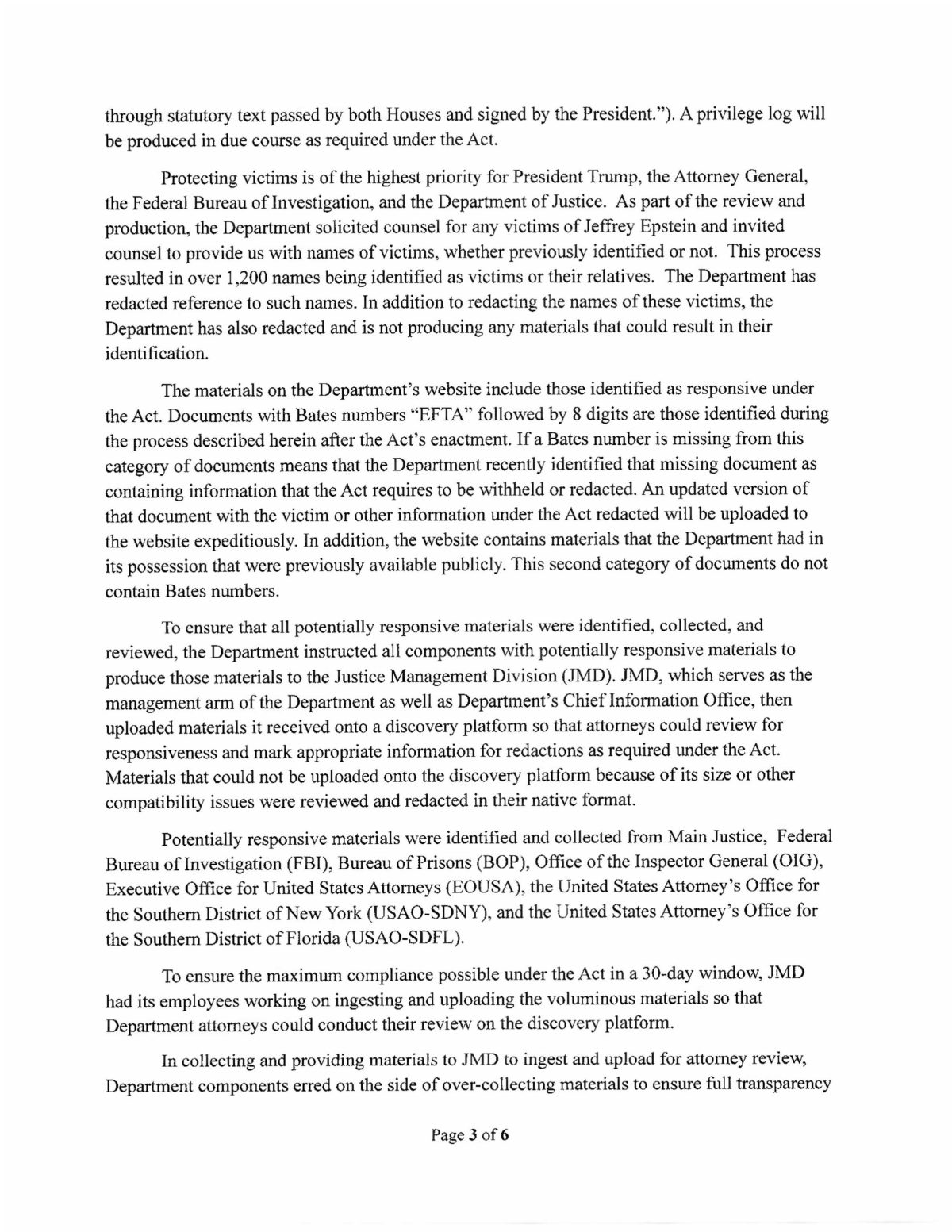
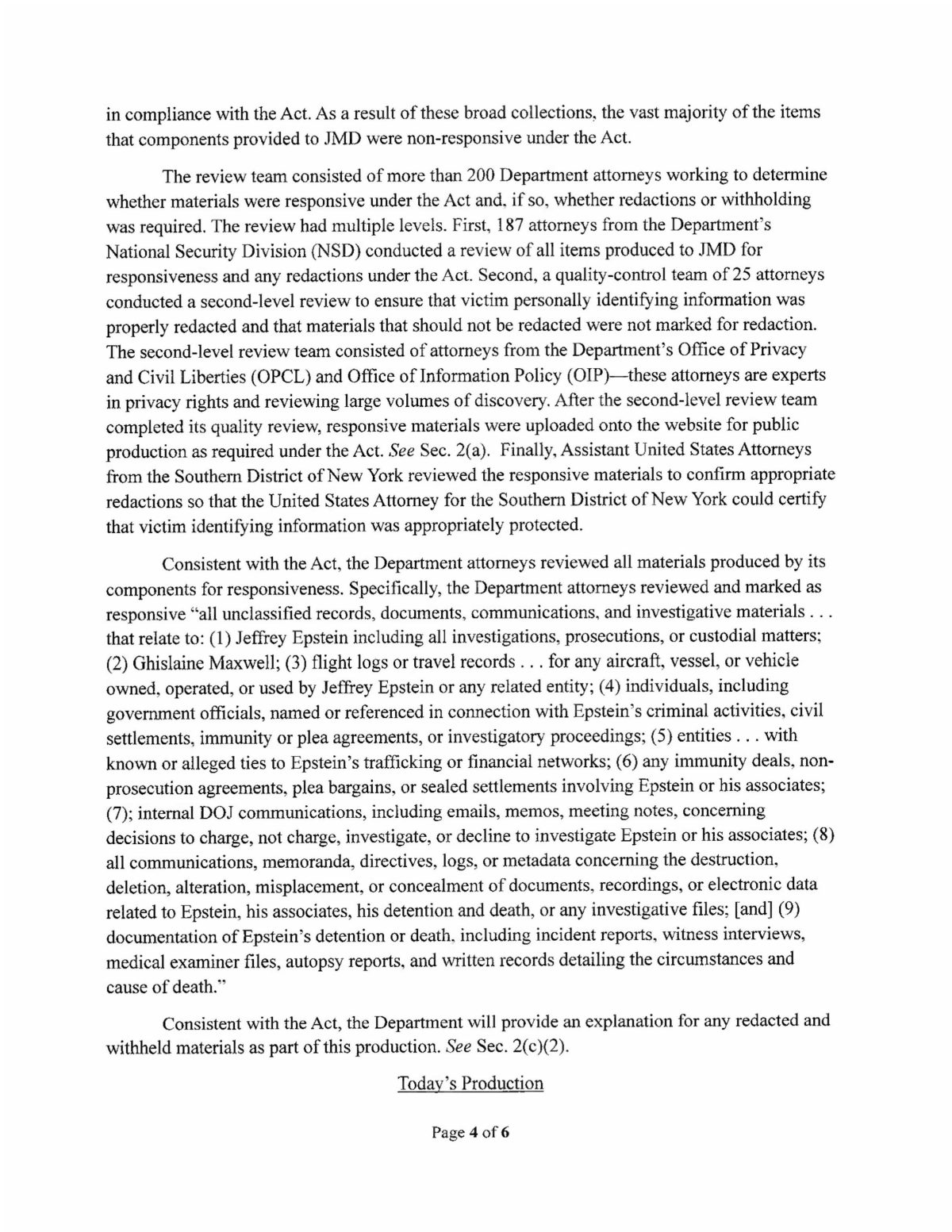
Blanche Letter
Blanche told Congress that his department worked assiduously to meet the 30-day deadline. The clock began ticking when Trump signed the Epstein Files Transparency Act on November 19.
Blanche explained at length the department’s continuing review, and why the documents will continue appearing in the coming weeks. “Just this week one of the Department’s components provided additional victim information requiring updated review of materials, and in the last few weeks multiple courts have granted the Department’s unsealing motions, requiring detailed review of thousands of pages of investigative and grand jury material,” he wrote:
Several components have just provided documents this week. Because of the volume of the material and the requirement that every page of every document be reviewed for potential redactions under the Act, final stages of review of some material continue. A district court judge in the Southern District of New York separately imposed additional requirements on the United States Attorney for the Southern District of New York, adding additional layers of review to minimize the risk of inadvertent production of protected victim information. I anticipate this ongoing review being completed over the next two weeks.
Blanche wrote that DOJ’s review protocol conformed with the law, and that attorneys redacted material that identified victims, showed child sex abuse, would imperil an investigation, showed images of “death, physical abuse, or injury,” and/or contained classified national security or foreign policy information.
The department also “withheld and redacted a limited amount of information otherwise covered by various privileges, including deliberative-process privilege, work-product privilege, and attorney-client privilege. These privileges are based in common law — not statutes — and Congress is fully aware of them.”
The separtment will produce a log of unreleased, privileged material.
1,200 Victims
The letter revealed the number of victims identified thus far. “As part of the review and production, the Department solicited counsel for any victims of Jeffrey Epstein and invited counsel to provide us with names of victims, whether previously identified or not,” Blanche wrote. “This process resulted in over 1,200 names being identified as victims or their relatives.”
DOJ redacted identifying material, and DOJ attorneys “marked as responsive” unclassified materials relating to these:
(1) Jeffrey Epstein including all investigations, prosecutions, or custodial matters;
(2) Ghislaine Maxwell;
(3) flight logs or travel records … for any aircraft, vessel, or vehicle owned, operated, or used by Jeffrey Epstein or any related entity;
(4) individuals, including government officials, named or referenced in connection with Epstein’s criminal activities, civil settlements, immunity or plea agreements, or investigatory proceedings;
(5) entities … with known or alleged ties to Epstein’s trafficking or financial networks;
(6) any immunity deals, non-prosecution agreements, plea bargains, or sealed settlements involving Epstein or his associates;
(7) internal DOJ communications, including emails, memos, meeting notes, concerning decisions to charge, not charge, investigate, or decline to investigate Epstein or his associates;
(8) all communications, memoranda, directives, logs, or metadata concerning the destruction, deletion, alteration, misplacement, or concealment of documents, recordings, or electronic data related to Epstein, his associates, his detention and death, or any investigative files; [and]
(9) documentation of Epstein’s detention or death, including incident reports, witness interviews, medical examiner files, autopsy reports, and written records detailing the circumstances and cause of death.
Redactions will be explained.
Noting that the Transparency Act requires the release of “all responsive materials,” Blanche explained that DOJ “worked diligently” to meet the deadline:
But the volume of materials to be reviewed — many of which continue to be produced … means that the Department must publicly produce responsive documents on a rolling basis. The Department’s need to perform rolling productions is consistent with well-settled case law that statutes should be interpreted to not require the impossible.
Speaking on Fox News, Blanche said the administration worked furiously to meet the act’s 30-day deadline.
“We saw during the Biden administration radio silence from the very Democrats that are screaming from congressional steps today that we haven’t done enough. But guess what?” he said:
President Trump signed that law 30 days ago, and we have been working tirelessly since that day to make sure that we get every single document that we have within the Department of Justice, review it, and get it to the American public.
But DOJ must also ensure that it does not release information that can identify victims.
The review team, Blanche wrote, includes 200 DOJ attorneys.
Massie Warning
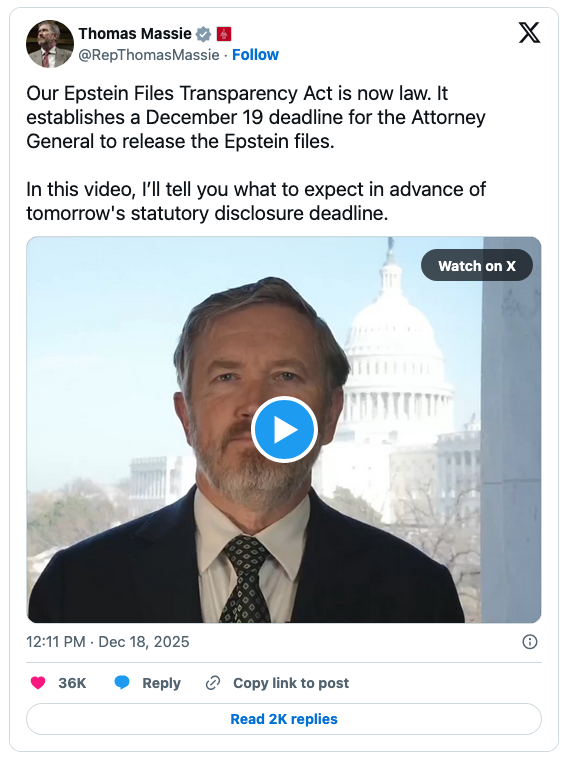
Yesterday, GOP Representative Thomas Massie of Kentucky, who introduced the Transparency Act with far-left Democrat Ro Khanna of California, released a video to explain how the public would know whether the administration had produced all the records.
“Let’s start out with, How will you know if they have released all the materials?” Massie began:
Well, one of the ways we’ll know is, there are people who have covered this case for years, and I’ve talked to them in private and they know what some of the material is that’s back there.
Some victims’ attorneys have contacted Massie, and “collectively, they know there are at least 20 names of men who are accused of sex crimes in the possession of the FBI,” he continued:
If we get a large production on Dec. 19 and it does not contain a single name of any male who is accused of a sex crime or sex trafficking or rape or any of these things, then we know they haven’t produced all the documents. It’s that simple.
Massie explained that Congress passed a law that does not expire and applies to any attorney general. A subpoena for material, he said, expires with the end of each Congress and must be renewed. But a new majority might not renew a subpoena.
Thus, if DOJ doesn’t produce all the documents by the time the Trump administration leaves office, the new attorney would be required to do so immediately.
The DOJ’s searchable Epstein library can be found here.
Todd Blanche’s letter to Congress appears in full below.