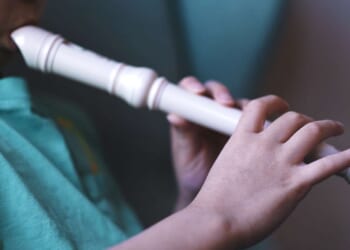
I take the subway to work. I like doing that because it gives me uninterrupted time to do things. Read. I get at least two books done per month. Write. Some of those book reviews get sketched out on the Orange Line. Pray. The trip to work can be a good 20 minutes for silent prayer.
Recently, looking around at my fellow passengers, I wondered how many others might avail their time in similar fashion. And that made me think of Richard John Neuhaus’s “naked public square.”
Why?
When Fr. Richard John Neuhaus introduced the concept of the “naked public square” in a 1984 book with the same name, he argued that it was anti-democratic because it required citizens to strip off their religious identities as the price of admission to public life and discourse.
The naked public square paradigm of church/state relations requires the majority of citizens, who are believers, to disavow that basic identity to participate in political and social life. Religion needs to be hidden from public view. In public life. In schools. On the subway.
Now, I’m not arguing for ostentatious public displays of religion. Catholics are in the midst of a “season of grace and favor” which began with Matthew’s Gospel, counselling people to go to their rooms, close the door, and pray.
But that Gospel is hardly the sole norm for prayer. If it were, how do you explain what Christians are supposed to do every Lord’s Day? Matthew counsels against public displays of faith to ensure we don’t aggrandize our own names, not that we avoid honoring His.
So, what’s that got to do with the naked public square?
Prayer and worship are not just commandments; they are also basic human needs because, pace modernity, there is no such thing as an atheist. Polish philosopher Zbigniew Stawrowski insists every man is a believer because everybody holds to certain absolute core principles – even, paradoxically, relativism – as matters not of proof but axioms of faith.
One believes in one’s “Absolute,” one’s god. That deity may be the true God of Abraham, Isaac, and Jacob, or a god like sex, money, or power. But it is a god with which one identifies and by which one’s life is ordered.
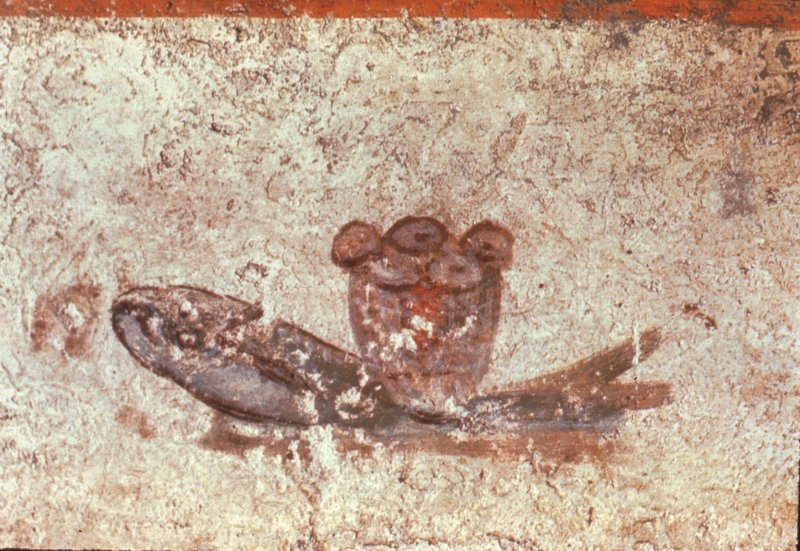
The naked public square does not exclude all believers from the public square, only those adherents of traditional faiths that do not make gods of the goods of this world. Contrary to its proclaimed goal of protecting religious liberty by excluding explicit religion from public affairs, it in fact fosters a preferential approach to religion, canonizing the faith of secularism as long as the latter pretends not to be a religion.
And, in the end, it promotes people living double lives. It does so by privileging certain identities – secular identities – in the public sphere while creating cultural expectations that other deeply held convictions constitutive of one’s identity must remain hidden.
Observant Christians and Jews must engage in some form of spiritual self-mutilation (or at least spiritual hormonal therapy) to conform to the expectations of the naked public square. Those beliefs and values most constitutive of one’s identity are supposed to stay in the closet because they are religious.
In an era otherwise inclined to let “a thousand identities bloom,” certain identities remain candidates for socio-cultural pesticide.
Germain Grisez included “authenticity” in an early version of his ethical theory of the basic human goods. By “authenticity,” Grisez meant a certain transparency of personality: what one held inside and what one showed the world were the same.
It was a part of the goods that integrated human beings from the divisive effects of sin: integrity united the disparate parts within man (reason, will, passions); authenticity united the inner and outer man; friendship connected him to his human peers; and religion to his God.
Authenticity and religion are, therefore, not optional, “feel-good” things, nor the exclusive territory of believers. They are basic goods necessary for all human beings to flourish.
Social, cultural, and legal expectations that somehow imagine religion as an “optional extra” best confined to the sacristy or the transparency of a believer’s religious identity in public are, therefore, at root fundamentally anti-human, in conflict with genuine human flourishing. A naked public square that presupposes people’s religious identity should be generally excluded from public life and visibility likewise stunts genuine human flourishing.
America is currently in the midst of a debate over this matter. The reign of almost 70 years of Supreme Court jurisprudence that confused freedom of religion with freedom from religion is largely over, replaced by a trend towards recognizing free exercise of religion as the first right protected by the Constitution.
As I sometimes pray on the way to work, I admit to wondering whether anybody else is doing so, which usually elicits a prayer for whomever there needs one. But I’m forced also to wonder why it is that we have come to consider a society that deems concealment of so many people’s core identities to be something normal and even desirable.
In an age utterly obsessed with identitarian issues, it’s a paradox that observant Jews and Christians are told to hide them. While Fr. Neuhaus thought the naked public square undermines democracy, perhaps an even more pernicious effect is how it normalizes the idea that persons of faith should live double lives.