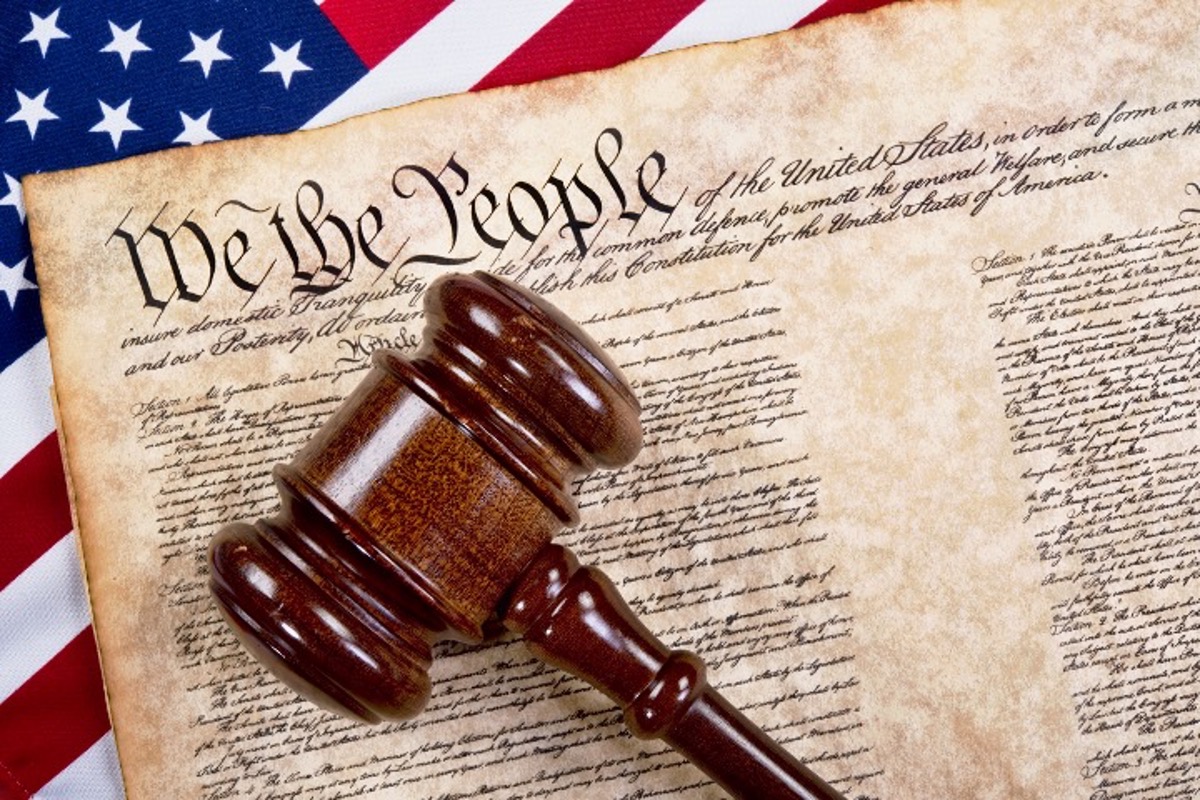
U.S. District Judge Toby Crouse ruled that Article II, Section 13 of the Kansas Constitution, which requires a two-thirds supermajority vote in the state Legislature to apply for an Article V constitutional convention, violates the U.S. Constitution. This provision, added in 1974 to prevent impulsive calls for a constitutional convention, was challenged by pro-Con-Con lawmakers because it impedes their efforts for a convention they claim would impose limits on the federal government. The provision reads:
A majority of the members then elected (or appointed) and qualified of each house, voting in the affirmative, shall be necessary to pass any bill. Two-thirds (2/3) of the members then elected (or appointed) and qualified in each house, voting in the affirmative, shall be necessary to ratify any amendment to the Constitution of the United States or to make any application for congress to call a convention for proposing amendments to the Constitution of the United States.
In March 2023, simple majorities in the Kansas Senate and House passed resolutions calling for a Con-Con following the wording of the Convention of States (COS) Project, urging Congress to propose amendments on fiscal restraints, term limits, and curbing federal power and jurisdiction. However, under Kansas’ supermajority rule, these resolutions failed.
Judicial Overreach
By dictating how the Kansas Legislature must conduct its legislative processes preventing reckless federal interventions, Judge Crouse’s overreach violates the 10th Amendment. Federal judges do not have legitimate authority to override state constitutional protections, and their judicial opinions cannot override the U.S. Constitution. This ruling is another example of blatant federal judicial activism. The Constitution does not specify a simple-majority threshold for state legislative applications to Congress for an Article V Convention — that power is reserved to the states. Each state has interpretive authority over the Constitution, and should not defer to unconstitutional “judicial supremacy,” which is contrary to the intent of the Founding Fathers.
Dangers of a Con-Con
Article V convention proponents such as the Convention of States Project claim it is a tool for reform, to ensure a balanced budget or term limits, for example. The Article V lobby’s tactics aggregate unrelated, centuries-old state applications to reach the 34-state threshold needed to force Congress to convene an Article V Convention. These activists mislead state legislators about a “limited” convention, while filing lawsuits to gain support.
However, history proves claims of a limited convention to be untrue — the 1787 Philadelphia Convention, called merely to amend the Articles of Confederation, discarded the articles entirely and drafted a new constitution, exceeding its mandate. Once convened, delegates to a modern-day convention — very likely to be heavily influenced by globalists — could propose anything, with no enforceable limitations. The judge’s decision opens a dangerous path that would likely spiral into a runaway convention rewriting or replacing the entire Constitution.
Leftists and globalists want an Article V Convention, too. They see it as the best opportunity to abolish the U.S. Constitution. Leftist groups have pushed for a convention in order to repeal the Second Amendment, abolish the Electoral College, and guarantee “rights” to abortion, healthcare, and housing. Harvard law Professor Lawrence Lessig and The Nation magazine have endorsed “runaway” conventions for progressive overhauls, with Lessig stating, “I don’t fear a so-called runaway convention.”
Americans must preserve our constitutional Republic, not remove protections that stand in the way of it becoming a socialist state. Lawmakers should nullify unconstitutional laws under Article VI, enforce existing limits on federal power, and rescind Article V applications. This ruling isn’t a win for Americans; it’s a victory for those slowly chipping away at constitutional safeguards.