It’s difficult to avoid terms such as “legendary” and “distinguished” when referring to Harvey Mansfield’s long career at Harvard University. Of course, his reputation is based on more than his famous resistance to grade inflation or his barbed criticisms of Harvard. He’s translated Machiavelli and Tocqueville, wrote significant books on both, and helped train many doctoral students, among many other accomplishments.
He also taught History of Modern Political Philosophy for over five decades, from 1968 to 2022, with the essence of that course presented in his new book, The Rise and Fall of Rational Control: The History of Modern Political Philosophy. The book provides a robust introduction to the thought of Machiavelli, Hobbes, Locke, Rousseau, Kant, Hegel, Marx, and Nietzsche. Other thinkers receive mention, naturally, but The Rise and Fall of Rational Control is primarily a study of these eight, chosen for their importance in the history of ideas, obviously, but also for their role, as the title indicates, in the defining task of modernity, namely, “rational control.”
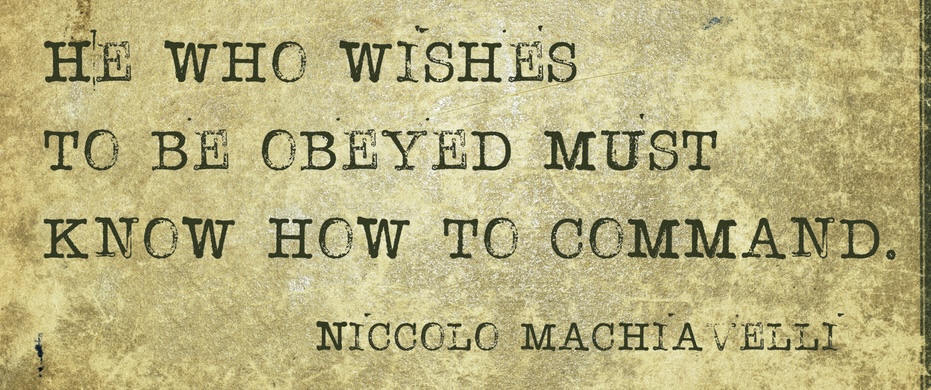
According to Mansfield, modernity is intrinsically linked to Machiavelli. Francis Bacon aspired for reason to enlarge “the bounds of human empire to the effecting of all things possible” and for “the relief of man’s estate,” but it was Machiavelli who revealed how to effectuate that goal. Rational control depended on ending irrational control, meaning custom, which includes social mores, institutions, and “God or the gods.” Rational control requires our liberation from the divine; humanity itself serves as a principle of order, asserting “human rights as against divine rights.” Moral custom can survive the taming of the gods, however, so morality must also be placed on a rational basis. For Machiavelli, princes must learn “how to be not good.” Ancient philosophers constructed utopian principles, but moderns take guidance from the “effectual truth” of action. The ruthless doing of “the necessary” establishes and preserves the city.
In rejecting the political thought of Aristotle, Hobbes, like Machiavelli, rejects the opinions of the ancients, instead following the method of science. Hobbes is apparently unsure if human nature is entirely like the rest of nature—naturalism—in which case human nature could be controlled with the science applicable to all nature, or if human nature is distinct and requires a distinctly political science. In either event, Hobbes is uninterested in probabilities—the domain of prudence—and leaps beyond prudential experience into a new form of control, the sovereign.
Mansfield, in full Straussian form, suggests that Locke hides his Hobbesian commitments. While his politics seems far removed from Hobbes, his account of nature replaces classical ideas of morality with self-preservation. At the same time, Locke accepts natural law arguments made by the theologian Richard Hooker, resulting in some inconsistency. It is this very inconsistency, however, that allows Locke to advocate for limited government, toleration, and the state’s preservation of its citizens as they secure property without natural or moral limits. Ultimately, Locke’s vision refrains from any search for “good, rational laws” as it seeks the marketplace of ideas and wealth in the marketplace without moral limits. In Locke, Mansfield claims, “Machiavellianism finds its way into the self-government of liberalism.”
Thus far the story of modernity is one of rational control, the steady bracketing of custom and the divine to make way for “man’s freedom … to answer his own needs with his own arms.” Control requires faith in reason’s capacity to resolve questions of teleology. With Rousseau, however, modern faith is both augmented and criticized. He advocates for social contract, an instance of modern rational control, but insists that human nature and reason undergo historical change. Human nature is not constant, neither is reason, and thus we enjoy no permanent basis of rationality. Machiavelli grappled with the necessary means to control nature, whereas Rousseau sees a natural sequence to history. History comes to the fore, and it is history, Mansfield argues, that fundamentally shapes the thought of Kant, Hegel, and Marx.
Modernity rejects the divine and the natural as guides for human behavior since (it is supposed) both limit freedom. It’s not difficult to understand how the commands of divinity hinder our autonomy, but the suspicion of nature is less intuitive. In rejecting the supernatural, one might turn to nature as guide, yet, on Mansfield’s account, nature is also an obstacle to freedom. Kant, motivated by reading Hume and Rousseau, and thoroughly modern in his search for control, stresses the dichotomy of freedom and nature. Humans are “free as rational beings and unfree as human beings.” Nature and freedom neither coincide nor overlap. Necessity and nature remain, yet we escape necessity by legislating morality to ourselves, and our self-legislation is not limited by nature; in fact, morality is powerful because “it sets no limits to the demands it places on human nature.” Morality is an exercise of autonomy.
Kant was less sanguine about metaphysics, suggesting reason’s attempt at fundamental principles collapses into contradiction and “antinomies.” For Hegel, however, all contradictions are “overcome” (aufgehoben) by transcending the previous limits of reason. Reason is not fixed or limited by any natural categories, and as reason progresses it “cancels every natural distinction and makes its own replacement for God.” The system resolves all and is the ultimate incarnation of reason.
At this point, the chapter on Marx almost writes itself, since his system overcomes necessity in the interest of the universal human. Marx articulates the “triumph of the human over necessity,” including the necessity of religion, politics, conflict, and competition, and, ultimately, of labor. While liberalism accepts the reality of conflict and restrains some aspects of freedom to achieve peace, Marx believes all conflict can be overcome, with peace attained. Doing so demands a new sort of human, namely “species being,” but this only requires overcoming necessity, for without necessity individualism disappears and “species being” desires community and the universal in an exercise of total freedom. Voilà, it is finished.
So much for the rise of rational control, but what of its fall, as indicated in the book’s title? On that question Mansfield turns to Nietzsche. Nietzsche is not sympathetic to the “herd morality” of liberal democracy and resurrects nature after its exile in modernity. As Mansfield puts it, Nietzsche wants “nature without quotation marks.” That is, nature is power, the will to power, and there is no reason to stylize or sanitize the terms. Nature is red in tooth and claw and demands cruelty rather than goodness. Goodness, in its moral sense, is slave morality; justice is exploitation of the weak by the strong. There is control, of course, but of the strong over the weak and a control uninterested in rationality.
Such is the rise and fall of rational control in modern political thought according to Mansfield. The book—fruit of five decades of teaching—is outstanding. I’m not a Straussian and shrugged when those interpretations appeared, and I quibbled with some choices of texts—why no discussion of the Phenomenology of Spirit?—and clearly Mansfield has far more regard for modernity than I do, but those criticisms seem like petulant throat-clearings. The Rise and Fall of Rational Control is excellent as an introduction to major figures of modern political thought, in showing the historical continuity and development of arguments, and in gesturing to the implications for our own moment and its necessities.