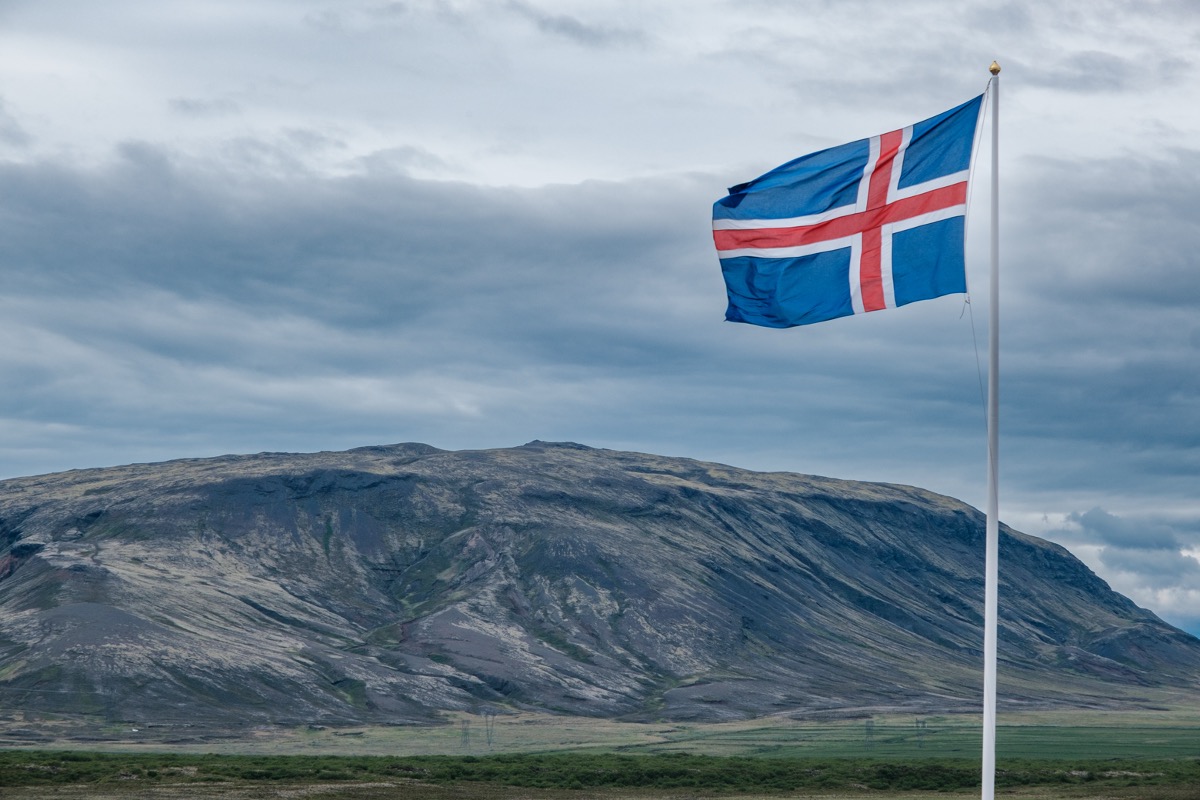
Iceland’s government has announced that it will hold a national referendum on August 29 regarding joining the European Union. The decision comes amid growing efforts to strengthen the supranational bloc at the expense of national sovereignty.
On February 25, during a press conference in Warsaw with Polish Prime Minister Donald Tusk, Icelandic Prime Minister Kristrún Frostadóttir announced plans for the referendum. If it passes, the country will restart formal negotiations on joining the EU.
Politico reported that “the move comes after a flurry of visits by EU politicians to Iceland and by Icelandic politicians to Brussels. If Icelanders vote yes, they could join the EU before any other candidate country,” said someone familiar with “the country’s accession preparations.”
This isn’t the first time Iceland has sought EU membership. A member of the European Economic Area since its creation in 1994, the country applied to formally join the EU itself in 2009. However, it froze negotiations in 2013 after a government more skeptical of EU membership assumed power.
Iceland’s current pro-EU government, elected in 2024 and led by the left-wing Social Democratic Alliance, had previously promised to hold a referendum by 2027. Opinion polls indicate that Iceland’s population is roughly split on joining the bloc. However, momentum for joining has increased due to “a rise in the cost of living and the war in Ukraine,” as well as public disapproval of U.S. policies under President Donald Trump.
Replacing National Sovereignty With Internationalism
Iceland appears to be the latest example of the establishment using geopolitical events to promote internationalism at the expense of national sovereignty. For example, Finland and Sweden joined NATO in 2023 and 2024, respectively, in response to Russia’s invasion of Ukraine, and Sweden and Denmark have both faced calls to join the Euro currency.
Unfortunately, once countries have surrendered their sovereignty to the EU or another international organization, it’s rare for them to reclaim it. The United Kingdom’s “Brexit” vote in 2016 and subsequent withdrawal in 2020 were a rare exception.
Since Iceland’s government appears intent on shackling its country to the EU, it now appears up to voters to protect their national sovereignty.
This article is adapted from the March 6, 2026 Insider Report. The Insider Report is The New American’s weekly online newsletter that is emailed to TNA subscribers each week. Click here to subscribe to The New American to receive the Insider Report and access exclusive content.