For an ancient people, the Romans were atypical in their concern about the moral justification of their wars. Conquest, they believed, was at least potentially nefas (“wicked”) and risked the community’s suffering religious pollution and divine disapprobation. To engage in a “just war” (bellum iustum) demanded a ceremonial declaration by a special class of priests who advised the Senate on foreign affairs and treaties.
Thus, even after the Second Punic War (218–201 BC), during which the Romans so thoroughly defeated the Carthaginians that the rival empire was constrained to little more than their North African city-state, Rome believed it required just cause to finally conquer its historic adversaries. Perceiving an opportunity to strengthen his own hand, the Numidian king Masinissa, an ally of Rome, exploited Carthage’s inability to effectively defend itself by regularly seizing territory and conducting raids. Finally, in 151 BC, a frustrated Carthage raised an army—in violation of the terms of their surrender to Rome 50 years earlier—and counterattacked the far stronger Numidians, who slaughtered the hapless Carthaginians.
Here, Rome—and particularly the statesman Cato the Elder, who would end his senatorial speeches with the phrase Carthago delenda est (“Carthage must be destroyed”)—had its bellum iustum. In 149 BC, a Roman delegation arrived in Carthage and demanded the city explain why they had used an army against the Numidians without first securing Roman approval. Their punishment, the Roman emissaries decreed, was to abandon their city and move inland, which effectively translated to civilizational suicide. Of course, Carthage refused. The subsequent Third Punic War ended three years later, with the once great city razed, its people enslaved, and the territory incorporated into the ever-growing Roman republic.
It was in that same land of the Numidians, five and a half centuries later, that Augustine of Hippo would offer a Christian articulation of that (some may say self-serving) Roman concept of bellum iustum. In City of God, Augustine cites the Roman statesman Cicero’s argument that a city should take up arms only in defense of its faith or safety. The bishop of Hippo in the same text observes that “it is the injustice of the opposing side that lays on the wise man the duty of waging wars.” Elsewhere, in Contra Faustum Manichaeum, Augustine expands on this idea, proposing that Christian citizens have an obligation to protect peace and punish wickedness, which extends to the realm of foreign affairs and military conflict. A later church father, Isidore of Seville, similarly declared: “Those wars are unjust which are undertaken without cause. For aside from vengeance or to fight off enemies no just war can be waged.”
As northern Europe was Christianized in the early medieval period, Catholic clerics such as Gratian in his Decretum encouraged converted political leaders to put into practice these patristic ideas, which medieval theologians argued had scriptural basis in St. Paul’s description of a ruler as “God’s minister” who “does not bear the sword in vain” (Rom. 13:4). The Council of Le Puy in 975 AD encouraged what came to be called the “Peace of God,” a popular peace movement demanding that wars be limited to the parties involved; the subsequent Council of Verdun in 1016 even threatened excommunication and interdict for those who failed to abide by these moral exhortations. Early ecclesial edicts also began to prohibit certain classes of weapons between Christian armies, such as bows and arrows (and, later, crossbows).
The “Truce of God,” first proposed by Pope John XV, forbade war on certain days. One synod in 1017 commanded that all warfare stop “from the ninth hour of Saturday until the first hour of Monday.” Another council forbade fighting on days that marked the most salient moments of Christ’s life: Thursdays (the Ascension), Friday (the Passion), Saturday (His burial), and Sunday (the Resurrection). In time, many other feast days were added to the list.
In the early 13th century, the Italian theologian Thomas Aquinas offered the most robust and systematic articulation of just war theory, in Summa Theologiae II-II, Question 40, Article 1. There he answers the question, “Whether It Is Always Sinful to Wage War?” Aquinas, building on patristic and early medieval sources, argues no, war is not always sinful, but that three criteria must be satisfied for it to be just. These are: (1) it must be justified on the authority of a sovereign; (2) there must be a just cause; and (3) the belligerents must have a right intention.
Per ethicist James Turner Johnson, one of the preeminent scholars of just war theory, “sovereign authority” is the idea that only a person responsible for the good of an entire community may justly authorize warfare. (The only exception to such a use of arms would be in response to an attack under way or immediately offered.) Johnson notes that for Aquinas to lead with the sovereign as a first principle of just war is not accidental, because the only force that could be justified is that of a legitimate political authority.
The second principle, a just cause, means that violence is permissible because of some fault in one’s adversary, such as recovery of something wrongly taken or the punishment of evil. Though not explicitly named by Aquinas, presumed would also be a scenario of self-defense against an attack that is already under way or obviously imminent. Johnson argues that for Aquinas, “defense of the common good—protecting just order and therefore peace—is the central rationale for just war as a whole.” This stems from the government’s responsibility to protect order, justice, and peace, what Augustine termed the tranquillitas ordinis, the tranquility of a just political order.
Third, says Aquinas, “it is necessary that the belligerents should have a rightful intention, so that they intend the advancement of good, or the avoidance of evil.” (This intention derives from one of what are sometimes called “first principles” of philosophy, which cannot be logically deduced but are simply presumed, such as the law of noncontradiction.) As for the positive, Aquinas relies on canon law in defining right intention as the objective of securing peace or punishing evildoers. Per Augustine: “We do not seek peace in order to be at war, but we go to war that we may have peace.” Alternatively, the negative side of intention is to stop cruelty, curb rebellion, or block the “lust of domination.”
These Thomistic criteria have informed and defined all later Christian discussions of just war, such as in the Scholastic and Humanist eras. This includes that of the pacifist Erasmus, who asserted in his 16th-century The Complaint of Peace and the Treatise on War that just war theory effectively operated as a justification for violence, and thus argued for more severe limitations on acceptable application of war. That Thomistic influence is also evident in Post-Reformation Dutch Protestant humanist Hugo Grotius, who in his book On the Law of War and Peace identified three just causes for war: self-defense, reparation of injury, and punishment.
In the modern era, three prudential criteria have often been added to the classical ones proposed by Augustine and Aquinas: last resort, the assessment that the good done by resorting to force will outweigh the evil (i.e., overall proportionality), and a reasonable hope of success. Johnson notes that the timing and circumstances of when these began to be argued is unclear. These criteria, a fairly recent scholarly development, “reflect the same uneasiness with modern war that gave rise to modern-war pacifism” and are a “prudent exercise of statecraft.” Moreover, because of developments in the idea of sovereignty since the Treaty of Westphalia in 1648 initiated the movement toward the modern nation-state, international law regarding a nation’s understood right to use force has focused attention on the right of self-defense.
In an American context, it is fascinating to note that the two most important wars in our own national self-understanding—the American Revolution and the Civil War—are still debated by Americans as to whether they satisfied the criteria of a just war. The New Criterion, for example, earlier this year featured a provocative (and expectedly thoughtful) piece by celebrated British historian Andrew Roberts critiquing the traditional reasons given for the colonists’ repudiation of the Crown as less than satisfying. The Civil War, in turn, more than 150 years removed from its completion, is still viewed by many Southerners as a war of aggression against people who had every right to secede and form their own government.
Of course, both these examples are complicated by the fact that they were not technically wars against two adversarial independent political entities but movements of secession, in that the citizens of one nation demanded the freedom to break from the state to which they had earlier, by their own admittance, owed their political allegiance. Many examples in the 20th century also present uncomfortable realities regarding just war theory. In the Spanish-American War (1898), the U.S. ship Maine was blown up and sunk in Havana’s harbor, resulting in the deaths of 266 American sailors. Whether or not the Spanish were in any way responsible (a subject still debated to this day), the United States’ reaction, which resulted in the conquest not only of Spanish Cuba but of Puerto Rico, Guam, and the Philippines, can hardly be described as meeting the criteria demanded by just war theory.
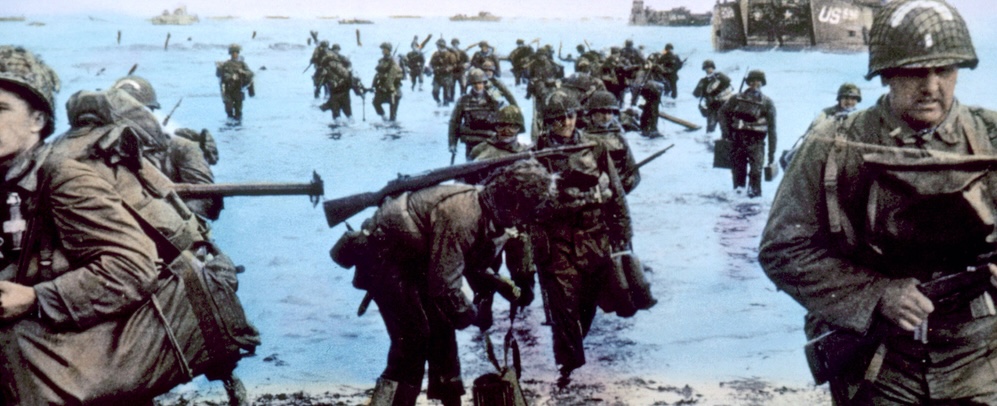
In the Second World War, the United States was of course on much firmer ground. The Japanese, though certainly frustrated by U.S. oil embargos, were unjustified in launching a bloody surprise attack on Pearl Harbor that killed thousands of Americans and could hardly have expected anything less than military retaliation. Indeed, all three of the Thomistic criteria are easily identifiable in the American response, as are the additional three prudential criteria.
All this said, I would argue that there are other factors that can further complicate the analysis of what constitutes just political violence. For example, in his novel The Fathers, Southern Agrarian Allen Tate describes a slaveholding Virginia Unionist family whose property and family are attacked by Union forces at the beginning of the Civil War. In such a scenario, even if the broader Confederate cause may not, in the abstract, be justified, it becomes more difficult to make a determination regarding what you, as an individual person, should do as a father, son, brother, or citizen. If an invading army treated you, your family, and your property with rapacious contempt, would you not in some sense be morally justified to react with violence, even if it meant aligning yourself with a broader political cause that is morally questionable?
The complexities of modern warfare further complicate these questions. Is a nuclear weapon, under any circumstances, morally legitimate? The Japanese cities of Hiroshima and Nagasaki were disproportionately civilian targets, and thus their status as historical recipients of atomic payloads has (understandably) provoked endless debates over the justness of the attacks levied against them. Perhaps if the target were a remote military base, where civilian casualties would be minimized, the calculus of whether such action is justified would change. Today we wonder whether unmanned aerial vehicles (i.e., drones) further complicate what constitutes just military action—though, one might reasonably retort, the Allies in World War II used piloted aircraft to firebomb a great many German and Japanese cities with far greater devastation to civilian populations than any drone has done today with a few hellfire missiles.
Millennia before any human could have imagined a weapon not much bigger than a horse that is capable of killing a hundred thousand people, Aristotle argued in his Politics: “The proper object of practicing military training is not in order that men may enslave those who do not deserve slavery, but in order that first they may themselves avoid becoming enslaved to others.” It’s a problem that is eerily similar to the challenges we face today as we confront threats that, according to who you talk to, are either immediately existential or distantly peripheral.