Every day, we encounter articles warning of AI’s future dangers. But is machine learning really the threat? No. As psychiatrist Karl Stern warned 71 years ago in “The Third Revolution,” the core problem is that intellectual elites have spent more than a century embracing materialism: scientism über alles.
Stern, a Jewish psychiatrist who fled Nazi Germany and converted to Catholicism, diagnosed this delusion with prophetic clarity. He warned that when we reduce persons to mechanisms, it opens the door to dehumanization in all its forms. The AI debate is the latest chapter in a story Stern witnessed firsthand: in Nazi Germany, materialist ideology reduced human beings to specimens in a racist biological theory, their humanity ignored.
Stern identified the fundamental error: science operates legitimately on the material, measurable plane. But when it claims this is the only plane, it fails on its own terms.
Consider Stern’s famous thought experiment. Imagine assembling a research team to study Beethoven’s Ninth Symphony. Physicists analyze the sound waves, intensities, and frequencies; psychologists investigate Beethoven’s childhood traumas and how he coped with deafness; sociologists examine his choice of Schiller’s “Ode to Joy” in the post-Napoleonic political climate; neurologists use functional MRI to map which brain regions are stimulated when subjects hear the choral movement.
Yet as Stern observes, “No matter how much data our scientific team compiled, it could not ‘explain’ a single bar of the musical experience we call the Ninth Symphony. The problem isn’t insufficient data. The problem is categorical: aesthetic experience, meaning, and beauty exist on a plane that scientific measurement cannot access.
This isn’t a failure of science. Science cannot deal with all of reality. As Stern wrote, “Love and hate, joy and mourning cannot be quantified.” You can map every neuron, measure every hormone, track every electrical impulse – and still not explain why one loves a prodigal son.
The same limitation appears across every domain that matters most to human life. Science can map neurological processes during moral decision-making, but it cannot ground moral obligation itself. Why should we sacrifice for others if we’re merely collections of atoms following physical laws?
Fundamentally, science cannot answer “why” questions about purpose and meaning. It excels at describing mechanisms – i.e., how things work. But it cannot address teleological questions – why things exist, what their purpose is.
These aren’t defects in the scientific method. They’re inherent limitations that reveal reality’s true nature: multiple planes of being, each requiring its own mode of knowing. The catastrophic error of scientism is claiming that only the material plane is real – that if science cannot measure it, it doesn’t exist.
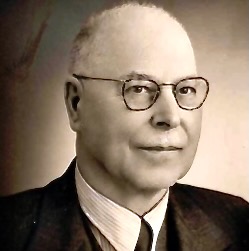
Stern’s solution wasn’t to reject science but to take it as a partial understanding of reality. The Catholic intellectual tradition, drawing on Aristotle and Aquinas, has always insisted on what Stern called “multiple planes of being.” Material reality operates according to physical laws that science can study. But persons exist simultaneously on several planes – body, soul, and spirit united in a person, a person made in God’s image.
If Stern were alive today, he would tell us how his understanding of reality relates to potential dangers from AI. Consciousness cannot be achieved through algorithms – not because our computers aren’t powerful enough, but because self-awareness belongs to a non-material plane of reality. No amount of computational complexity can bridge the gap between syntax and meaning.
Consider something as concrete as addiction recovery. Could an AI chatbot serve as a 12-Step sponsor? Technically, it could be programmed with all the right phrases. But it could never actually be a sponsor – because sponsorship requires what AI fundamentally lacks: empathy born of shared suffering, moral authority grounded in personal transformation, the presence of one wounded healer accompanying another. A sponsor needs to have been broken and found grace – to be “God with skin.”
Materialism fails everywhere it’s applied to persons. You cannot reduce love to oxytocin, beauty to preference patterns, moral obligation to evolutionary advantage, or human dignity to biological function. Persons are embodied souls, created for communion with a personal God, bearing His image.
We should use AI where it excels – as a tool for analyzing data, automating routine tasks, and solving computational problems. But we must resist letting it invade domains that belong to persons: education that forms character, counseling that heals souls, relationships that constitute our humanity.
And we should reclaim the vocabulary of the soul. In an age that reduces persons to brains, consciousness to information processing, and love to neurochemistry, we need to speak again of spiritual realities: of souls created for eternity, of transcendent purposes, of communion with the divine. Not as poetry or metaphor, but as the most fundamental truth about what we are.
Karl Stern fled one materialist regime that reduced persons to specimens and lived to see others embrace the same philosophy in different forms. The AI panic is just the latest manifestation of the delusion he diagnosed: that persons are mechanisms, that consciousness is computation, that science is enough.
It isn’t enough. It never was. And until we recover what Stern knew – that persons exist on multiple planes, that materialism destroys human dignity – we’ll keep building better tools while losing our humanity.