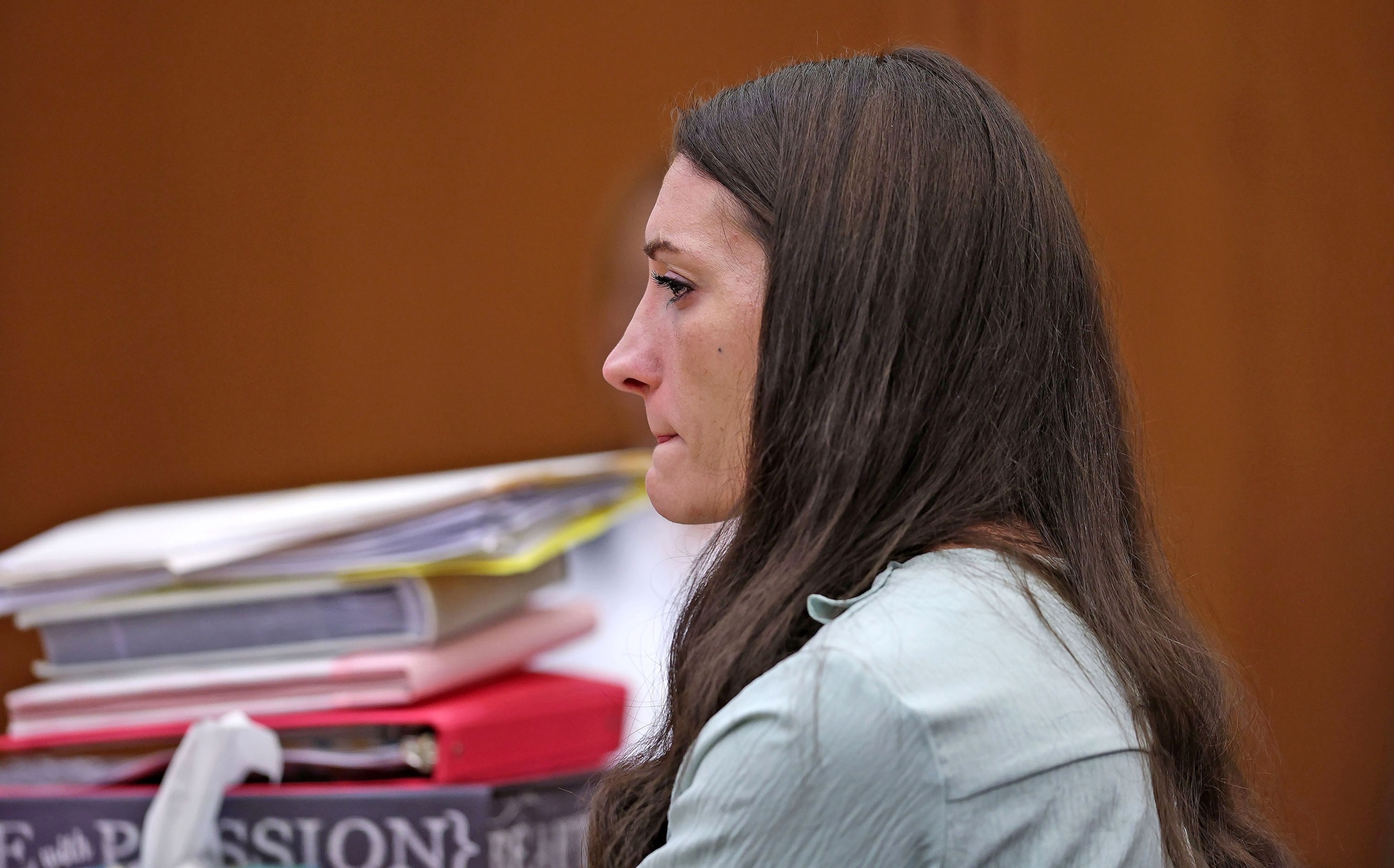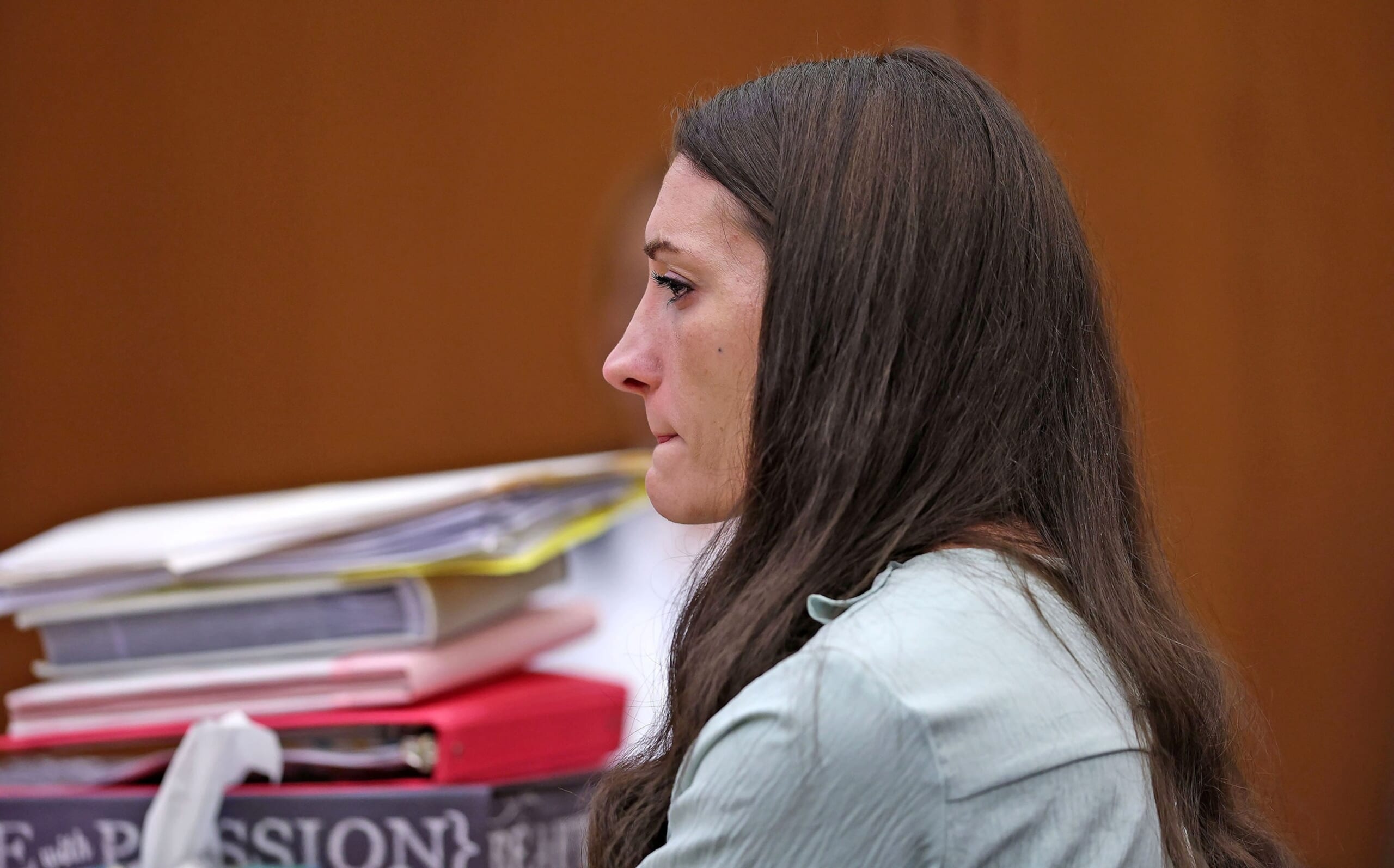
Lindsay Clancy returned to court Tuesday for the first time since the mistrial, and her lawyer argued there is “no evidence” she killed her three children — after a trial in which she did not contest that she had killed them.
Clancy, a former nurse, is charged with first-degree murder in the Jan. 24, 2023, strangling deaths of Cora, 5, Dawson, 3, and Callan, 8 months, at the family’s home in Duxbury. Prosecutors say she then jumped from a window in a suicide attempt and was left paralyzed and in a wheelchair. She has pleaded not guilty.
At her five-week trial, attorney Kevin Reddington argued she was suffering from postpartum psychosis and was overmedicated when she strangled the children and tried to take her own life. Clancy did not dispute during the trial that she killed them. The fight then was over criminal responsibility.
REACH PRO-LIFE PEOPLE WORLDWIDE! Advertise with LifeNews to reach hundreds of thousands of pro-life readers every week. Contact us today.
The jury deadlocked 11-1. Judge William Sullivan declared a mistrial Sept. 4, saying he had “no choice.”
On Tuesday, Reddington asked that the case be thrown out, saying prosecutors failed to prove she was responsible for the deaths.
“This entire case is based on speculation,” he said in court. “There is no evidence that she admitted she did this.”
He has also asked for a required finding of not guilty, argued that a retrial would violate double jeopardy, and asked the court to investigate the holdout juror who would not join the other 11 in finding her not guilty by reason of insanity. That juror’s position was that Clancy was aware of her actions and should be held criminally responsible.
Plymouth County District Attorney Tim Cruz’s office has said it stands by the charges. Prosecutors have not said whether they will retry the case. They could bring the same charges or lesser ones.
Neither side agree on a new trial date and the judge asked them to agree to a new date when they return for a future hearing on November 2.
The new argument does not change the central facts that brought Clancy to court: three young children are dead, and at trial her defense did not dispute that she strangled them. What changed Tuesday was the defense’s claim about the proof.
For those who say Cora, Dawson and Callan still have no voice in the case, the question remains whether prosecutors will put that evidence before another jury.
The defense argues there was no “manifest necessity” for the mistrial, pointing to comments that the holdout juror acknowledged doubt yet would not find Clancy not criminally responsible. But the holdout juror says that’s false and that he always knew Clancy was guilty.
Reddington has also asked the court for the holdout juror to be investigated, stating the inquiry “will not touch the substance of deliberations.”
Cora, Dawson and Callan are dead. An 11-1 vote for lack of criminal responsibility would have produced no finding of guilt in their killings and no justice for them.
Postpartum mental illness is real, but a person can be mentally ill and still criminally responsible. Mental illness does not change that three children were killed in the home where they were supposed to be safest. They will never grow up. The children cannot speak in the courtroom. Dismissing the charges would leave the taking of their lives without a completed finding of criminal responsibility.
Pro-life writers have called that reaction a moral inversion: compassion for a mother who killed her children, with far less public focus on Cora, Dawson and Callan themselves.
Journalist Caitlin Flanagan wrote that “what began as admirable compassion for a woman who says she was driven by mental illness to commit the world’s greatest form of evil has turned into something strange: an almost exultant, fan-like celebration of Lindsay Clancy.”
Paul Batura of Focus on the Family argued that a culture already trained to treat a child’s death as secondary to a mother’s distress — first in abortion, then in cases like this one — struggles to say plainly that killing children is wrong even when the mother is ill. Postpartum mental illness is real, he wrote, but “an individual can be mentally ill and still criminally responsible.”
Abby Johnson, CEO and founder of And Then There Were None and ProLove Ministries, who herself experienced postpartum psychosis after the birth of one of her children, said the intense identification with Clancy reveals a deeper moral distortion long cultivated by abortion advocacy.
“I am not arguing that compassion for Lindsay is wrong…What concerns me is something different. We have become extraordinarily practiced at looking at a dead child and asking first what his or her mother was going through. And abortion taught us how to do that. For decades, the defense of abortion has depended on shifting the moral center of the story away from the human being who dies and toward the human being experiencing the crisis. The mother’s suffering becomes the justification. But suffering does not make killing good,” Johnson wrote.
Johnson stressed that mental illness may affect legal culpability without changing the moral nature of the act.
“Mental illness may affect a person’s culpability for an act. It does not change the moral nature of the act itself,” she said. “Cora was five years old. Dawson was three. Callan was eight months old. Their mother killed them.”
Johnson argued that culture has spent more than 50 years training itself to begin with a mother’s fear, financial stress, lack of support or depression until the child’s humanity nearly disappears—first in abortion and now in cases like this one.
“We can demand better postpartum mental-health care in their names. We can acknowledge that their mother may have been gravely ill. We can pray for Lindsay,” Johnson wrote. “None of that requires us to forget where the greatest irreversible harm occurred. Three children went to bed on January 24, 2023, in the home where they were supposed to be safest. They will never get to grow up.”
Cora, Dawson and Callan cannot be allowed to become peripheral to their own story.