The International Energy Agency (IEA) has published a 10-point plan to reshape everyday behavior in response to the energy crisis triggered by the U.S.-Israel war on Iran. The proposal, titled “Sheltering From Oil Shocks,” is advising governments, businesses, and individuals to reduce fuel consumption.
The IEA is an international forum that coordinates energy policies among major economies. It operates under the framework of the Organization for Economic Cooperation and Development (OECD). The OECD, in turn, explicitly aligns its work with broader global energy and “sustainability” initiatives, including those tied to the United Nations’ Agenda 2030.
The United States is a founding member of the IEA. The government frames it as a valuable partner in policy analysis, data collection, and coordinated emergency response, working alongside other international organizations on major energy initiatives.
The plan, published last Friday, follows the IEA’s own intervention in the crisis. On March 11, member countries released 400 million barrels of oil from emergency reserves, the largest coordinated release in the agency’s history. That move stabilized markets temporarily, but, of course, did not solve the underlying problem. The agency is now shifting focus from supply to demand.
The Crisis
The IEA describes the scale of the disruption as unprecedented:
The conflict in the Middle East has created the largest supply disruption in the history of the global oil market. The volume of fuel supply offline now is higher than the supply loss during the oil shock of 1973 that led to the IEA’s creation and any disruption since then.
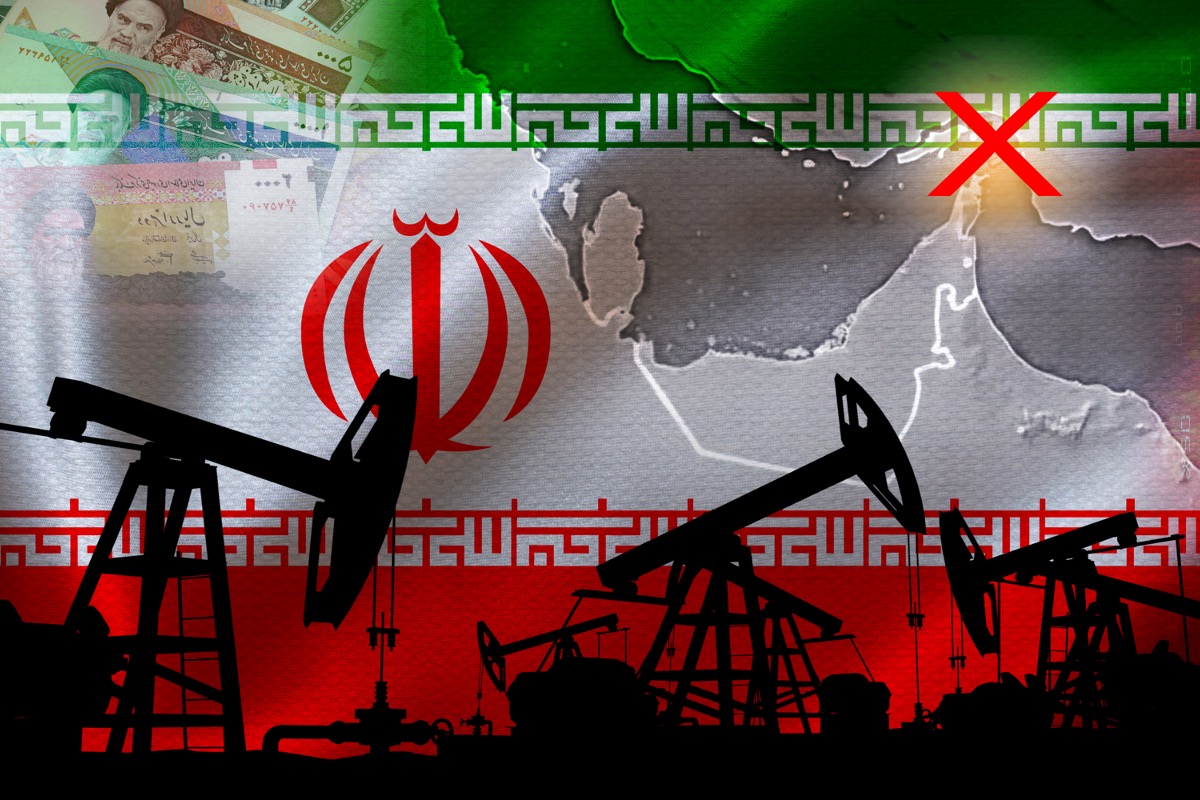
Oil flows through the Strait of Hormuz, a critical global shipping corridor, have almost collapsed. Roughly 20 million barrels per day once passed through that chokepoint, “equivalent to around 20% of global oil consumption.” Today, traffic has slowed to a “near halt.”
As a result, prices have surged across the board. Per the report:
The loss of supply is having significant impacts in global markets, pushing up prices for crude oil above $100/barrel, and leading to much higher prices for some refined products — notably diesel, jet fuel and liquefied petroleum gas (LPG).
IEA Executive Director Fatih Birol said that the war is “creating a major energy crisis” with impacts that will “become more and more severe.”
Governments Curbing Demand
The IEA places demand restraint at the core of its response. It treats it as a formal emergency tool, not a last resort:
Demand restraint is one of the emergency response measures that all IEA member countries are required to have ready as a contingency — and that they can use to contribute to an IEA collective action in the event of an emergency like this current disruption.
This framing matters. The response is not limited to increasing supply or stabilizing prices. It shifts the burden toward reducing consumption across entire economies.
The scope is global, as the IEA makes clear that demand-side action is not confined to its members. Countries worldwide are expected to respond to the strain on oil markets.
The approach is structured and immediate, and the agency places governments at the center of execution. It states they are expected to “take the lead, both through measures they implement for the public sector and through regulations and mandates.” In doing so, they are to “support” households and businesses in cutting their oil use:
All ten options can be implemented quickly, with savings achieved in a matter of weeks.
The report further presents demand reduction as a coordinated effort, emphasizing collective participation across society:
[T]he more options that governments, businesses and households adopt would further increase their national, regional and global impact, helping to alleviate the shock for everyone.
The agency does acknowledge the limits of its approach. Even if every country fully “sheltered,” it would not “replace the disrupted supply.” The report is explicit: “Only the resumption of transit through the Strait of Hormuz can do that.”
Work, Travel, and Movement
The first set of measures focuses on how people move.
Remote work sits at the top of the list. The IEA recommends working from home up to three days per week where possible. This alone could cut oil demand significantly — “around 20% for individual drivers.”
Speed limits are next. Governments are urged to reduce highway speeds by at least 10 kilometers — or 6.2 miles — per hour. This directly lowers fuel consumption across millions of vehicles.
Air travel also comes under pressure. The plan calls for avoiding flights “where alternative options exist.” Business travel is a primary target.
Private Car Use
Cars represent a large share of global oil demand, and the plan addresses them directly.
Governments are encouraged to shift drivers toward public transport, “such as buses and trains.”
Private access to roadways should also be restricted:
Alternate private car access to roads in large cities on different days: Limiting cars’ access in designated zones to specific days based on their number plate could reduce traffic congestion, engine idling and fuel-intensive stop-and-go driving.
“Options like cycling and walking for shorter journeys can lead to further reductions,” add the IEA experts.
Car sharing is promoted. It is best to be combined with “eco-driving measures, including checking [tire] pressure, adjusting air conditioning settings, and efficient driving practices.”
These steps aim to reduce fuel consumption by several percentage points at the national level.
Freight, Fuel Switching, and Industry
The plan extends beyond personal transport, reaching into logistics, fuel allocation, and industrial operations.
For commercial vehicles, the IEA calls for “efficient driving for road commercial vehicles and delivery of goods.” It prescribes
eco-driving practices, including regular checks of [tire] pressure, reduced idling, and reduction of braking and accelerating, combined with operational improvements, such as optimisation of vehicle loads.
Fuel use is also being redirected, with the report recommending diverting “LPG use from transport.” It notes that part of the global vehicle fleet runs on LPG, and suggests switching those vehicles to other fuels.
That priority is reinforced for cooking food. As LPG supply tightens, people and businesses are pushed toward electric or other alternative cooking methods. “Non-essential” uses of LPG are expected to give way.
Industry faces the same pressure to adapt. The report advises producers to “leverage flexibility with petrochemical feedstocks and implement short-term efficiency and maintenance measures.” Facilities are expected to prioritize available inputs and tighten operations to reduce waste.
The report also draws a direct line to recent crises. “As seen in 2022, governments can intervene with measures to help consumers with their energy bills during price spikes,” it reminds.
World Reacts to Disruptions
Since the attacks began on February 28 — and Iran’s retaliation and effective shutdown of shipping through the Strait of Hormuz — governments and businesses have moved quickly to implement demand-reduction measures.
Across parts of Asia and Africa, governments have revisited earlier crisis playbooks and introduced new ones. Countries including Pakistan, the Philippines, Thailand, and Sri Lanka have rolled out shorter workweeks, expanded remote work, school closures, and broader energy conservation measures. Sri Lanka has also implemented fuel rationing through its National Fuel Pass QR system.
Egypt has ordered shopping malls and restaurants to close by 9 p.m. each day, with government offices shutting by 6 p.m. Authorities have also suspended lighting on billboards. Ethiopia has introduced a priority system for fuel allocation, directing supply first to security and defense, essential public projects, manufacturers and exporters, commercial agriculture, and public transportation.
Businesses have also begun to adapt. Major corporations such as Samsung and SK Group have limited employee travel, discouraged car use, and introduced internal energy-saving policies.
In Europe, Slovenia has introduced nationwide limits on fuel purchases, becoming the first EU country to impose caps at the pump. Similar restrictions have appeared elsewhere. In Hungary, some retailers have introduced limits aimed at preventing shortages and curbing panic buying. The government moved to cap prices on gasoline and diesel.
Other governments have focused on restricting mobility rather than fuel access itself. South Korea is now enforcing a mandatory vehicle rotation system for the public sector. Cars are grouped by license-plate numbers and banned from driving on specific weekdays. Electric and hydrogen vehicles are exempt from these restrictions.
The effectiveness of these interventions remains highly questionable. Political elites tend to respond to crises by limiting people’s rights and freedoms, even when those crises stem from policy decisions and geopolitical actions of their own making.
Fertilizer Bottleneck at Hormuz Raises Risk of Food Inflation and Worsening Global Hunger