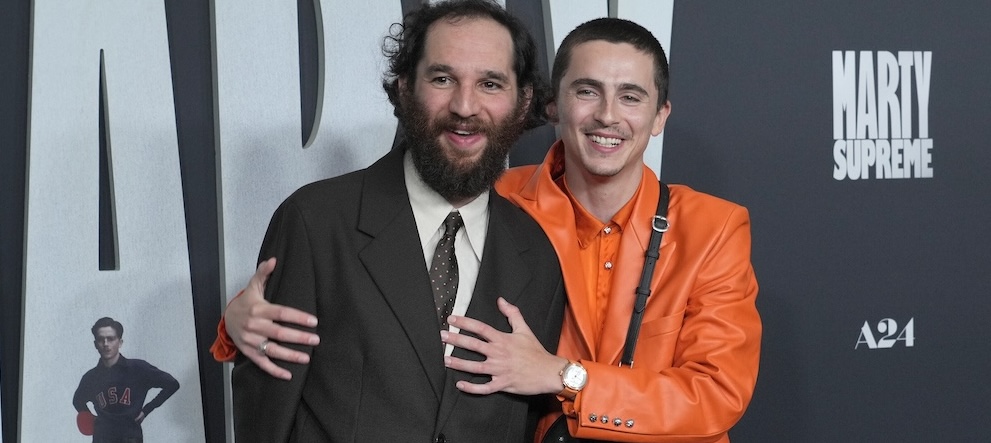
Most Oscar movies have no audience and few admirers and are instantly forgotten (name last year’s winner). One exception is Marty Supreme, which has just received nine Oscar nominations. More surprising, it has already reached into the IMDb Top 250, at 238 and climbing (dedicated fanbase). Marty Supreme is Josh Safdie’s first movie after he stopped working with his brother Benny. Together they made two well-regarded movies, Good Time (2017) and Uncut Gems (2019). During COVID, they stopped directing but now they’re back, but apart; we all lost something during COVID, I guess.
But Josh Safdie will celebrate his 42nd birthday with four Oscar nominations: as director, writer, producer, and editor (the last three are shared with longtime partner Ronald Bronstein). At this level of success, we can judge what we can expect from male directors. First of all, not popularity. The movie made about $80 million in America on a budget of $70; it would need to earn double its budget to break even, then quite a bit more to cover its marketing budget. Artists are nowadays burning rather than making money as part of the ongoing death of cinema. It’s possible that Oscar-specialized mini-studio A24 expects to sell it to streamers.
Next we can expect sleazy stories about marginal figures. That’s a Safdie specialty, but they’ve no copyright on the style. Why wallow? Because liberalism’s psychotherapeutic ideal, the well-adjusted individual, is intolerable, at once boring and arrogant; to find anything interesting, artists rake in the muck. But they fail to escape the ideological imperatives of Progress, so these protagonists don’t amount to much. Marty Supreme takes its material from a real mid-20th-century table tennis celebrity, Marty Reisman. Fictionalized as Marty Mauser, he becomes both more interesting and more contemptible.
Finally, we’re relitigating American history, since Progress is no longer plausible. In a way the only question left is: Who gets the blame for all the lost illusions? Marty Supreme features a lot of ’80s music (Alphaville, New Order, Peter Gabriel, Korgis, Tears for Fears, Public Image Limited) that is back in fashion, since it cultivates alienation (“alternative music”). But the story is set in the 1950s, when worldwide glamour seemed to follow America’s great WWII victory. Confidence, growth, and peace seemed assured, maybe destined.
Our protagonist Marty’s formative period would be: the October 1929 crash through the Great Depression to Pearl Harbor and WWII. That could work as a stand-in for the Zoomer experience: 9/11, the 2008 market crash, the political shocks since 2015, the lost wars, COVID, the bad economy. Both periods followed decades of prosperity and luxury, the roaring ’20s and the end-of-history ’90s. What follows such shocks? In talking about the 1950s, Safdie is looking at our own times indirectly, as an older Millennial reflecting on what the young experience.
So much by way of explaining why this story matters to audiences. Now to the story itself. Marty is a born conman. He’s a shoe salesman for his uncle, but table tennis is his talent as well as his preferred way of making money. It’s 1952, early in the history of globalized entertainment, so it’s only a few steps from parlor hustling to international professional athleticism. (Think of the recently deceased Norman Podhoretz’s remark about traveling from Brooklyn to Manhattan.) Marty performs well at the British Open, loses the final, then goes touring internationally as a novelty opening act for the Harlem Globetrotters, and finally contests the World Championship in table tennis.
Of course, the subtext is integrating Jews in America. Surprisingly, the story insists on Jewish crime (mobster Ezra, opportunity conwoman Rachel), not discrimination. Moreover, there’s an Auschwitz survivor in the movie’s most shocking scene (true story, won’t spoil it), Marty’s partner in the exhibition tour. That character is based on Polish table tennis champion Alojzy Ehrlich, a much more admirable and interesting man than Marty Reisman, but not American and not a good fit for our age. Maybe a couple of decades back the Oscar movie would have featured him—a humanistic triumph in the age of ideological struggle, freedom versus tyranny. But it’s hard to say who believes in that nowadays.
Instead, we get the Safdie specialty: sleaze, crime, cheap ambition and indifference to moral restraints, one long series of accidents, an adrenaline-fueled picaresque that gives lead Timothee Chalamet another bite at the Oscar apple. Why? Because he impersonates our social media celebrities. Marty gets involved with a fading Hollywood star looking for a career revival (Gwyneth Paltrow), which brings in the middle-aged female audience previously attracted to Desperate Housewives. But it also compares Jews to WASPs, newer celebrities to older, the ugliness of an individualism that no longer has ruggedness, only doggedness, and perhaps also the robust health of this more democratic age.
The non-sport middle of the movie also introduces the plight of the artist. Marty is as much an artist as his actress paramour. He stands in for the director, for the need to get an audience, to get attention by any means, which tends to mean doing contemptible things by mixing showmanship and conmanship. Such is the life of American artists; we used to conceal this behind glamour, censorship, and binding contracts. Now it’s all out there, and the only restraint is controlling money. That would be the actress’s husband, who becomes Marty’s patron, circus master, and aspiring nemesis, played by Kevin O’Leary (from Shark Tank no less).
All this degradation is supposed to lead to atonement, or at least humbling. And a surprising reconciliation. Nothing to do with his talent or ambitions, Marty is involved in an affair with Rachel (Odessa A’zion, a remarkably brave Jewish name in our age), who ends up divorcing her husband and having Marty’s child. Marty eventually learns to love her and take responsibility for the child. A retreat from glamour into life is the advice the story offers to the most catastrophic generation in American history. America has never had fewer babies or marriages. So maybe Safdie’s story rehashes the oldest divine commandment, to be fruitful and multiply.
Of course, this is built on breaking most other commandments. Aside from adultery, Marty is also a liar, a thief, covetous, and ends up involved in a horrible scene where a mobster and a farmer shoot each other dead. This isn’t Sunday school or yeshiva material—it’s the Oscars we’re talking about. Accordingly, it’s beautifully shot by veteran Darius Khondji, and the period setting is very convincing, so it makes for one of the few amazing theater experiences of 2025. What one must suffer through to get it is another question.