We’re just weeks from 2026, and just months from America’s 250th birthday. We’re also just days from Advent, a season of self-examination and hope for Christians in preparing for the central event of human history: the birth of Jesus. It’s a beautiful, serious, reflective time of year. Which makes it a perfect time for some awkward thoughts about who we are as a believing people and the character of the “American Experiment,” the nation we call home and help sustain. So, let’s begin.
On the place of religious faith and traditions:
1. The American Founding is a child of Biblical and Enlightenment thought. But the Enlightenment itself is a child of the Biblical framework – its anthropology and morality – from which it developed and tried to outgrow. To oversimplify: no Bible, no Enlightenment, no United States. At least, no United States as its Founders originally understood and intended it.
2. Despite more than a century of anti-Catholic prejudice and occasional violence, Catholics could successfully fit into and contribute to a deeply Protestant country because we shared a “mere Christianity” despite our theological and ecclesial differences. From the start, Jews too have shared in the country’s Biblical roots. To put it even more forcefully: A Christian-inspired understanding of man and his purpose, and therefore his civic life, makes no sense outside its grounding in the Judaism from which it emerged. Thus, Christian anti-Semitism is a uniquely ugly form of blasphemy. Jesus and his mother were, after all, Jews.
3. Because of the above, other religious traditions can sometimes have difficulty integrating here. They must either adjust themselves to the Founding’s original framework and “soul” (not an impossible task), or change them into something else, i.e., diminish the Christian and Biblical dimension of public life. The latter course has largely succeeded, conducted by a secularized, progressive leadership class. This accounts, in part, for the negative revisionism in American history and civics education during the past half-century. Note especially that Islam has an anthropology and view of the state and society very different from Christian and Enlightenment thought. This has obvious implications for public life. Note current conditions in Europe.
On Jefferson’s “wall of separation”:
4. Religion and politics make ripe ground for conflict. On the one hand, the “wall of separation” between Church and state appears nowhere in the Constitution. The phrase came from an 1802 letter by then-President Thomas Jefferson. Established Churches can work. Various U.S. States had an officially recognized church in the early years after independence. The last, in Massachusetts, was disestablished only in 1833. But history shows that they’re a bad idea. Establishment usually benefits the state more than the Church, which too often becomes a dependency of, and a chaplaincy to, political power. Thus, the separation of Church institutions from the state is, in principle, a sound idea. But it can easily be abused by excluding religious institutions from public activity and appropriate collaborative service with public programs. This is the toxic reality we now increasingly face.

5. On the other hand, the separation of religious faith from politics is impossible. We all believe in something or things around which we organize our lives. And what we really believe inevitably drives what we do. If we claim to believe something and then deliberately wall it off from any practical impact on our actions and choices, then we don’t really believe it, and we make ourselves liars. This is why Christopher Lasch – a nonbeliever himself, but one who respected genuine religious faith – argued that an honest atheist is always preferable to a “cultural Christian.” The man whose faith is a mere attachment to culture is a moral and political eunuch.
6. The result of excluding our faith from our civic lives is a form of theft from the moral health of the larger community. A pluralistic democracy depends for its vitality on people of conviction advancing their beliefs – respectfully and non-violently, but vigorously – in the public square. Self-censorship on matters of faith is cowardice. And profoundly self-defeating.
On the threats to our religious institutions:
7. Today’s practical threats to religious freedom involve attempts to drive religious institutions and their beliefs out of public service and public witness, mainly by (a) forcing them into actions that betray their beliefs, and/or (b) excluding them from appropriate public funds in their social ministries. See “Philadelphia and the New Tolerance” here for a specific example of government attacks on Church-related foster care. And see the recent report, “Eradicating Anti-Christian Bias,” here, by two of my EPPC colleagues for a more comprehensive inventory of anti-Christian actions under the Biden administration.
8. Regrettably, government agencies with Democratic Party leadership have a lopsided role in such threats. This reflects the more secularist, religion-skeptical spirit now dominant (and often aggressive) in the party, especially regarding – but not limited to – matters related to sexual identity and behavior. In a society that increasingly seems to rely on social “science” as its new source of Revelation, the data are, well, revealing: Currently, 14 percent of Republicans are religiously unaffiliated vs 34 percent of Democrats. Strong belief in God dropped 4 percentage points among Republicans between the 1990s and 2020s. It dropped 24 points among Democrats in the same time period.
9. Finally and most importantly: Having said all of the above, the greatest threats to U.S. religious freedom and institutions are tepid, distracted, comfortable Christians themselves, fellow travelers of an irreligious leadership tribe; a problem compounded by (a) the eclipse of civil society by an expanding government and growing popular dependence on its services; and (b) the intensely consumerist, acquisitive, materialist nature of current American life, obscuring any transcendent horizon or shared higher purpose to the nation’s life.
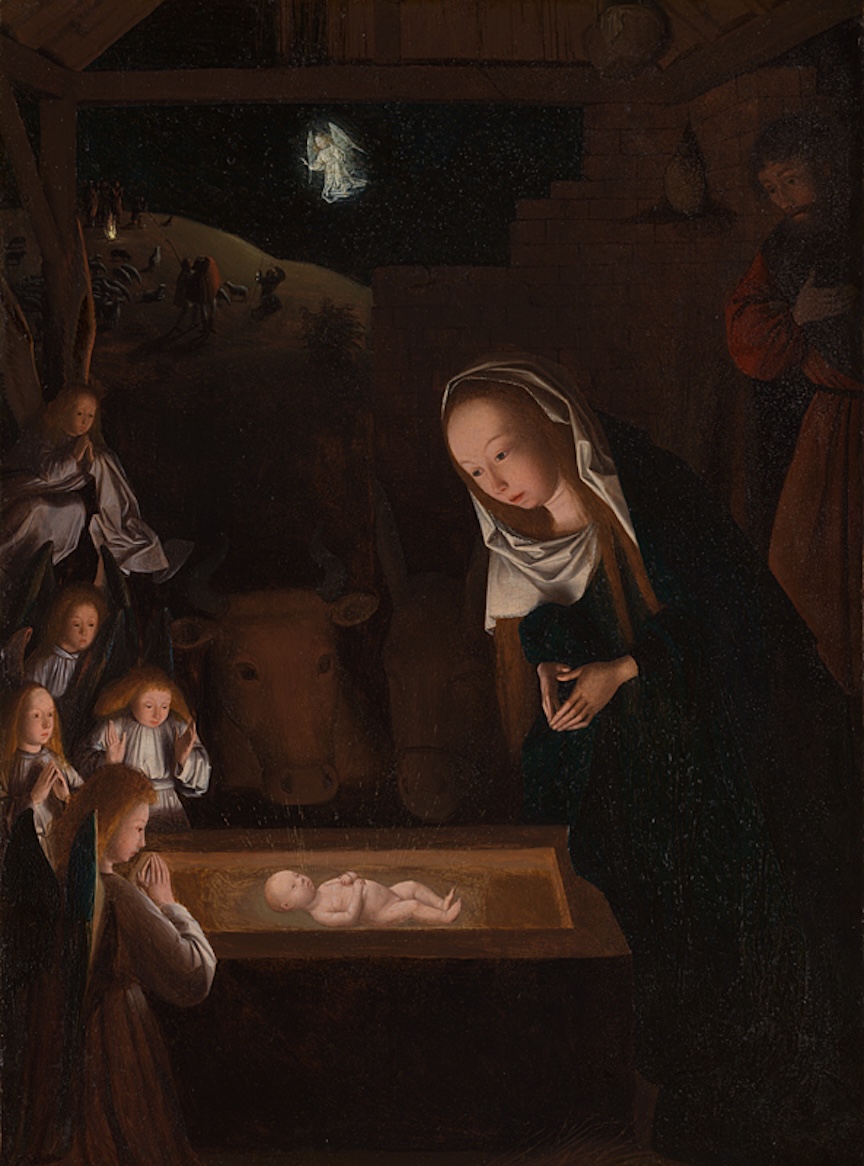
Why ramble on? It’s mid-November as I write this column. The annual lava flow of holiday advertising is already in full, 24/7 swing. And yes, the C word – “Christmas” – does make an occasional guest appearance. But it’s carefully limited. Some of that Infancy Narrative stuff in Luke is bad for business.