The war in Iran just surpassed the one-month mark, with escalation appearing more likely in coming weeks than peace. Instead of wrapping up military operations, the Pentagon is reportedly preparing a ground invasion. And this is all happening as dissatisfaction among soldiers may be festering and growing.
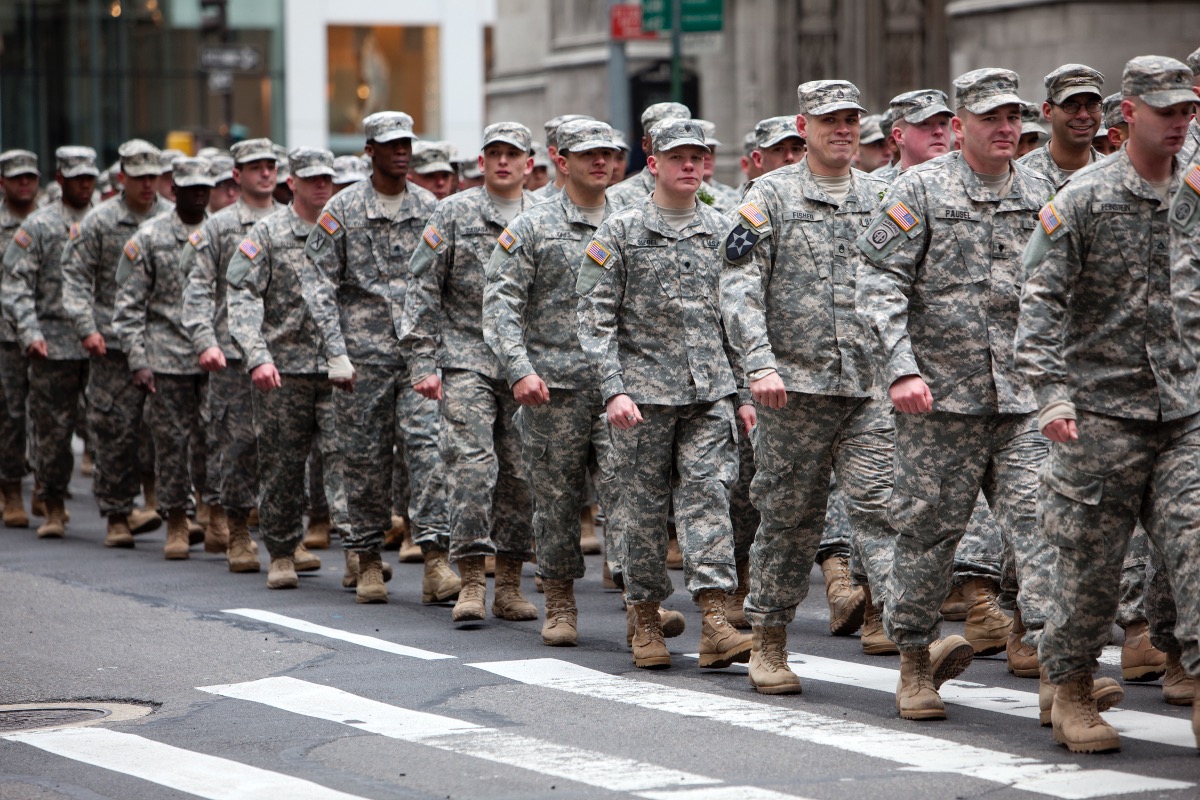
Reports from nonprofits that talk to military members suggest that this war is particularly unpopular among troops.
Massive Increase in Service Members Objecting
The nonprofit Center on Conscience & War (CCW) says it has seen a massive increase in calls since this war began. The CCW, an organization that works to defend the rights of conscientious objectors, “has recorded a 1,000 percent increase in new conscientious objector (CO) clients since the US-Israeli military campaign against Iran began,” according to reports.
Another nonprofit counseling organization that works with service members, the GI Rights Hotline, says they’re seeing similar numbers. GI Rights Hotline provides counseling on U.S. military regulations and practices.
And a counselor with Quaker House reportedly told Snopes that “her organization fielded 212 calls in the first half of March alone, a volume it would ordinarily see across an entire month.”
Mike Prysner, the director of the CCW and an Iraq war veteran, told The Intercept on March 20, “We’ve started more people in the CO process in the past two weeks than we typically do over the period of a year.” He told The Virginian-Pilot that it’s not fear that’s driving the calls, but principles. “I haven’t heard from a single caller who said, ‘I’m scared of dying in a war I don’t believe in.’ All of them are scared of killing people in a war they don’t believe in,” he said.
Not Just Iran
A resource counselor at the GI Rights Hotline, Steve Woolford, told The Virginian-Pilot that it’s not just the war in Iran that’s creating opposition among service members, but other military venues as well. “We’ve had a huge increase in (conscientious objector) calls in the last year, especially when the National Guard started getting sent places domestically,” Woolford said. “We’ve had calls about the different actions with Venezuela where people feel totally confused about what’s going on and don’t see blowing up speedboats or capturing leaders of countries as part of defense. That only accelerated even more with this current conflict in Iran.”
Lenore Yarger of Quaker House told the International Business Times that calls were coming in from soldiers in all military branches, from bases in and out of the United States.
The CCW announced in a social media post on March 6 that they received a call from a military member who “reports widespread opposition to [the] Iran War within their unit.” In a subsequent post, they added, “In particular, [the member] conveyed disgust at the US massacre of the girls’ school as well as the attack on the Iranian frigate in international waters. There are countless other service members who feel this way but don’t know they have options to refuse to participate.”
Minab Bombing a Catalyst
Yarger and Prysner both mentioned the Minab school bombing as a major factor that has triggered disillusionment among soldiers. Prysner said Minab was the “breaking point” for many military members. “By far the most common thing we’ve heard from people for a specific thing that caused them to reach out was the Minab school massacre,” he said. “It’s not wanting to be a part of what they see as crimes against people they have no reason to hurt.” The Minab school bombing refers to the February 28 strike on a girls’ elementary school in southern Iran. That strike killed about 175 people, most of them children. An investigation found that a U.S.-launched Tomahawk missile struck the school. The military blamed outdated targeting data for the tragedy.
Joe Kent’s Resignation
A couple of weeks ago, a high-profile government worker resigned in protest of the war. Joe Kent’s resignation letter announcing why he quit his position as director of the National Counterterrorism Center triggered a wave of backlash and smears, particularly among war supporters in the neoconservative media ecosystem. Kent said Iran didn’t pose an imminent threat to America and that we attacked Iran because President Donald Trump and his administration were bamboozled into believing erroneous intelligence rumors from Israel.
Kent is a decorated combat veteran who spent years fighting in the Middle East, and Prysner believes his resignation will likely inspire more conscientious objectors. “This is the kind of thing that really resonates: seeing respected people in positions of power validating what many service members feel, which is that this is bad and people shouldn’t take part in it,” Prysner said. “There are a lot of people who may be inspired by what Kent did.”
No Response to Opposition
The U.S. military has not made any public statements or comments regarding the reported surge in conscientious objector applications as of recently.
On March 1, the day after he announced the war, Trump told the Daily Mail “that the military campaign was expected to be a ‘four-week process.’” Like many other forecasts by the president, this has proven false. Moreover, reality suggests a contrary trajectory. Thousands of additional Marines and paratroopers have already been sent to the region in preparation for a possible ground invasion. And if Washington moves forward with boots on the ground, it would be yet another reversal of what the president has told the American people. Moreover, it would have to carry out such an operation without any help from its joint ally in this war, Israel. According to a recent report, “the Israel Defense Forces (IDF) will not participate in any American ground operation inside Iran.”
Unconstitutional War
While debate continues about whether Iran truly posed an imminent threat and should’ve been attacked, one undeniable and critical factor is that this war was never authorized by Congress, in violation of the supreme law of the land, the U.S. Constitution. The Constitution and supporting Federalist essays make it clear that only Congress has the right to declare war. There is nothing that makes this illegal war legal, including the War Powers Resolution of 1973, which says the president has the power to start a war under one of three possible conditions: a declaration of war, a specific statutory authorization, or “a national emergency created by attack upon the United States, its territories or possessions, or its armed forces.” None of those conditions has been met.