In the season of Lent, the Church enters the wilderness to fast and abstain. It is a time of testing. The number forty often indicates this throughout the Scriptures. “Forty days” signals a time when God tests the hearts of His people, so that what lies hidden within might be revealed.
In Genesis, the deluge that washed the world of living creatures – except for Noah and those on the ark – lasted for forty days. Moses fled Egypt for his life after murdering a man and spent forty years in Midian as a shepherd before God appeared to him in the burning bush. After forty days, the ten spies that Moses sent into the land convinced Israel to distrust God and despair of their ability to take it. For forty years, the Israelites were sent to wander in the wilderness before they could occupy the Promised Land. For forty days and nights, Goliath taunted Saul and his army before David slew him. And Jonah gave the Ninevites forty days to repent before they would be overthrown by God.
And in the most famous case of all, of course, Jesus spent forty days in the desert and was tempted by the Devil.
These periods of forty days or forty years are not random spans of time. They reveal a pattern in how God deals with His people. As Moses tells Israel:
The LORD your God has led you these forty years in the wilderness, that he might humble you, testing you to know what was in your heart, whether you would keep his commandments, or not. (Deuteronomy 8:2)
God does not test human beings because he needs to learn about the fidelity of his creatures. He already knows the human heart. (1 Samuel 16:7) The test exists so that the man himself may learn what is inside of him. Abraham was tested by God, and came to learn of his complete trust in the Lord. In contrast, Pharaoh was tested by God and he hardened his heart.
Now that we are in the midst of these forty days of Lent, we have entered the same Biblical pattern of trial and purgation. Lent should not be just like any other season in life. During this time, we should especially have our eyes turned toward the heavenly Promised Land, and most especially toward the Way that leads to it: Jesus Christ.
Yet Lent often passes in vain. Our hearts are not easily moved. They grow dull and indolent when left unattended. In the stagnation of idle thoughts, the heart becomes a wilderness thick with thorns and thistles, tangled with brambles and covered with stones.

This inner wilderness is a consequence of sin, both actual and original. When Adam and Eve rebelled against God and attempted to decide for themselves what was good and evil, the curse of that wilderness was the natural consequence.
St. John Henry Newman describes this condition:
We have stony hearts, hearts as hard as the highways; the history of Christ makes no impression on them. And yet, if we would be saved, we must have tender, sensitive, living hearts; our hearts must be broken, must be broken up like ground, and dug, and watered, and tended, and cultivated, till they become as gardens, gardens of Eden, acceptable to our God, gardens in which the Lord God may walk and dwell; filled, not with briars and thorns, but with all sweet-smelling and useful plants, with heavenly trees and flowers.
A careless and frivolous heart gradually becomes a hardened one. But the desert fathers teach that the remedy for such a heart is meditation on the Cross.
For instance, St. John Cassian describes this remedy and tells us that we Christians must be “daily and hourly turning up the ground of our heart with the Gospel Plough, i.e., the constant recollection of the Lord’s Cross.”
The hard ground of the heart cannot cultivate itself. The wilderness of the heart must first be cleared of vain thoughts, and then the heart can be broken up with the Gospel Plough, the Cross. As the plough tears into the soil, so the Cross breaks up the hardened heart. Meditation on the Lord’s Cross during this season of Lent, and the formation of a habit of frequent meditation and prayer, allows Christ to enter in and turn over the hardened soil of the heart.
When Christ enters the wilderness for forty days at the beginning of his ministry, he enters the wilderness of our hardened hearts. During these forty days of Lent, we can invite Him to take up the Gospel Plough and tear out the thorns, overturn the stones, and break open the hardened soil. When we meditate on the Cross, the nails, the thorns, the scourging, and the complete humiliation that God the Word undertook for the salvation of man, our hearts are cleared and softened. Through meditation, the soil of the heart becomes receptive, and the seed of the Word can take root.
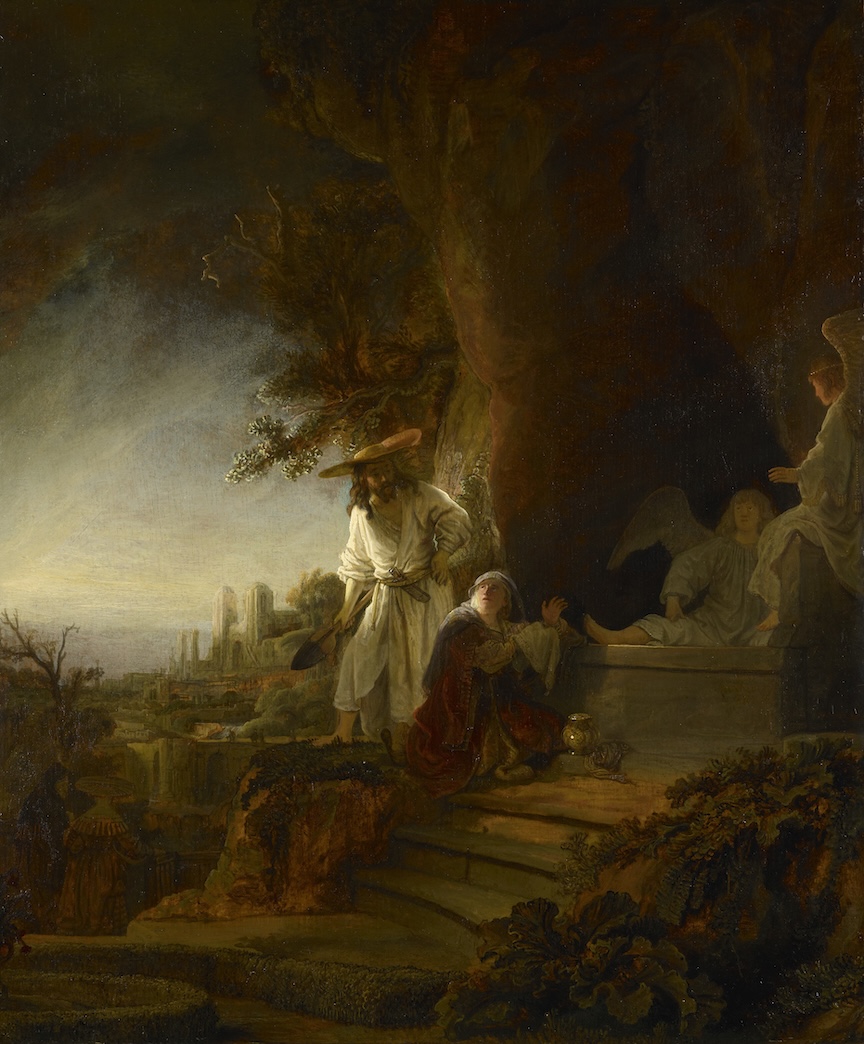
When we complete these forty days of testing, we will leave the wilderness for the garden where Jesus Christ was buried. (John 19:41) On that day, we will find an empty tomb and encounter the risen Christ. There it will be no mistake if we turn to Jesus Christ, as Mary Magdalene did, and take him for a gardener. (John 20:15) For just as the first Adam was placed in the garden “to serve and protect it” (Genesis 2:15), so the new Adam (1 Corinthians 15:45), Jesus Christ, is the gardener of the New Creation.
And the garden that Jesus Christ wishes to keep is the heart of man.