If memory serves (an increasingly dubious supposition), my theatrical debut occurred in the first grade, when I played an elderly Civil War veteran. My opening lines ran: “Here it is Decoration Day, and I’m confined to my bed, too old to be in the parade.” Having now attained eighty plus seven, it’s probably prudent to inform a younger generation that “Decoration Day” was the name of the holiday we now celebrate as “Memorial Day.” Decoration Day received its name from the practice of decorating the graves of those who had served their country and paid the ultimate price.
But what evoked the eighty-year-old memory was the word that lingered on the tongue of a seven-year-old: “confined.” At the time, it probably elicited associations with measles or whooping cough and being unhappily “confined” to bed, though, happily, excused from school. Now, living in a retirement residence, the associations are rather with walkers, wheelchairs, and hospital stays – less pleasant prospects and confinements.
But even these pale before the “confinement” recalled in today’s gospel for the Third Sunday of Advent. John the Baptist, confined in prison, straitened, physically and spiritually, poses the anguished question: “Are you the one who is to come, or should we look for another?” (Matthew 11:3)
“Confinement” bears the sense of being “bordered,” “limited,” set within “boundaries.” In this sense we are all “confined:” by physical abilities, natural endowments, ultimately, by our common mortality. As the psalmist ruefully concedes: “The years of our life are threescore and ten, or even fourscore if we are strong. . .but they are soon gone and we fly away.” (Psalm 90:10)
Of course, we, sons and daughters of Adam and Eve, all too often rebel against limits and restrictions, against mortality. Ernest Becker’s The Denial of Death remains, even after fifty years, a pellucid diagnosis of our personal and cultural plight. We are enthralled by the insinuation: “You will not die. . .you will be like God.” (Genesis 3:4-5)
So, we strive to snatch the fruit that promises unending life, limitless possibility, mastery of our destiny. Dante memorably depicts the three beasts – lustful desire, unbridled power, frenzy for fame – that tantalize and allure us by their spurious promise, even as they derail our journey to true life.
It takes no great imaginative skill to picture their prominent contemporary embodiments. They are featured daily, though diversely, on Fox and CNN. It takes more probing discernment to confess one’s own complicity. So, we too implore with the psalmist: “teach us to number our days, that we may attain wisdom of heart.” (Psalm 90:12)
Yet considering “confinement” more closely may yield further insight. The word might slyly contain its own reversal. There is, for instance, that strangely suggestive “con.” Together we share limits; we border one another; we are bound tightly to each other. Confined, we rub shoulders one against the other – for weal and woe. “Aye, there’s the rub!” Or the solution. Perhaps even an opening to salvation.

Confined, we appear diminished, reduced, solitary. Solitary confinement is a frightening facsimile of Hell. But break the word apart and a transforming reality may appear. “Con-finis:” a common end. We share together a goal, a purpose, not by nature, but by sheer grace. The grace of him who is to come; indeed, who is ever coming: the Christ of God.
“But who may abide the day of his coming? And who can stand when he appeareth?” (Malachi 3:2) And even Handel’s dulcet tones cannot soften the starkness of the query.
“Go, announce to John what you see and hear: blind see, lame walk, lepers are cleansed. Even the dead come to life, while good news reaches the poor. And truly blessed is the one who does not find me scandalous.”
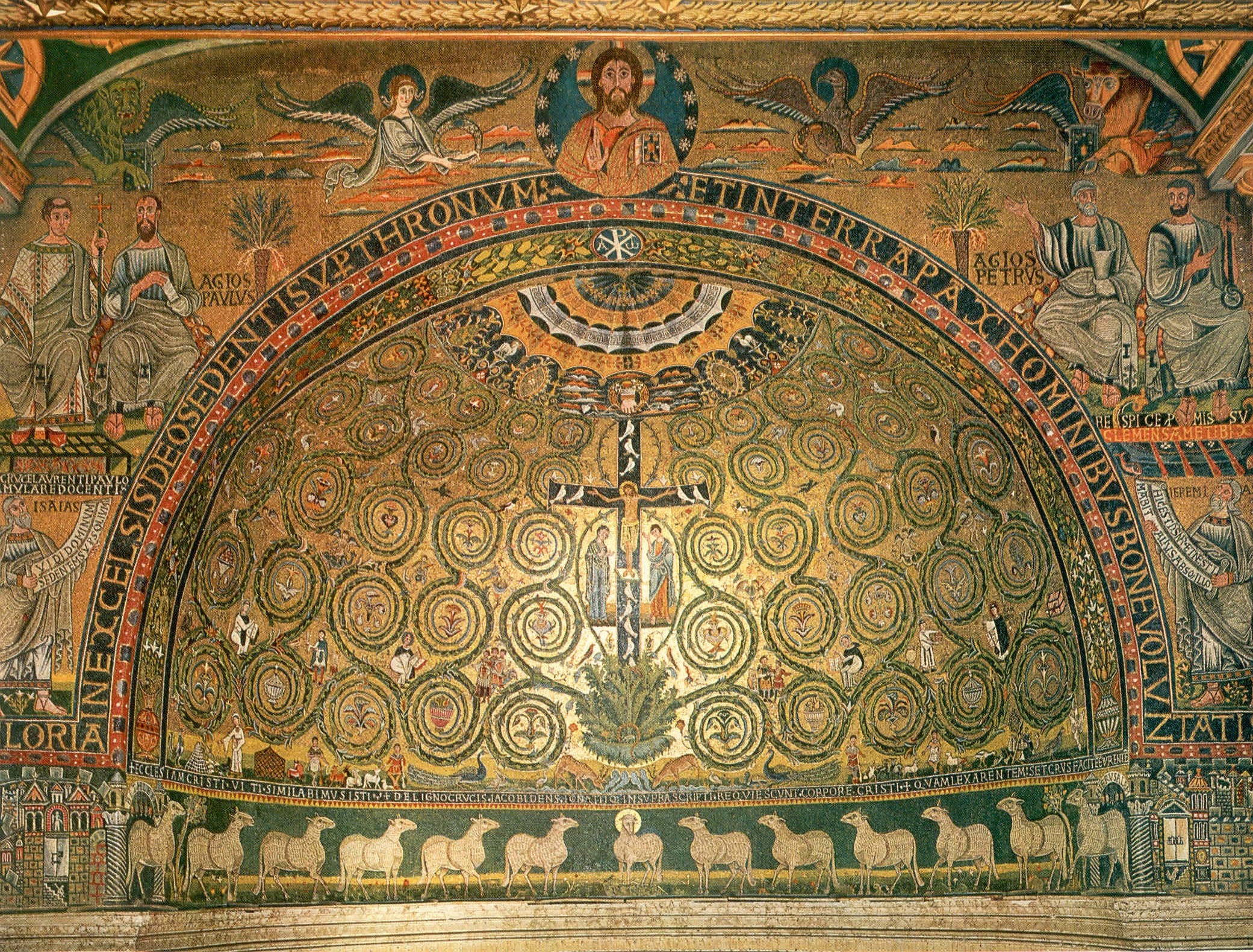
The true scope of the scandal has only begun to be revealed on this Advent Sunday. We must first traverse this season of expectation and the mysterious wonder of Christmas. We must journey into the Lenten desert and arrive trembling at the sight of the Cross, before sounding the scandal’s real depth. There, transfixed with the Crucified, we may at last realize that the uttermost confinement has become the most encompassing communion. “And, when I am lifted up from the earth, I will draw all to myself.” (John 12:32)
The Daystar that rises and illumines our path and discloses our hope always glows cruciform. It reveals the one liberation from confinement and despair. In the same epistle in which Paul bids us “rejoice always in the Lord” (Philippians 4:4), he recounts something of his own transformative journey. He confesses the idolatries of lineage and prestige, the misguided zeal that constricted his vision and impeded his encounter with the living God. For he has come to realize that truly to live is to live wholly in Christ, “the Son of God who loved me and gave Himself for me.” (Galatians 2:20) Christ is God’s end, goal, purpose.
Now Paul’s consuming desire is “that I may know Christ and the power of his resurrection, and may share his sufferings, becoming like him in death, that, if possible, I may attain the resurrection from the dead.” (Philippians 3:10,11)
But this new life is not for Paul alone. The Apostle shares in Christ the call common to all. The common end – con-finis – to which all humanity is summoned. To be not merely adjacent to one another, dwelling in enmity and hostility, but to live as neighbors, and more than neighbors. To be members together of the Body of Christ, sisters and brothers in the Lord, (dare we say it boldly?) fratelli tutti in Cristo.
And the little ones who inhabit and live this new Creation are greater even than the Baptist who, from his confinement, could only herald it from afar.
And so, in our Advent commemoration of the Lord’s death, resurrection, and ascension, we exultantly acclaim the ascended Lord’s continual coming to us: “Rejoice in the Lord always; indeed, the Lord is near.” Gaudete!
The post Our “Confinement” appeared first on The Catholic Thing.