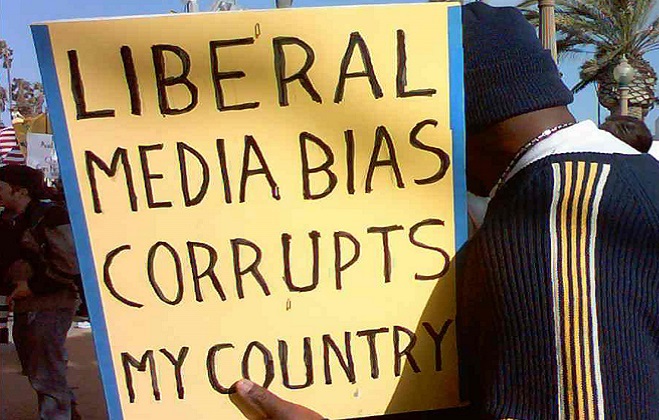
A news site promising “non-partisan journalism” and a “fact-based, editorially independent forum” has consistently published abortion-related content that principally favors abortion rights.
The Conversation U.S. turns academic research into widely distributed news articles and says it aims to provide information “free of commercial or political bias.” It distributes the articles through venues such as the Associated Press.
However, an examination by The College Fix of the site’s abortion coverage from October 2024 to October 2025 found that nearly all articles discussing abortion did so in a way that favored the killing of preborn babies.
This analysis follows another College Fix report which found the website receives at least $2 million per year from public universities through member fees. It also receives membership fees from private universities as well. The Fix previously found that most coverage of President Donald Trump is slanted against him.
REACH PRO-LIFE PEOPLE WORLDWIDE! Advertise with LifeNews to reach hundreds of thousands of pro-life readers every week. Contact us today.
The Fix reviewed 25 abortion related articles published during the one-year period. Of those articles, 22 were categorized as pro-abortion, two were neutral, and one slanted in favor of the pro-life perspective.
The majority of articles examined framed restrictions on the killing of preborn babies as a negative development. The articles used phrases like “reproductive health care,” “reproductive justice advocates,” “restrict access,” and “reproductive freedom.”
“Banning abortion is a hallmark of authoritarian regimes,” a University of Michigan gender studies professor wrote on October 16 of this year, as The Fix recently reported.
Another article linked “stricter abortion laws” to “increased infant mortality,” a claim that has come under criticism from experts. Language included statements that abortion access had been “severely restricted” and that post-Dobbs prohibitions have contributed to an “anti-abortion sentiment that has led America” into worsening medical and legal conditions.
Out of the two neutral articles, one included an analysis of the policy focus of Catholic priests, noting abortion as the most frequently addressed issue, and the other discussed religion and abortion. The single pro-life leaning article evaluated the Supreme Court’s return to originalism in a positive manner, citing the Dobbs v. Jackson decision.
The Fix reached out to Beth Daley, executive editor of The Conversation U.S., asking for comment on these findings. The Fix asked how the outlet reconciles its stated commitment to non-partisanship and bias-free reporting with the data found in this analysis and whether the outlet planned to review its practices or broaden their range of representation.
Daley did not respond to two emailed requests for comment in the past several weeks.
Expert: Academic journals have a bias against pro-life, conservative views
However, a Catholic University of America professor who regularly writes about abortion issues for national publication provided further insights.
“I really have not considered writing for the Conversation,” Professor Michael New told The Fix via email. “The Conversation is not part of my consistent reading consumption and they have not made an effort to reach out to me to offer a pro-life commentary.”
He also said, “since I am often reacting to polls, studies, and research — it is important that I am able to publish commentary and analysis quickly. Outlets like National Review Online nearly always publish my submissions and reach a large audience. I am often not inclined to try a new publication where I might run into delays or problems.”
The professor described the larger academic publishing world as largely unreceptive to pro-life scholarship. “Academic publications are almost always hostile to pro-life viewpoints,” he said. “Editors often do not wish to publish articles that present pro-life arguments or have pro-life policy implications.”
Even editors who do not personally oppose pro-life work and are “fair minded,” he said, face professional pressures. “They realize they will receive pushback and criticism from colleagues if they publish an article with a pro-life viewpoint,” he said. “This also makes them reluctant to publish submissions from pro-life researchers and scholars.”
He said “journal editors have total control over what gets published in their journals. Even if a pro-life article receives favorable reviews from other academics, the editor is within his rights to reject the article.”
“Since most academic journal editors are political liberals, they often seek to publish articles that present liberal arguments or have liberal policy implications,” he said.
“Now it is possible for a conservative article to get published in an academic outlet. However, it is much more difficult,” New said. “Conservative submissions will be treated with more scrutiny and will likely have to go through more rounds of revisions before they are published.”
New advised scholars wanting to publish conservative articles in academic outlets to “seek employment at either a conservative think tank or a conservative university.”
He said, “getting a conservative submission published at a liberal academic journal can be very time consuming.”
“That makes it more difficult for conservative scholars to have enough publications to qualify for promotion and tenure at many universities.”
LifeNews Note: College Fix contributor Ana Hathaway is a student at Elmhurst College where she studies English, Spanish, and secondary education. She is a cross country and track athlete and is also heavily involved in Elmhurst’s Catholic club. This column originally appeared at The College Fix.