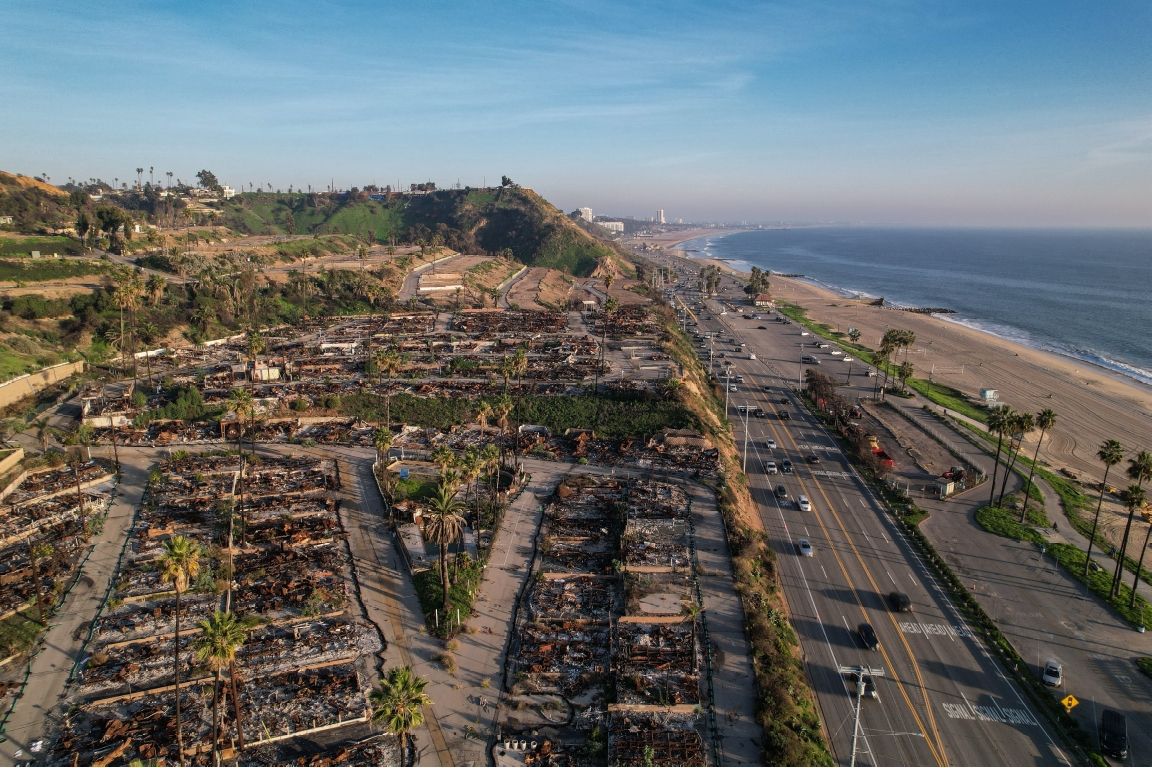
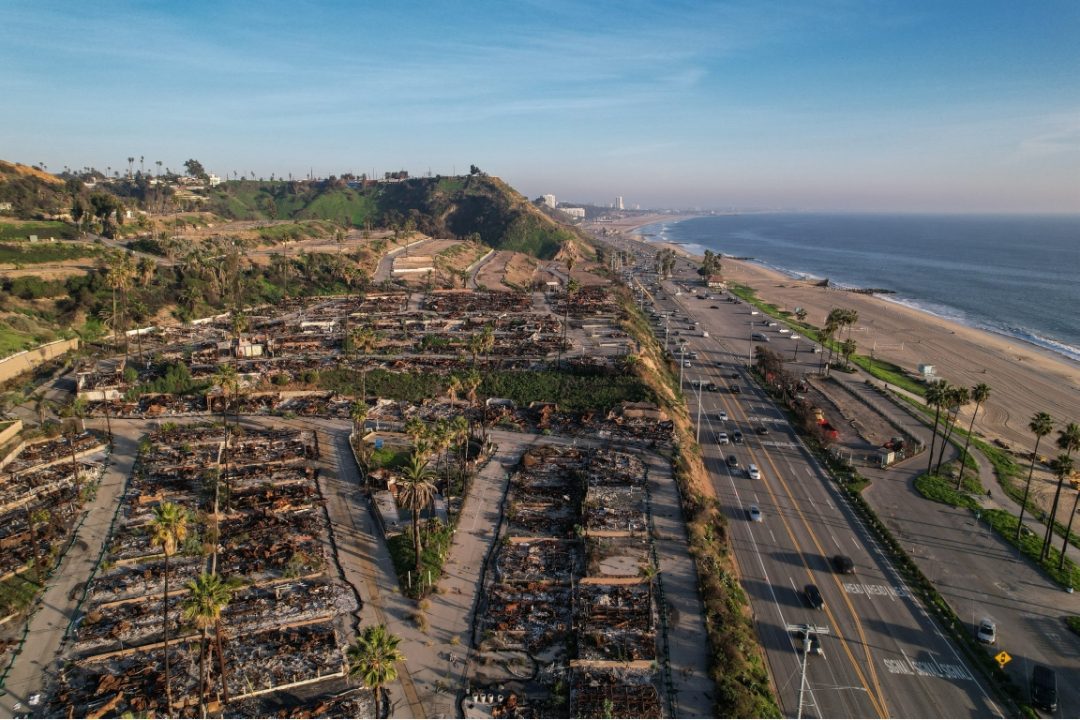
The 2025 Palisades Fire, which killed 12 people and destroyed 7,000 structures in southern California, might not have happened if state and local officials had been more concerned about endangered people than about endangered plants, documents and court testimony revealed.
California State Parks officials worked with Los Angeles Fire Department (LAFD) officials to ensure that firefighters didn’t damage “federally endangered plants” and “culturally sensitive” areas while putting out the turn-of-the-year Lachman Fire, the Los Angeles Times reported Saturday. Then the LAFD packed up its hoses and left while these “avoidance areas” smoldered. Days later, the smoldering brush erupted into the Palisades Fire.
The state, from Governor Gavin Newsom on down, denied any involvement in the efforts to contain the Lachman Fire, which occurred in Topanga State Park. Dissatisfied victims sued, claiming California State Parks did not do enough to ensure the fire was completely extinguished.
Dozing Off
Public records uncovered by plaintiffs’ attorneys and journalists, along with recent court testimony from state and federal officials, have severely damaged the state’s credibility.
For example, the Times story opened with this revelation:
An hour after midnight Jan. 1, as a small brush fire blazed across Topanga State Park, a California State Parks employee texted the Los Angeles Fire Department’s heavy equipment supervisor to find out if they were sending in bulldozers.
“Heck no that area is full of endangered plants,” Capt. Richard Diede replied at 9:52 a.m, five hours after LAFD declared the fire contained.
“I would be a real idiot to ever put a dozer in that area,” he wrote. “I’m so trained.”
Whether or not Diede agreed with desisting from dozing, his decision to do so was surely driven in part by fear of the consequences of crossing the state’s environmental zealots. The Times wrote:
In 2020, the city of Los Angeles agreed to pay $1.9 million in fines as part of an agreement with the California Coastal Commission after L.A. Department of Water and Power crews bulldozed hundreds of federally endangered plants in Topanga State Park. The city had been working to replace aging wooden power poles to make the power lines more resistant to strong winds and fire.
In 2021, LAFD deployed bulldozers to another Palisades fire. According to testimony from [California State Parks senior environmental scientist Noa] Rishe Khalili, firefighters’ use of bulldozers to put a contingency line around that fire ended up harming [endangered plant] astragalus.
“That activity results in extensive suppression damage,” she testified, noting that part of her role is to “advise the location of the contingency lines to provide options to go around or avoid sensitive natural and cultural resources.”
Parks and Abjuration
In fact, Rishe Khalili and her colleagues were texting each other with concerns about the potential for bulldozing astragalus plants in Topanga State Park “minutes after the Lachman Fire ignited,” noted the paper. Rishe Khalili, in turn, texted Diede, with whom she had worked during a 2021 Palisades-area fire.
In addition, a park ranger toting “maps showing sensitive areas … was dispatched to the command post,” penned the Times. According to NewsNation, “Photographs show state parks representatives on scene directing firefighters with maps on Jan. 1 and Jan. 2.”
Confronted with such evidence, California State Parks was forced to change its tune. Now, while admitting that some of its employees did converse with LAFD personnel, California State Parks told the Times that “no one from its agency interfered with fire suppression or mop up or influenced LAFD’s decision to not use bulldozers. Making sure the blaze was out, the agency said, was the responsibility of the fire department.”
After verifying that their precious plants hadn’t been harmed, California State Parks officials set about ensuring that a hand-cleared firebreak was covered up (to avoid confusing hikers) and that left-behind fire hoses were picked up. (The Times recalled that the LAPD once left hoses at a wildfire site for 18 months.) They were unconcerned about the smoldering underbrush.
The hose matter was resolved quickly — perhaps too quickly — the newspaper reported:
A battalion chief ordered firefighters to roll up their hoses and leave the burn area Jan. 2, even though crews warned that the ground was still smoldering. The LAFD also decided not to use thermal imaging technology to detect heat underground.
Ignition Key
Not surprisingly, the supposed end of the fire was only the beginning. “Video from hikers,” wrote NewsNation, “shows embers still smoldering in the restricted areas days after the fire was declared contained, with 911 calls about smoke going unanswered.”
According to the Daily Caller, William Schry, a special agent with the Bureau of Alcohol, Tobacco, Firearms and Explosives (BATF), testified:
Although the LAFD quickly suppressed the Lachman Fire on January 1, unbeknownst to anyone the fire continued to smolder and burn underground, within the root structure of dense vegetation.
On January 7, heavy winds caused the underground fire to surface and spread above ground in what became the Palisades Fire.
That blaze surely destroyed more endangered plants and “culturally sensitive” sites than a hundred bulldozed firebreaks would have.
Over 3,000 victims represented by attorney Roger Behle are hoping the courts will hold both Los Angeles and California accountable for the destruction of their homes and businesses.
Behle told NewsNation: “The state’s narrative that they had nothing to do with it, and it’s some other agency’s fault, it’s their responsibility, it’s not ours, flies in the face of the evidence.”