Friedrich Nietzsche is notorious for his theory of the Übermensch, the superior man who rises above the constraints of morality and mediocrity. But his theory of the “last man” has proven to be far more prophetic – and relevant. A kind of counterexample to the Übermensch, the last man is lazy, weak, incurious, and lives for pleasure. He is the product of an overly civilized, Christianized, and complacent culture.
While literary examples of the Übermensch abound, there are relatively few depictions of the “last man” in all his non-glory. Perhaps such a character hits a little too close to home and might make more than a few readers uncomfortable, or perhaps most writers like to imagine themselves as an Übermensch creating and commanding imaginative realms, not last men confessing their weaknesses.
Or most likely, last men are by definition so passive that they pose a serious challenge for any writer trying to put together a compelling narrative about them.
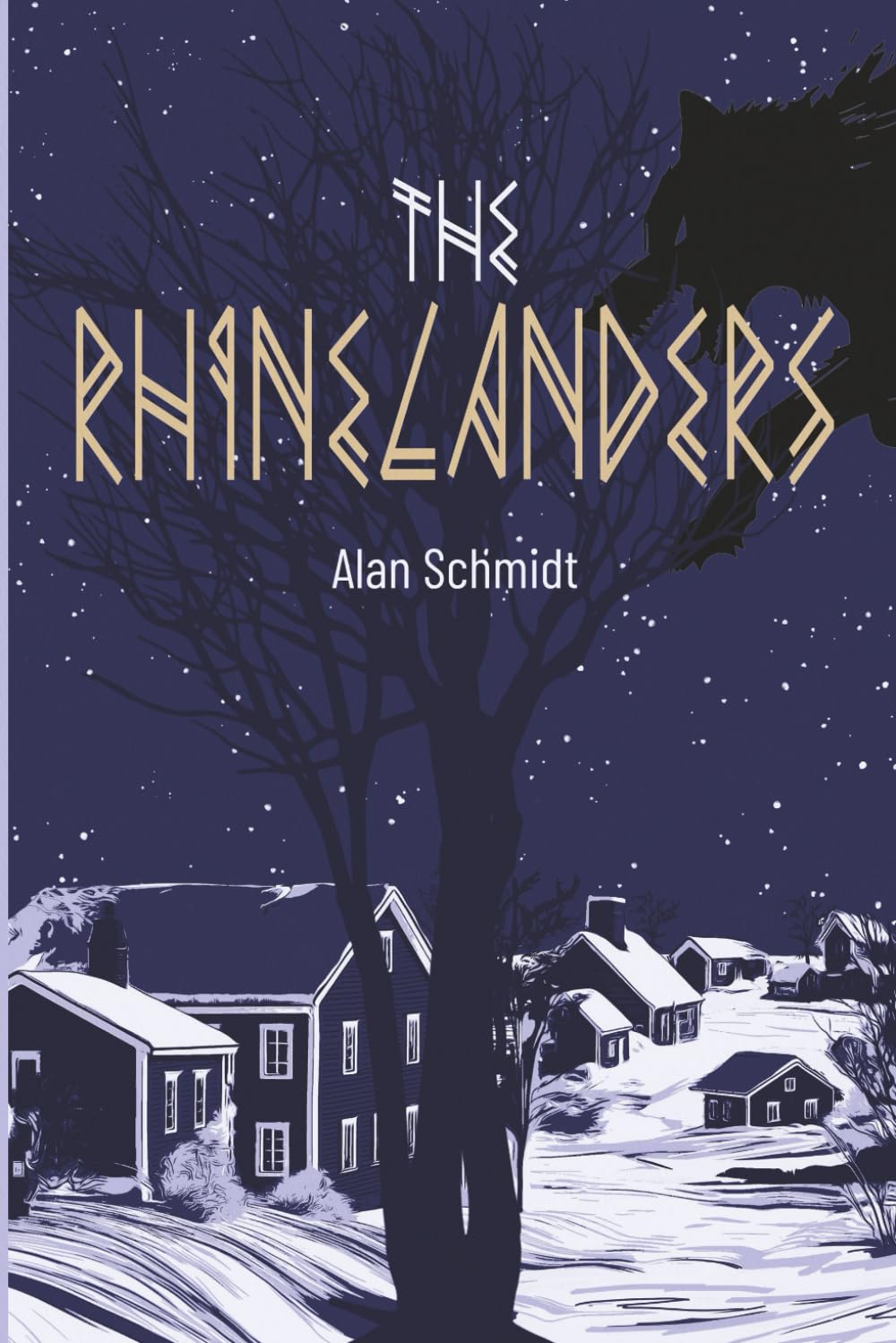
But just because something is challenging does not mean that it isn’t worth trying. In his debut novel The Rhinelanders, Catholic essayist Alan Schmidt takes on the problem of the last man by telling his story and envisioning his destiny. In doing so, he portrays the mundane, quiet despair in which so many people today live, including people of faith. His novel reminds readers not to forget these lost souls since they, too, are children of God, people with a notable past and a potentially notable future.
The story takes place in Westphalia, Michigan, a small rural town founded by German Catholic settlers. The hero of the story is Stephen Koenig, a middle-aged, unmarried, and unremarkable man who lives with his mentally handicapped sister, Sarah, and ne’er-do-well brother, Thomas. Unlike most of the Koenig clan, Stephen never left his hometown, lacking the ambition that would inspire such a change. He lives comfortably, working a nondescript office job at a financial consulting firm, attending Mass, praying his rosary every day, and maintaining good relationships with his siblings and neighbors.
Certain forces intervene, however, to disrupt Stephen’s placeholder existence. At night, he is periodically visited by ghosts of his ancestors along with two menacing wolves who deny him peace of mind. During the day, he is offered a job opportunity that would finally take him out of Westphalia, and is confronted with a romantic relationship with a woman who essentially initiates every meetup. Meanwhile, he uses his sister’s disability and his brother’s failure-to-launch as excuses for putting off any meaningful action.

\
Schmidt introduces each chapter with a passage recalling a moment in the history of Stephen’s ancestry. From a tribe of pagan Goths to the generation of German Americans immediately preceding Stephen and his family, the juxtaposition illustrates the gradual loss of will and inner strength that once propelled the Koenigs. Well before he is explicitly identified as “the Last Man,” it is apparent that this is who Stephen is meant to represent.
Even so, Schmidt refrains from offering a mere Nietzschean allegory set in modern rural America. Certain redeeming factors complicate Stephen’s character. Yes, he is indecisive, noncommittal, and insecure, but he is also charitable, pious, and wholesome. This happens to make him much more sympathetic than his brother Thomas, who is the inverse, a man of great energy and will, but also abrasive and rebellious.
The modern world shows its preference for men like Stephen by granting them a frictionless existence full of easy opportunities, while it actively punishes men like Thomas who must fight for everything they have.
Moreover, even as Stephen and Thomas make their way in the world, Schmidt makes it clear that their choices do not happen in a vacuum. They are the product of their local surroundings, their German lineage, their church, their upbringing, and the life-altering tragedies that occur without warning. Even though the decisions they make are ultimately theirs, they are heavily influenced by the world outside and inside of them. Thus, if they fall short of their potential or jeopardize their own salvation, the reader should not only blame them, but also the fallen world around them that seemed to facilitate their decadence and downfall.
After setting up these conflicts and themes, it would be easy enough for Schmidt to leave everything unresolved and ambiguous, settling for a cheap nihilism that passes for depth in modern novels (see my analysis in a previous column of Elena Ferrante’s Neapolitan novels). But to his great credit, he frames his subject matter through a Catholic lens. Everything the characters say and do has meaning and carries eternal implications, conversion and healing are always possible, and a deeper truth lurks behind the apparent mysteries of life. More importantly, these ideas manifest themselves subtly and artfully, not through facile preachiness.
However, because of these virtues, The Rhinelanders may present some challenges for modern readers. Schmidt is a brilliant and talented writer, but he demands more than a little patience and understanding from his audience. Some events pass slowly, several scenes drag a little, others (usually involving spirits) are difficult to take in fully, and the characters may sometimes feel underdeveloped. But in Schmidt’s defense, he is trying to remain realistic: many people today lack a strong personality, and the supernatural often transcends language.
That said, The Rhinelanders is still an exceptional work of contemporary Catholic fiction that demonstrates the great breadth and potential of the genre. Like other quality Catholic fiction, it faces reality with the necessary honesty and depth demanded of the Catholic worldview. It refuses easy answers, acknowledges the necessity of suffering, and carries love and holiness to the darkest places.
Not only does the novel go a long way in explaining the plight of today’s ‘last men,’ it offers a way forward and reveals the pinpoint of spiritual light that lies at the end of what can be a long, dark tunnel.