Among the thrills in being flat out immobile, or fairly close to it, is that it keeps one out of bookstores. One finally has an opportunity to read what one was putting off until retirement.
Irresponsible book-buyers have invariably collected works to read then, “when I will have lots of time.” Unfortunately, with advancing age comes the revelation that one has not lots of time.
Indeed, as I begin this column, I learn that a close old friend, whom I have known since he was twenty-five, has died at what I once thought the ripe old age of eighty. We were just getting around to discussing certain things, and I reflect, “If Julian could die, anyone could die.”
And believe me, the Canadian winter is a mortification. It is among the many advantages of living in this place.
Reading up here in my cell (I call it the High Doganate), like the author of the book that I am reading, “I spend as much time nodding into my books as I do in my bed.” But unlike him, when sleep is most pleasant and I feel I could stay in bed for hours, the bell rings for Matins.
It is St. Aelred of Rievaulx I read, and I imagine that in north Yorkshire nine hundred years ago it could be just as cold as it gets in Toronto. The only difference is that not all of us need to go out in it, like the poor garbage collectors whose noisy truck suddenly disturbs me before seven in the morning.
There is work to do, out there, too, but unlike in a monastery, everyone doesn’t have to do it. We don’t have “from each according to his abilities to each according to his needs,” as they do in theoretical Marxism, or was actually the case in the Rievaulx Abbey. It was a worker’s paradise: everyone worked.
In the Speculum Caritatis, or Mirror of Charity, which I try to read through the din of garbage trucks, Aelred is directly or indirectly addressing novices, or potential novices.
He dealt with a lot of them, and as he who was once sent by King David I from Scotland towards Rievaulx when it was still construction huts, he had much experience in the art of recruitment. He went on to be the most illustrious Abbot in that north Yorkshire precinct, while continuing in the same old gig, saving souls wherever possible.

And here he is explaining to a novice, who is perhaps settling in, the difference between life inside and life outside the monastery. Should you be flinching at the burden of work that may be necessary to save your soul, well, the Matins bell will go off around 3 a.m.
But remember, these were in medieval times – not quite the “High Middle Ages” yet – and most of Europe was then quite Christian, unlike today.
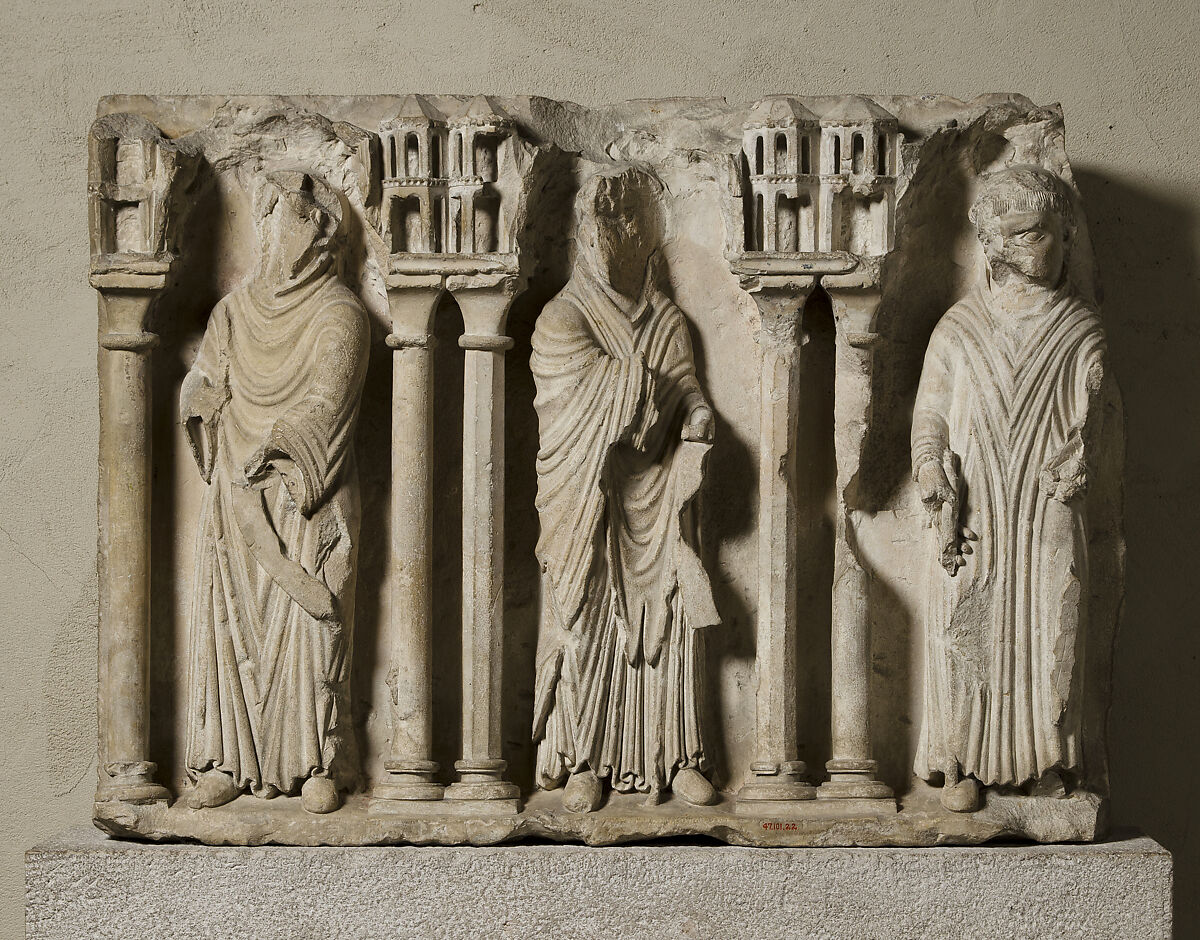
The splendid Romanesque and Gothic edifices, which our tourists like to ogle when any of them remain, were not only being built (to higher craft standards than we can imagine), but were not yet fully inhabited.
Our civilization was still on our “to-do” list, for the most part. Instructions for how to live and what to do were still accumulating. St Aelred was contributing to this “media job.”
In contrast, look at Rievaulx today. It is a pretty ruin in its valley, and much shrunk since the stones that went to erect it were used in making the secular structures that now litter that particular landscape.
They were recycled when Henry VIII was wrecking the place to make room for Protestantism, except the choicest bits, which were privatized onto the property market.
No one actually lives in the ruin, for it has no central heating. You would freeze. Also, no water. And the “National Trust” won’t even let you camp.
It follows that a guide to becoming, or staying, a novice, is no longer needed, except by academics and experts. The rest may comfortably waste their lives. There will be no “test” in any earthly sense. Your only instruction as a Christian is to rise, except that may now seem impossible. Gravity would be offended.
But according to Aelred, there will be no difference at all. The many things that concerned and afflicted you in secular life, will more or less follow you into the convent, and you don’t become any holier when you step inside.

Indeed, he was in the (possibly obnoxious, were he not very charming) habit of asking his novices if they thought they were holier before they came in.
Did they, for instance, feel God’s love more or less? Did they think they were obtaining more spiritual consolation? Were their old secular friends any less attentive to their needs and desires than their new friends in the monastery?
Et cetera. It was a comparison that would quickly convince the novice that he had made a wrong move, if that novice wasn’t already finding his footing in his new life. And shake him up at least mildly if he thought he knew what he was doing.
Later, when he has been locked in for a while to the monastic regime, Aelred might ask if he was suffering any more for Christ’s sake than he did just after he arrived? And the novice would probably reply that he would not have been able to bear a single hour of what he now did all day.
In particular, no one imagines how difficult it is to be absolutely silent, from dawn to dusk, and then after.
And while we weep real tears, when we think how much we love Christ, that will not stop us from going back to the usual with friends and relatives if we take a break; to eating and drinking too much, sleeping late, and giving in to discontent, fighting, and coveting each other’s property.
St. Aelred is surprisingly modern.