I have what I like to think of as a healthy obsession with bulbs. I don’t mean the kind you screw into an electric lamp. I mean flower bulbs: tulips, hyacinth, daffodils, crocuses, snowdrops, and the like. I bury them in the dirt in the autumn. And as soon as the frozen ground softens to mud, green things start to emerge.
While the rest of the world (the lingering snow by the curb included) thinks it is still winter, the bulbs are having none of it. The bulbs are unstoppable. Once the bulbs emerge – those little green nibs, sometimes tinged wine-red – there’s no going back. Winter is finished, and all the cold snaps and late-season snow showers are in vain.
As we say in our family every year when the first crocuses appear, “Aslan is on the move.”
The arrival of spring, of course, is a metaphor for resurrection. Here we are in Lent and what we see around us in nature parallels our Lenten journey. The first flowers of spring are heralds of the coming joys of Easter. The bulbs that “died” and were buried have emerged more glorious and alive than ever.
And so every child knows. At least, it used to be so. I hope children still learn such things.
Right now, winter is losing the same battle it loses every March. And just like every year, the bulbs are pushing the sodden soil aside and emerging clean, startlingly green, and swollen with new life. Somehow the arrival of spring bulbs, the sheer newness of them, is always startling. I know from the calendar that spring is coming, of course. And I planted those bulbs precisely so that I could see them in the spring.
Yet spring arrives and these living things that were not there before (at least not to my eyes) push up through the cold, sweet-smelling earth with a contagious, irrepressible vitality. One could almost believe that the spring sun grows warmer because of the emerging flowers rather than the other way round. Every spring somehow feels like the first.
I recall lines about spring from Gerard Manley Hopkins:
What is all this juice and all this joy?
A strain of the earth’s sweet being in the beginning
In Eden garden…
But it happens again and again, over and over. Every year, the bulbs drive winter away. Every year, these little floral gems emerge, looking like the newest things in all Creation. Every year, nature’s metaphor for resurrection plays out in plain view. Every year, it is startling to see something so utterly new under the sun.
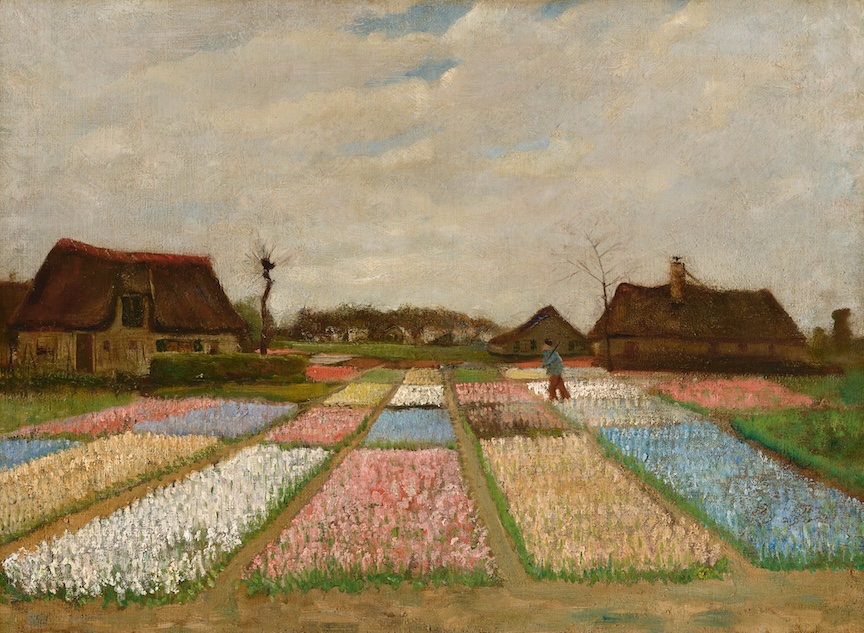
And here is another metaphor, one that is subtler and harder to learn than the first. A metaphor that has taken me many springs – many Lents and many Easters – to understand. It is a metaphor about old things and new things. About things past made present. About grace and nature. About creation and repetition. About the shocking newness and gratuity of something utterly predictable and expected.
The Lord said:
Amen, amen, I say to you, unless a grain of wheat falls to the ground and dies, it remains just a grain of wheat; but if it dies, it produces much fruit.
The seed goes down into the ground. It dies. But then it rises again to bear much fruit. The bulb is buried under dirt and snow and ice. From that death, a glorious new blossom emerges. So far so good. If we were to see this happen once, and only once, we would think it a miracle. If it happens over and over and over again, is it less miraculous?
The Lord said:
Whoever loves his life loses it, and whoever hates his life in this world will preserve it for eternal life.
An innocent man lays down his life. He dies. He rises again to new life, eternal life. A man takes bread and wine, blesses them, and gives them to his disciples; his body and blood. If it happens once, it is a miracle. But what if that same miracle is made present to us, not once, but over and over and over again?
This metaphor, if you can follow me, gets closer to what I love about spring bulbs. This implacable repetition of the miracle, the outrageous made so commonplace we might hardly notice, is why I love those smooth green and red nibs poking through the soil and reaching for the sun.
They are a miracle in themselves. But they come again and again every year. Without fail. They come whether I notice them or not. The miracle is relentless. The miracle pursues us. And for all that repetition, it never loses any of its freshness or newness. Each spring might as well be the first spring. Each miracle might as well be the very act of Creation itself.
Had I only ever seen one tulip or one crocus in spring, I would know the miracle. But to know that it is repeated, repeated with purpose and patience, again and again, dazzles the mind. Had I been there that Friday, all those years ago, and had I but seen the empty tomb on Sunday morning, I would know the miracle. Yet I find it there on the altar – find Him there – day after day.
Dazzled ain’t the half of it.